


The main difference lies in the fact that 440C stainless steel has higher hardness and strength, but poorer corrosion resistance; while 316 stainless steel, due to the presence of molybdenum, has better corrosion resistance, but its hardness is not as high as 440C. 440C is very suitable for applications requiring high hardness, such as bearings and cutting tools, while 316 is more suitable for harsh environments such as marine or chemical processing.

What are the uses of 440C stainless steel?

440C stainless steel is magnetic under all conditions and has excellent wear resistance. It can be cold-worked or heat-treated. Common industries/applications for 440C stainless steel include: bearings and bushings, valves, cutting tools and instruments.
What is 440C Stainless Steel?
440C stainless steel is a high-carbon martensitic stainless steel with excellent wear resistance and corrosion resistance. It boasts good tensile strength and a bright luster, making it ideal for numerous industries, including automotive, food processing, medical equipment, and building materials. The main advantage of 440C lies in its hardness; compared to other grades of stainless steel, it can withstand higher temperatures, making it suitable for high-temperature environments or high-pressure applications, such as engine parts or cookware requiring optimized heat transfer. Furthermore, due to its high hardness, 440C maintains a sharp edge for longer than softer grades like 316, meaning it can be used for cutting tools such as knives without frequent sharpening.
What is 316 Stainless Steel?
316 stainless steel is an austenitic stainless steel with a higher nickel content than other grades. Compared to other grades (such as 304 or 430), 316 stainless steel has stronger corrosion resistance, which is more prone to rusting over time. Its superior corrosion resistance also makes it ideal for food processing equipment, as it is less likely to be corroded by acidic liquids. Furthermore, because 316 stainless steel has a lower carbon content than 440C stainless steel, its edge retention is not as good as 440C stainless steel when used as a cutting tool, but its formability is better, making it easier to handle in processes such as welding or bending.
440C vs.316L stainless steel :Key differences
| Property | 440C Stainless Steel | 316L Stainless Steel |
|---|---|---|
| Type | Martensitic Stainless Steel | Austenitic Stainless Steel |
| UNS Number | S44004 | S31603 |
| Standard | ASTM A276 / AISI 440C | ASTM A240 / A276 / A312 |
| Microstructure | Hard, high-carbon martensitic | Non-magnetic austenitic |
| Main Features | High hardness and wear resistance | Superior corrosion resistance and weldability |
| Magnetism | Magnetic | Non-magnetic |
| Heat Treatment | Hardenable by heat treatment | Non-hardenable, strengthened by cold working |
| Typical Applications | Bearings, cutting tools, valves | Chemical, marine, and medical components |
440C vs.316L stainless steel : Chemical Composition Comparison
440C has a higher carbon content and a lower nickel/molybdenum content, resulting in higher hardness, but its corrosion resistance is not as good as 316L.
316L's low carbon content and added molybdenum give it stronger resistance to pitting corrosion and chloride attack, especially in marine and chemical environments.
| Element | 440C (%) | 316L (%) |
|---|---|---|
| Carbon (C) | 0.95 – 1.20 | ≤0.03 |
| Chromium (Cr) | 16.0 – 18.0 | 16.0 – 18.0 |
| Nickel (Ni) | ≤0.75 | 10.0 – 14.0 |
| Molybdenum (Mo) | - | 2.0 – 3.0 |
| Manganese (Mn) | ≤1.0 | ≤2.0 |
| Silicon (Si) | ≤1.0 | ≤1.0 |
| Sulfur (S) | ≤0.03 | ≤0.03 |
| Iron (Fe) | Balance | Balance |
440C vs.316L stainless steel : Mechanical Properties
| Property | 440C (Hardened) | 316L (Annealed) |
|---|---|---|
| Tensile Strength | 760–1,850 MPa | 485 MPa |
| Yield Strength | 450–1,400 MPa | 170 MPa |
| Elongation | 14–17% | 40% |
| Hardness (HRC) | 56–60 | ≤95 HB (~20 HRC) |
| Density | 7.74 g/cm³ | 8.00 g/cm³ |
| Specification | 440C | 316L |
|---|---|---|
| Standard | ASTM A276 / AISI 440C | ASTM A240 / A276 / A312 |
| Product Form | Plate, Bar, Rod, Sheet | Plate, Sheet, Pipe, Tube, Bar |
| Finish Options | Bright, Annealed, Ground | No.1, 2B, BA, Mirror, Pickled |
| Heat Treatment | Hardened & Tempered | Solution Annealed |
| Certification | EN 10204 3.1 / 3.2 | EN 10204 3.1 / 3.2 |
| Processing Services | CNC Cutting, Grinding, Polishing | Shearing, Laser Cutting, Welding |
| Available Thickness | 1 mm – 100 mm | 0.5 mm – 100 mm |
| Width Range | Up to 2000 mm | Up to 2000 mm |
| Length Range | 1000 – 6000 mm | 1000 – 6000 mm |
Why Choose Gnee as Your Stainless Steel Supplier
✅ Over 18 years of export experience to 80+ countries
✅ Certified by ISO, SGS, BV
✅ Global stock of 316L and 440C stainless steel plates and bars
✅ Custom processing services - cutting, polishing, CNC machining, and packaging
✅ Fast delivery within 7–15 days, supported by global logistics partners
📦 Packaging & Delivery
All stainless steel products are:
Packed in wooden pallets or crates
Covered with moisture-proof wrapping
Labeled with heat number, standard, and size
Shipped worldwide via sea, air, or express
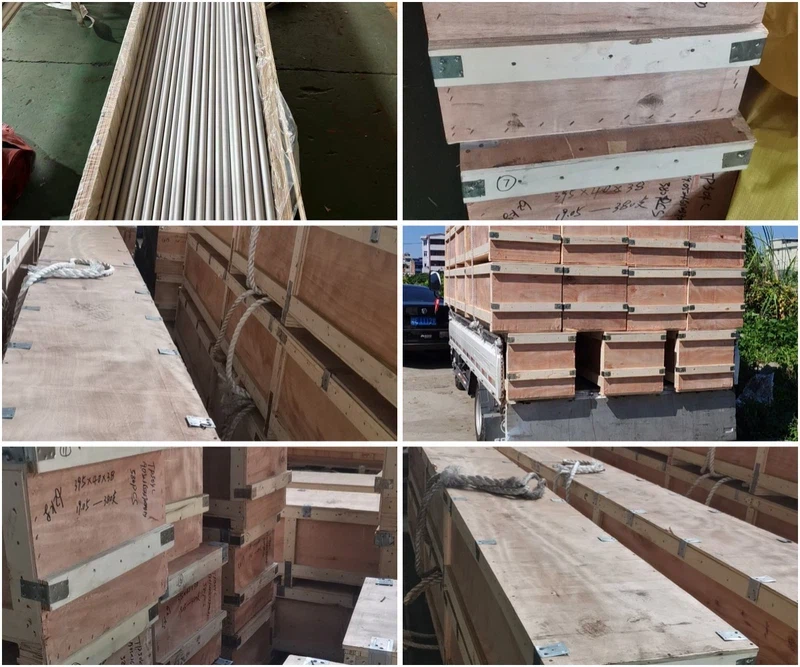
Gnee Steel specializes in the production of a wide range of stainless steel products. Gnee Steel's product packaging includes: Steel Strapping: Pipes with an outer diameter of 3 inches or less are typically strapped together with polypropylene film to prevent rust during ocean shipping, and then secured with steel strapping. Wooden Cases/Crates: Pipes are typically packaged in wooden cases or crates to protect the pipes during transportation, especially those that are longer or have larger diameters. Seaworthy Export Packaging: Suppliers typically use standard seaworthy export packaging methods, which may include a variety of materials and techniques to protect the pipes during transportation. Tarpaulin Packaging: This prevents rain, seawater, and other external factors from penetrating the export crates during transportation. Gnee Steel specializes in the production and sale of alloy materials. Gnee Steel's products are widely used in the aerospace, chemical, power, automotive, and nuclear energy sectors, and we can provide customized alloy material solutions based on customer needs. For alloy material pricing or customized alloy material solutions, please contact us for a quote: ru@gneesteelgroup.com


