


What are the differences between 420 stainless steel and 316 stainless steel?
Gnee Steel
What are the differences between 420 stainless steel and 316 stainless steel?
The main difference is that 420 stainless steel is a hardenable martensitic stainless steel, known for its high hardness and wear resistance; while 316 stainless steel is an austenitic stainless steel, possessing excellent corrosion resistance due to its molybdenum content. This means that 420 stainless steel is ideal for cutting tools and applications requiring sharp edges, while 316 stainless steel is better suited for environments with high humidity or corrosive chemicals.

Gnee Steel
What are the uses of 420 stainless steel?
"420 stainless steel is widely popular due to its high hardness, excellent wear resistance, and good corrosion resistance, making it an ideal material for cutting tools, medical devices, and industrial components."

What is 420 Stainless Steel?
420 stainless steel is a high-carbon steel commonly used in the manufacture of blades and surgical instruments. It is known for its high hardness, good wear resistance, and ability to maintain its shape at high temperatures. It is magnetic and belongs to the martensitic stainless steel category. 420 stainless steel is not recommended for applications requiring high corrosion resistance.
What is 316 Stainless Steel?
316 stainless steel is a commonly used austenitic stainless steel containing molybdenum, which enhances its corrosion resistance. It is widely used in shipbuilding, pharmaceuticals, food processing, and chemical industries. 316 stainless steel is known for its high strength, durability, and strong corrosion resistance. It is non-magnetic and has excellent weldability.
420 Stainless Steel vs. 316 Stainless Steel: Key Differences
Composition
420 Stainless Steel: Higher carbon content (0.15%–0.4%), resulting in increased hardness but reduced corrosion resistance.
316 Stainless Steel: Higher molybdenum (2%–3%) and nickel content, offering excellent resistance to chlorides and acids.
Note: For CNC machining plants, composition directly impacts machinability and processing performance-choosing the wrong steel grade can increase tool wear and project costs.
Hardness
420 Stainless Steel: After heat treatment, it can reach a hardness of 50 HRC, making it one of the hardest stainless steels available.
316 Stainless Steel: Typically has lower hardness (approximately 15–20 HRC), but still maintains good strength and toughness.
Tip: Choose 420 stainless steel if sharp edges or highly wear-resistant parts are required. 316 stainless steel is superior for structural durability and weldability.
Corrosion Resistance
420 Stainless Steel: Moderate corrosion resistance, but prone to rusting in humid, high-salt, or chemically treated environments.
316 Stainless Steel: Excellent resistance to seawater, chemicals, and acids.
Tip: 316 stainless steel is a safe choice for CNC-machined parts in marine and medical applications. Avoid using 420 stainless steel unless corrosion is not a critical factor.
Abrasion Resistance
420 Stainless Steel: High hardness and excellent abrasion resistance, suitable for cutting tools, molds, and bearings.
316 Stainless Steel: Lower abrasion resistance, not suitable for high-friction applications.
Note: Using 316 stainless steel under high-wear conditions may increase parts replacement costs over time.
Oxidation Resistance
420 Stainless Steel: Good oxidation resistance below 650°C, but not suitable for long-term high-temperature environments.
316 Stainless Steel: Good oxidation resistance below 870°C, more suitable for high-temperature environments.
Weldability
420 Stainless Steel: Difficult to weld; requires preheating and post-weld heat treatment to prevent cracking.
316 Stainless Steel: Excellent weldability, therefore widely used in structural component manufacturing.
Tip: If your CNC machining project requires welded components, 316 stainless steel is a better choice.
Heat Resistance
420 Stainless Steel: Performs well at moderate temperatures, but corrosion resistance decreases above 400°C.
316 Stainless Steel: Maintains good corrosion resistance and oxidation resistance even at temperatures up to 870°C.
Machining Performance
420 Stainless Steel: Machining performance is better in the annealed state, but heat treatment increases hardness and tool wear.
316 Stainless Steel: Due to its toughness and work hardening, it is more difficult to machine and requires specialized tools.
Tip: To reduce machining costs, for high-hardness projects, consider using annealed 420 stainless steel, but be careful with tool wear when machining hardened materials.
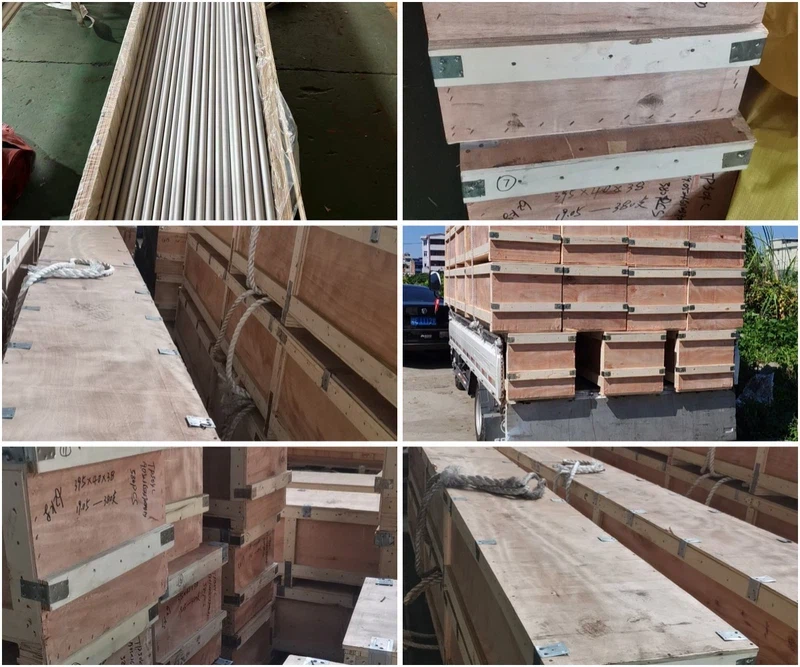
Gnee Steel specializes in the production of a wide range of stainless steel products. Gnee Steel's product packaging includes: Steel Strapping: Pipes with an outer diameter of 3 inches or less are typically strapped together with polypropylene film to prevent rust during ocean shipping, and then secured with steel strapping. Wooden Cases/Crates: Pipes are typically packaged in wooden cases or crates to protect the pipes during transportation, especially those that are longer or have larger diameters. Seaworthy Export Packaging: Suppliers typically use standard seaworthy export packaging methods, which may include a variety of materials and techniques to protect the pipes during transportation. Tarpaulin Packaging: This prevents rain, seawater, and other external factors from penetrating the export crates during transportation. Gnee Steel specializes in the production and sale of alloy materials. Gnee Steel's products are widely used in the aerospace, chemical, power, automotive, and nuclear energy sectors, and we can provide customized alloy material solutions based on customer needs. For alloy material pricing or customized alloy material solutions, please contact us for a quote: ru@gneesteelgroup.com


