


Is 304 stainless steel more suitable for food applications than 316 stainless steel?
Both 304 and 316 are food-grade stainless steels, but 316, due to the addition of molybdenum, has superior corrosion resistance, making it ideal for environments containing chlorides (such as salts) or strong acids. 304, on the other hand, is an economical and versatile choice suitable for general food processing equipment where corrosion resistance is not critical.
Does 304 stainless steel meet food safety standards?
Hygiene and Cleanability
Both 304 and 316 stainless steels are non-porous, easy to clean, and do not easily harbor bacteria. Their smooth, polished surfaces make them ideal for hygienic applications and help meet food safety standards.

Both 304 and 316 stainless steels are classified as food-grade, complying with relevant regulations and standards for direct contact with food, including FDA regulations, EU Framework Regulation (EC) No 1935/2004, and NSF/ANSI 51 certification. Their food safety performance stems from three key characteristics: corrosion resistance, chemical stability, and ease of cleaning.
Food-grade stainless steel is formulated to minimize impurities such as lead, cadmium, and sulfur, which could otherwise leach into food. Through appropriate passivation, a protective chromium oxide layer forms on the surface, preventing corrosion and inhibiting contamination.
Surface treatment further impacts hygiene: a smooth, electropolished surface reduces microbial adhesion and simplifies cleaning, which is particularly important in dairy, brewing, and other beverage processing environments.
Comparing Properties of 304 vs 316
Although both are austenitic stainless steels, their chemical compositions and corrosion resistance differ:
Chemical Composition
| Element | 304 SS | 316 SS |
|---|---|---|
| Chromium (Cr) | 17.5–20.0 % | 16.0–18.5 % |
| Nickel (Ni) | 8.0–11.0 % | 10.0–14.0 % |
| Molybdenum (Mo) | 0 % | 2.0–3.0 % |
Corrosion Resistance
304 Stainless Steel
304 stainless steel is a widely used and cost-effective stainless steel suitable for general food and beverage industries. It has good resistance to most oxidizing acids and is not easily corroded in standard processing environments.
However, it is prone to pitting corrosion in chloride-rich environments, making it less suitable for saline or high-salinity water environments.
316 Stainless Steel
The addition of molybdenum gives 316 stainless steel even stronger resistance to pitting and crevice corrosion, especially in chloride, acidic, or high-temperature environments. It is suitable for seafood processing, the production of acidic foods such as citrus or tomatoes, and applications using robust in-situ cleaning (CIP) systems.
In these cases, 316 stainless steel is more durable and reliable than 304 stainless steel.
Durability and Strength
304 Stainless Steel
304 stainless steel is renowned for its toughness and reliability. It can withstand frequent cleaning, physical abrasion, and daily mechanical stress in food industry environments.
316 Stainless Steel
316 stainless steel is even more durable, especially under harsh conditions, or when equipment is exposed to strong chemicals or frequent use. It is a better choice when components are subjected to continuous stress, corrosive cleaning agents, or rough handling. While both stainless steels are strong, 316 stainless steel is more resilient in demanding environments.
Hygiene and Ease of Cleaning
Both 304 and 316 stainless steels are non-porous, easy to clean, and resistant to bacterial growth. Their smooth surfaces make them ideal for hygienic applications and help meet food safety standards. In fact, there is little difference in their hygienic properties-both stainless steels are excellent for keeping food contact surfaces clean and hygienic.
Why Choose Gnee Steel (Supplier Example)?
✅ Large stock of 304/316 stainless steel strip/coil, fast shipping.
✅ Factory direct sales, highly competitive prices, excellent value for money.
✅ Comprehensive quality assurance: Material Testing Certificate (MTC), Chemical Composition Certificate, and Mechanical Properties Certificate.
✅ Value-added services: Slitting, cutting, polishing, surface treatment.
✅ Worldwide shipping, secure and reliable packaging, and provision of export-required documentation.
Email: ru@gneesteelgroup.com
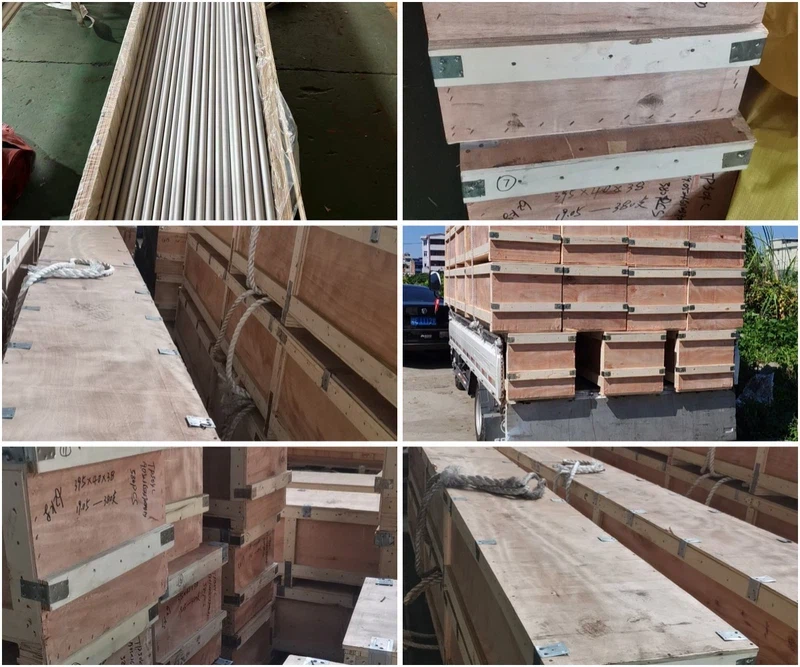
Gnee Steel specializes in the production of a wide range of stainless steel products. Gnee Steel's product packaging includes: Steel Strapping: Pipes with an outer diameter of 3 inches or less are typically strapped together with polypropylene film to prevent rust during ocean shipping, and then secured with steel strapping. Wooden Cases/Crates: Pipes are typically packaged in wooden cases or crates to protect the pipes during transportation, especially those that are longer or have larger diameters. Seaworthy Export Packaging: Suppliers typically use standard seaworthy export packaging methods, which may include a variety of materials and techniques to protect the pipes during transportation. Tarpaulin Packaging: This prevents rain, seawater, and other external factors from penetrating the export crates during transportation. Gnee Steel specializes in the production and sale of alloy materials. Gnee Steel's products are widely used in the aerospace, chemical, power, automotive, and nuclear energy sectors, and we can provide customized alloy material solutions based on customer needs. For alloy material pricing or customized alloy material solutions, please contact us for a quote: ru@gneesteelgroup.com


