


What are the differences between SS304 and SS316 pipes?

What are the differences between SS304 and SS316 pipes?
316 stainless steel pipe contains at least 2.0% molybdenum, which makes it more corrosion-resistant than 304 stainless steel pipe. However, because molybdenum is a more expensive element, 316 stainless steel pipe is generally more expensive.
What does the "L" in 304L stainless steel represent?
The "L" in 304L stainless steel stands for "low carbon," meaning its carbon content is at most 0.03%, while standard 304 stainless steel has a carbon content of 0.08%. The lower carbon content improves the steel's weldability and prevents intergranular corrosion that can occur in the heat-affected zone during welding.

What is 304 Stainless Steel Pipe?
304 stainless steel pipe is a commonly used stainless steel pipe material, renowned for its excellent corrosion resistance, durability, and versatility. It consists of 18% chromium and 8% nickel, exhibiting strong oxidation and corrosion resistance in various environments. 304 stainless steel pipe is widely used in industrial, construction, and civil applications, favored for its high strength and ease of processing.
What is 316 Stainless Steel Pipe?
316 stainless steel pipe is a corrosion-resistant pipe material made from AISI 316 or UNS S31600 alloy. It contains 16-18% chromium, 10-14% nickel, and 2-3% molybdenum, enhancing its resistance to corrosive elements. 316 stainless steel pipe is widely used in the shipbuilding, chemical, and pharmaceutical industries, possessing excellent durability, high-temperature resistance, and superior corrosion resistance.
Chemical composition
| Grade | C | Si | Mn | P | S | N | Cr | Ni | Mo |
|---|---|---|---|---|---|---|---|---|---|
| 304 | 0.07 | 1.00 | 2.00 | 0.045 | 0.015 | 0.10 | 17.5 - 19.5 | 8.0 - 10.5 | - |
| 316 | 0.07 | 1.00 | 2.00 | 0.045 | 0.015 | 0.10 | 16.5 - 18.5 | 10.0 - 13.0 | 2.0 - 2.5 |
Corrosion Resistance:
304 Stainless Steel Pipe: 304 stainless steel pipe has excellent oxidation resistance and resistance to a variety of chemicals, but its performance deteriorates in saltwater or chloride environments.
316 Stainless Steel Pipe: Unlike 304 stainless steel pipe, 316 stainless steel pipe has even stronger corrosion resistance due to the addition of molybdenum. This makes it the material of choice for marine applications and environments exposed to highly corrosive chemicals.
Applications and Common Uses:
Choosing the appropriate stainless steel grade is crucial for improving efficiency and extending service life.
304 Stainless Steel Pipe: Due to its wide range of applications, it is widely used in kitchen appliances, bathroom fixtures, and automotive body parts, and is a common material in the food and beverage industry.
316 Stainless Steel Pipe: 316 stainless steel pipe has excellent corrosion resistance, making it the preferred material in the pharmaceutical, marine hardware, and surgical instrument industries. Its excellent corrosion resistance makes it ideal for applications requiring high corrosion resistance.
Why Choose Gnee Steel (Supplier Example)?
✅ Large stock of 304/316 stainless steel strip/coil, fast shipping.
✅ Factory direct sales, highly competitive prices, excellent value for money.
✅ Comprehensive quality assurance: Material Testing Certificate (MTC), Chemical Composition Certificate, and Mechanical Properties Certificate.
✅ Value-added services: Slitting, cutting, polishing, surface treatment.
✅ Worldwide shipping, secure and reliable packaging, and provision of export-required documentation.
Email: ru@gneesteelgroup.com
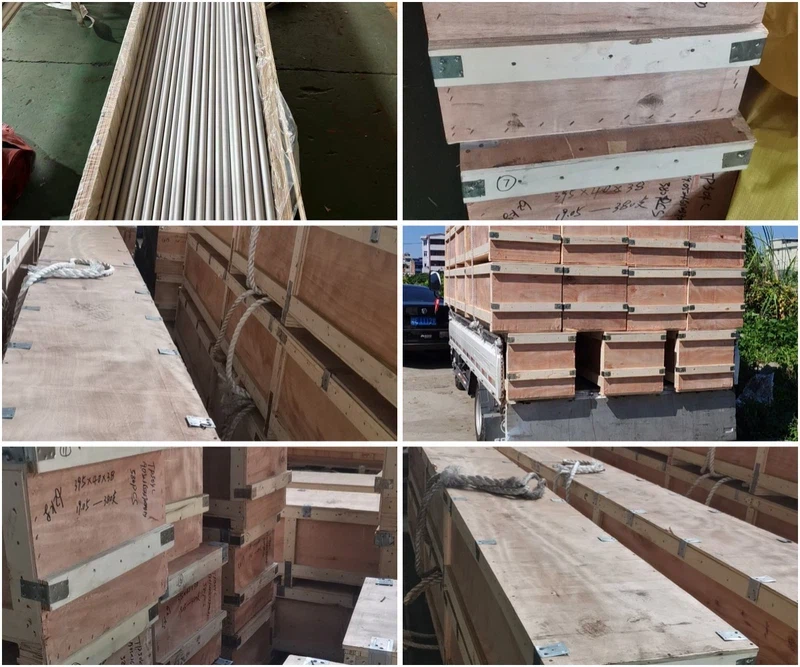
Gnee Steel specializes in the production of a wide range of stainless steel products. Gnee Steel's product packaging includes: Steel Strapping: Pipes with an outer diameter of 3 inches or less are typically strapped together with polypropylene film to prevent rust during ocean shipping, and then secured with steel strapping. Wooden Cases/Crates: Pipes are typically packaged in wooden cases or crates to protect the pipes during transportation, especially those that are longer or have larger diameters. Seaworthy Export Packaging: Suppliers typically use standard seaworthy export packaging methods, which may include a variety of materials and techniques to protect the pipes during transportation. Tarpaulin Packaging: This prevents rain, seawater, and other external factors from penetrating the export crates during transportation. Gnee Steel specializes in the production and sale of alloy materials. Gnee Steel's products are widely used in the aerospace, chemical, power, automotive, and nuclear energy sectors, and we can provide customized alloy material solutions based on customer needs. For alloy material pricing or customized alloy material solutions, please contact us for a quote: ru@gneesteelgroup.com


