


Which is better for food-grade stainless steel, 304 or 316?

Which is better for food-grade stainless steel, 304 or 316?
For most food-grade applications, 304 stainless steel is sufficient, while 316 stainless steel is better suited for environments involving contact with corrosive substances such as salt or acid. Both are safe for food contact, but due to the addition of molybdenum, 316 stainless steel offers superior corrosion resistance, making it ideal for more demanding environments such as marine applications, strong cleaning agents, or certain food processing involving acidic/alkaline ingredients.
What are the disadvantages of 304 stainless steel?
It has strong corrosion resistance and good mechanical properties, making it suitable for general applications. What are the disadvantages of 304 stainless steel? 304 stainless steel is not suitable for environments containing salt, chlorine, or strong chemicals. In marine or industrial environments, it may corrode.

304 stainless steel vs 316
Chemical composition
| Grade | C | Si | Mn | P | S | N | Cr | Ni | Mo |
|---|---|---|---|---|---|---|---|---|---|
| 304 | 0.07 | 1.00 | 2.00 | 0.045 | 0.015 | 0.10 | 17.5 - 19.5 | 8.0 - 10.5 | - |
| 316 | 0.07 | 1.00 | 2.00 | 0.045 | 0.015 | 0.10 | 16.5 - 18.5 | 10.0 - 13.0 | 2.0 - 2.5 |
304 Stainless Steel:
304 stainless steel is a general-purpose stainless steel with good corrosion resistance and processing properties, widely used in food, medical, and construction industries. Its main components are iron, chromium, and nickel, with a chromium content of at least 18% and a nickel content of at least 8%. This composition allows 304 stainless steel to maintain good stability in most environments.
Food Grade Stainless Steel 316
316 stainless steel is a high-chromium-nickel austenitic stainless steel alloy. Like many steel alloys, its continuous service temperature is far higher than the temperatures required for most food processing (above 800°C, or 1472°F).
The reason 316 alloy is an ideal material for food-grade steel sheets is its extremely high resistance to acids, alkalis, and chlorides (such as salts). Other austenitic stainless steels, such as 304 stainless steel, are prone to severe pitting corrosion when in contact with the salts commonly found in food.
316 stainless steel is an ideal material for manufacturing food-grade stainless steel containers and is suitable for almost all food applications.
When to Choose 304 Stainless Steel
Affordable: 304 stainless steel is relatively inexpensive, making it ideal for projects on a tight budget.
General Use: 304 stainless steel is well-suited for indoor or general applications where it will not come into contact with corrosive substances.
Food-Grade Equipment: 304 stainless steel is suitable for food handling and processing equipment where it will not come into contact with large amounts of chemicals.
When to Choose 316 Stainless Steel
Marine Environments: 316 stainless steel offers excellent resistance to seawater corrosion, making it ideal for coastal or marine applications.
Chemical or High-Chloride Environments: The added molybdenum gives it excellent resistance to pitting and crevice corrosion in environments containing salt or other corrosive chemicals.
High-Value Components: For components where failure is unacceptable, the added durability and corrosion resistance of 316 stainless steel provide superior long-term performance.
Medical Devices: 316 stainless steel is commonly used in medical devices where high levels of corrosion resistance and biocompatibility are required.
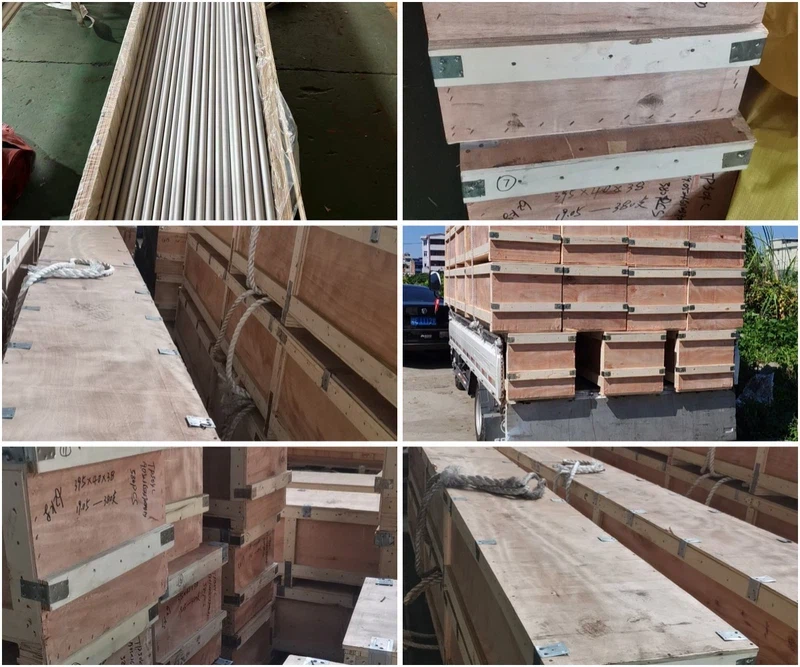
Gnee Steel specializes in the production of a wide range of stainless steel products. Gnee Steel's product packaging includes: Steel Strapping: Pipes with an outer diameter of 3 inches or less are typically strapped together with polypropylene film to prevent rust during ocean shipping, and then secured with steel strapping. Wooden Cases/Crates: Pipes are typically packaged in wooden cases or crates to protect the pipes during transportation, especially those that are longer or have larger diameters. Seaworthy Export Packaging: Suppliers typically use standard seaworthy export packaging methods, which may include a variety of materials and techniques to protect the pipes during transportation. Tarpaulin Packaging: This prevents rain, seawater, and other external factors from penetrating the export crates during transportation. Gnee Steel specializes in the production and sale of alloy materials. Gnee Steel's products are widely used in the aerospace, chemical, power, automotive, and nuclear energy sectors, and we can provide customized alloy material solutions based on customer needs. For alloy material pricing or customized alloy material solutions, please contact us for a quote: ru@gneesteelgroup.com


