


What is the difference between SS304 and SS316 steel plates?

What is the difference between SS304 and SS316 steel plates?
The main difference lies in the fact that SS316 sheet, due to the addition of molybdenum, has superior corrosion resistance, making it ideal for harsh environments such as marine or chemical plants; while SS304 sheet is more common, cheaper, and suitable for general uses such as indoor kitchen equipment or decorative elements. SS304 sheet also has slightly better welding and polishing properties and is more readily available.
What's the difference between 304 and 316L?
The main difference is that 316L contains molybdenum, which significantly enhances its corrosion resistance, especially in chloride-rich environments such as marine environments. 304, on the other hand, is a more versatile stainless steel, sufficient for many applications, and is also slightly less expensive. Both are classified as "L," meaning they have a lower carbon content, which improves weldability. However, due to the addition of molybdenum, 316L is a better choice for demanding or weldable applications.

This article delves into the differences between 304 and 316 stainless steel sheets, going beyond the performance parameters on paper to reveal their unique value in various industries such as food processing, construction, and pharmaceuticals. After reading this article, you will gain a wealth of knowledge to make more informed material choices for your next project.
Unveiling the Basic Composition
304 Stainless Steel
304 stainless steel, also known as 18-8 stainless steel, is a high-quality alloy composed of chromium and nickel. These alloying elements endow it with many excellent properties, such as good mechanical properties, non-magnetic properties, and excellent corrosion resistance in various atmospheric environments. However, the true essence of 304 stainless steel lies in its versatility. Due to its cost-effectiveness and suitability for most applications, it has become a reliable choice for many processors.
316 Stainless Steel
316 stainless steel, based on 304 stainless steel, adds molybdenum, elevating its corrosion resistance to a whole new level. The addition of molybdenum significantly enhances its resistance to pitting and crevice corrosion, especially in environments with high chloride ion concentrations common in marine or industrial settings. Although its structural strength is slightly lower than 304 stainless steel, the advantages of 316 stainless steel become more pronounced in situations where corrosion is the primary threat.
Facing the Most Harshest Environments
Marine Machinery
In the field of marine engineering, salt spray and humid environments constantly erode metal surfaces, threatening them with corrosion. 316 stainless steel is the ideal choice to meet this challenge. Choosing the wrong material can determine whether a ship's stabilizer will have a long and durable lifespan or become a maintenance nightmare.
Hygiene Standards in Food Production
Food-grade stainless steel is not just a suggestion, but a stringent requirement. Compliance with hygiene standards is closely related to material selection. 316 stainless steel resists various acidic substances present in foods and is easy to clean, thus securing its place in everyday tableware and equipment, ensuring food purity and corrosion resistance.
304 vs 316 Stainless Steel Plate Chemical Composition (Weight %)
| Grade | Carbon (C) Max | Silicon (Si) Max | Manganese (Mn) Max | Phosphorus (P) Max | Sulfur (S) Max | Nitrogen (N) Max | Chromium (Cr) | Nickel (Ni) | Molybdenum (Mo) |
|---|---|---|---|---|---|---|---|---|---|
| 304 | 0.07 | 1.00 | 2.00 | 0.045 | 0.015 | 0.10 | 17.5 - 19.5 | 8.0 - 10.5 | - |
| 316 | 0.07 | 1.00 | 2.00 | 0.045 | 0.015 | 0.10 | 16.5 - 18.5 | 10.0 - 13.0 | 2.0 - 2.5 |
Physical Properties of 304 Stainless Steel Plate
| Physical Property | Value |
|---|---|
| Melting Point | 1450 °C |
| Density | 8.00 g/cm³ |
| Thermal Expansion | 17.2 x 10⁻⁶ /K |
| Modulus of Elasticity | 193 GPa |
| Thermal Conductivity | 16.2 W/m·K |
Physical Properties of 316 Stainless Steel Sheet
| Physical Property | Value |
|---|---|
| Melting Point | 1400 °C |
| Density | 8.00 g/cm³ |
| Modulus of Elasticity | 193 GPa |
| Thermal Expansion | 15.9 x 10⁻⁶ /K |
| Thermal Conductivity | 16.3 W/m·K |
304 Stainless Steel Mechanical Properties
| Mechanical Property | Value |
|---|---|
| Tensile Strength | 500 - 700 MPa |
| Elongation A50 mm | 45 % Min |
| Hardness (Brinell) | 215 Max HB |
316 Stainless Steel Mechanical Properties
| Mechanical Property | Value |
|---|---|
| Tensile Strength | 400 - 620 MPa |
| Elongation A50 mm | 45 % Min |
| Hardness (Brinell) | 149 Max HB |
Why Choose Gnee Steel (Supplier Example)?
✅ Large stock of 304/316 stainless steel strip/coil, fast shipping.
✅ Factory direct sales, highly competitive prices, excellent value for money.
✅ Comprehensive quality assurance: Material Testing Certificate (MTC), Chemical Composition Certificate, and Mechanical Properties Certificate.
✅ Value-added services: Slitting, cutting, polishing, surface treatment.
✅ Worldwide shipping, secure and reliable packaging, and provision of export-required documentation.
Email: ru@gneesteelgroup.com
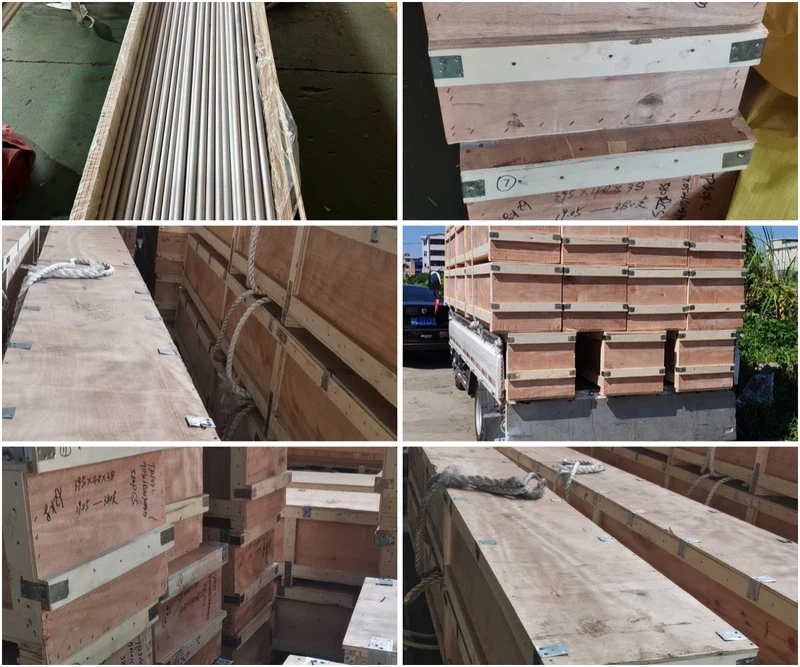
Gnee Steel specializes in the production of a wide range of stainless steel products. Gnee Steel's product packaging includes: Steel Strapping: Pipes with an outer diameter of 3 inches or less are typically strapped together with polypropylene film to prevent rust during ocean shipping, and then secured with steel strapping. Wooden Cases/Crates: Pipes are typically packaged in wooden cases or crates to protect the pipes during transportation, especially those that are longer or have larger diameters. Seaworthy Export Packaging: Suppliers typically use standard seaworthy export packaging methods, which may include a variety of materials and techniques to protect the pipes during transportation. Tarpaulin Packaging: This prevents rain, seawater, and other external factors from penetrating the export crates during transportation. Gnee Steel specializes in the production and sale of alloy materials. Gnee Steel's products are widely used in the aerospace, chemical, power, automotive, and nuclear energy sectors, and we can provide customized alloy material solutions based on customer needs. For alloy material pricing or customized alloy material solutions, please contact us for a quote: ru@gneesteelgroup.com


