


What are the differences between 440 stainless steel and 316 stainless steel
The main difference lies in their properties: 440 stainless steel is a high-carbon martensitic stainless steel, favored for its hardness and sharpness retention, making it ideal for knives and cutting tools; while 316 stainless steel is an austenitic stainless steel, with excellent corrosion resistance due to its high molybdenum content, suitable for marine and chemical applications. 440 stainless steel is magnetic and its hardness can be increased through heat treatment, but its corrosion resistance is poor; 316 stainless steel is non-magnetic, cannot be hardened through heat treatment, and has excellent corrosion resistance.
Can a magnet attract 316 stainless steel?
No. 316 stainless steel is normally non-magnetic because it belongs to the austenitic stainless steel family. However, after cold working or welding processes, it may become slightly magnetic. Its composition contains nickel and chromium, giving it high corrosion resistance and making it difficult to develop strong magnetism under normal conditions.

440 Stainless Steel Grade
440 stainless steel is primarily composed of 17% to 19% chromium, 1% manganese, 1% silicon, and trace amounts of molybdenum, copper, nitrogen, phosphorus, sulfur, and carbon. It is magnetic in both the annealed and quenched states. Due to its high chromium content, this grade exhibits excellent corrosion resistance. A disadvantage is its low nitrogen content, making it susceptible to seawater corrosion.
316 Stainless Steel Grade
316 stainless steel is primarily composed of 16% to 18% chromium and 11% to 14% nickel, with trace amounts of molybdenum, copper, nitrogen, phosphorus, and sulfur. Due to its high nickel content, it possesses excellent corrosion resistance, being more resistant to seawater corrosion than other grades (such as 440). However, its heat resistance is lower than other grades, therefore it may not be suitable for applications exceeding 800°F (427°C).
Differences between 440 and 316 Stainless Steel
Chemical Composition
One of the main differences between 316 and 440 stainless steel is their chemical composition. 316 stainless steel contains chromium, nickel, molybdenum, and manganese, while 440 stainless steel contains chromium and carbon.
Corrosion Resistance
Another key difference between these two stainless steels lies in their corrosion resistance. 316 stainless steel is more corrosion-resistant than 440 stainless steel. This is because 316 stainless steel contains molybdenum in its chemical composition.
Strength
440 stainless steel is stronger than 316 stainless steel. This is because 440 stainless steel has a higher carbon content.
Heat Resistance
440 stainless steel has higher heat resistance than 316 stainless steel. This is due to the higher carbon content of 440 grade stainless steel.
| Feature | 440 Stainless Steel | 316 Stainless Steel |
|---|---|---|
| Grade Type | Martensitic | Austenitic |
| Key Alloying Elements | High carbon, high chromium | Molybdenum, nickel, high chromium |
| Corrosion Resistance | Moderate; prone to rust | Excellent; superior in marine and acidic environments |
| Hardness | High (after heat treatment) | Moderate; cannot be significantly hardened by heat treatment |
| Strength | Very high tensile and yield strength (after heat treatment) | Moderate tensile and yield strength |
| Weldability | Poor | Excellent |
| Magnetic Properties | Magnetic | Non-magnetic |
| Typical Applications | Knives, cutting tools, bearings, surgical instruments | Marine equipment, chemical processing equipment, medical implants |
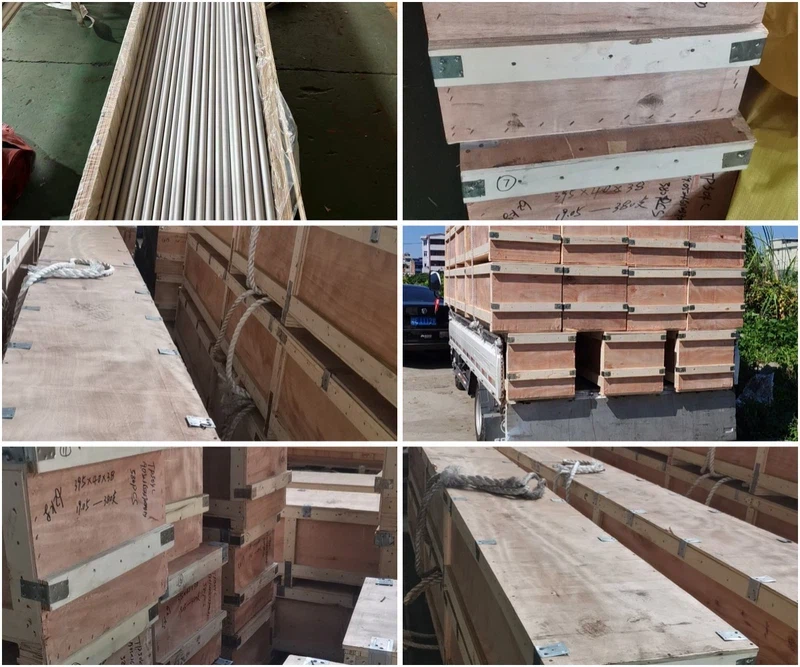
Gnee Steel specializes in the production of a wide range of stainless steel products. Gnee Steel's product packaging includes: Steel Strapping: Pipes with an outer diameter of 3 inches or less are typically strapped together with polypropylene film to prevent rust during ocean shipping, and then secured with steel strapping. Wooden Cases/Crates: Pipes are typically packaged in wooden cases or crates to protect the pipes during transportation, especially those that are longer or have larger diameters. Seaworthy Export Packaging: Suppliers typically use standard seaworthy export packaging methods, which may include a variety of materials and techniques to protect the pipes during transportation. Tarpaulin Packaging: This prevents rain, seawater, and other external factors from penetrating the export crates during transportation. Gnee Steel specializes in the production and sale of alloy materials. Gnee Steel's products are widely used in the aerospace, chemical, power, automotive, and nuclear energy sectors, and we can provide customized alloy material solutions based on customer needs. For alloy material pricing or customized alloy material solutions, please contact us for a quote: ru@gneesteelgroup.com


