


What are the differences between 410 stainless steel and 316 stainless steel?

What are the differences between 410 stainless steel and 316 stainless steel?
The main difference lies in the type of stainless steel. 410 stainless steel is a hardenable martensitic stainless steel with good strength and moderate corrosion resistance, while 316 stainless steel is a non-hardenable austenitic stainless steel with superior corrosion resistance, especially in harsh or chemical environments. 410 stainless steel is magnetic and less expensive, while 316 stainless steel (in the annealed state) is non-magnetic, more expensive, but performs better at high temperatures.
What are the uses of 410 stainless steel?
Common applications of 410 stainless steel include: Cutlery and kitchenware: Due to its combination of strength, hardness, and corrosion resistance, it is commonly used in the manufacture of knives and kitchenware. Fasteners and bolts: Its strength makes it ideal for screws, bolts, and other fasteners in mild environments.

316 vs 410 stainless steel properties
| Grade | C | Cr | Fe | Mn | Mo | Ni | N | P | Si | S |
| 316 | 0-0.08 | 16.0-18.0 | 62.0-72.0 | 0-2.0 | 2.0-3.0 | 10.0-14.0 | 0-0.1 | 0-0.045 | 0-0.75 | 0-0.03 |
| 410 | 0.08-0.15 | 11.5-13.5 | 83.5-88.4 | 0-1.0 | 0 | 0-0.75 | 0 | 0-0.040 | 0-1.0 | 0-0.03 |
Comparison of Corrosion Resistance between 316 and 410 Stainless Steel
Chromium content is a crucial factor in determining the corrosion resistance of alloy steel. 316 stainless steel contains 16%–18% chromium, while 410 stainless steel contains approximately 11.5%–13.5%. Therefore, 316 stainless steel exhibits superior corrosion resistance compared to 410 stainless steel. However, 410 stainless steel contains at least 11.5% chromium, sufficient to provide a certain level of corrosion resistance. After quenching and tempering, it can achieve quite good corrosion resistance.
316 vs 410 stainless steel tensile strength
| Hardness | Break elongation | Fatigue strength | Tensile strength | Yield Strength | |
| 316 | 160-360 | 8.0-55.0 | 210-430 | 520-1180 | 230-850 |
| 410 | 190-240 | 16.0-22.0 | 190-350 | 520-770 | 290-580 |
Applications of 316 and 410 Stainless Steel
Applications of 316 Stainless Steel
Stainless Steel Pipes and Wear-Resistant Pipes
Marine Components
Chemical Industry
Pharmaceutical and Medical Equipment
High-Temperature Casting
Structural Steel and Forgings for Marine Environments
Applications of 410 Stainless Steel
Kitchen Utensils (Knives and Forks)
Household Appliances
Decorative Applications
Automotive Exhaust Systems
Bolts and Nuts
Pump Rods
| Feature | 410 Stainless Steel | 316 Stainless Steel |
|---|---|---|
| Grade Type | Martensitic | Austenitic |
| Hardening | Hardens by heat treatment | Cannot be hardened by heat treatment |
| Strength & Hardness | High strength and hardness achievable through heat treatment | Lower hardness than heat-treated 410; strength achieved through work hardening |
| Corrosion Resistance | Moderate; can rust in humid environments | Superior, especially against salt and chemicals |
| High-Temperature Performance | Lower resistance to high temperatures | Better resistance to high temperatures due to molybdenum content |
| Magnetism | Magnetic | Generally non-magnetic (in its annealed state) |
| Cost | More affordable | More expensive due to higher content of alloying elements like nickel and molybdenum |
| Typical Uses | General-purpose, high-strength applications like cutlery, knives, and tools | Marine, chemical processing, and medical applications |
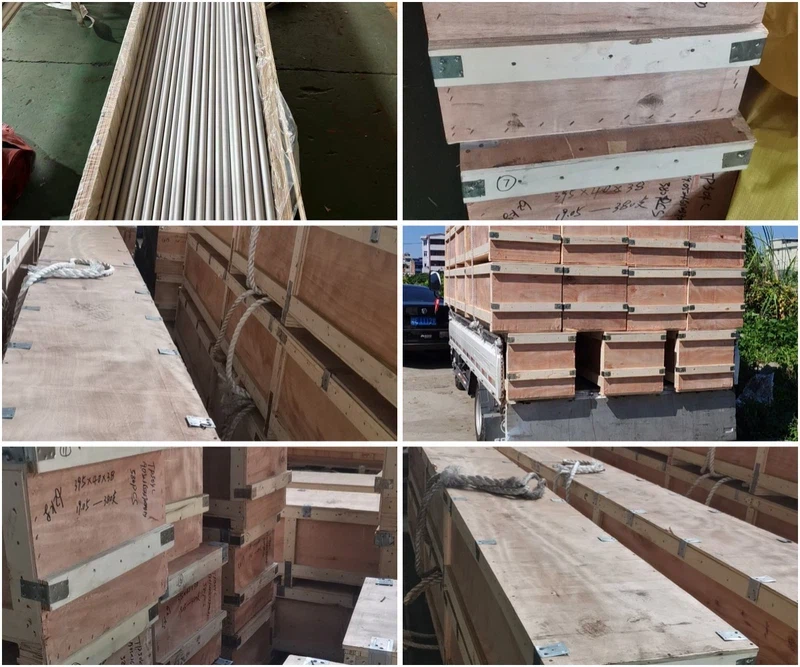
Gnee Steel specializes in the production of a wide range of stainless steel products. Gnee Steel's product packaging includes: Steel Strapping: Pipes with an outer diameter of 3 inches or less are typically strapped together with polypropylene film to prevent rust during ocean shipping, and then secured with steel strapping. Wooden Cases/Crates: Pipes are typically packaged in wooden cases or crates to protect the pipes during transportation, especially those that are longer or have larger diameters. Seaworthy Export Packaging: Suppliers typically use standard seaworthy export packaging methods, which may include a variety of materials and techniques to protect the pipes during transportation. Tarpaulin Packaging: This prevents rain, seawater, and other external factors from penetrating the export crates during transportation. Gnee Steel specializes in the production and sale of alloy materials. Gnee Steel's products are widely used in the aerospace, chemical, power, automotive, and nuclear energy sectors, and we can provide customized alloy material solutions based on customer needs. For alloy material pricing or customized alloy material solutions, please contact us for a quote: ru@gneesteelgroup.com


