


316 stainless steel and 304 stainless steel

The difference between the application of 316 stainless steel and 304 stainless steel
316 stainless steel is often preferred over 304 stainless steel in applications requiring higher corrosion resistance, particularly in chloride-rich environments such as marine environments or chemical processing. While 304 stainless steel is widely used for general purposes, the addition of molybdenum to 316 stainless steel significantly enhances its corrosion resistance, making it suitable for more severe service conditions.
What are the applications of 304 stainless steel?
304 stainless steel is widely used across a wide range of industries due to its excellent corrosion resistance, good mechanical properties, and ease of processing. Common applications include kitchenware, food processing equipment, building components, chemical and petroleum industry equipment, and automotive and aerospace components.

316 stainless steel Vs 304 stainless steel

Common Applications
Understanding the uses and reasons for using 304 or 316 stainless steel can help make your decision easier. Each stainless steel grade offers advantages in different applications-based not only on cost but also on environmental exposure, sanitary standards, and structural requirements.
Let's look at common real-world applications for each stainless steel grade.
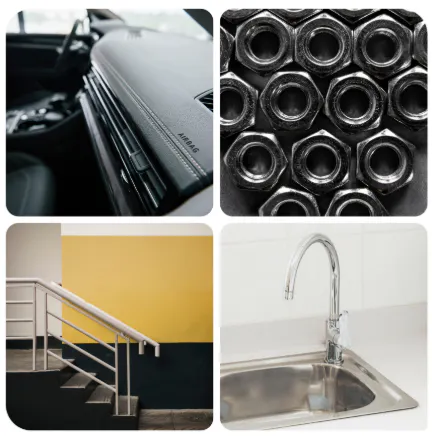
Applications of 304 stainless steel
Often referred to as the "workhorse" of stainless steel, 304 is used across countless industries thanks to its balance of strength, corrosion resistance, and affordability.
Common uses of stainless steel, like 304, include:
Kitchen equipment: Sinks, countertops, splashbacks, tableware
Food and beverage production: Brewing vessels, milk tanks, storage silos
Architectural and structural components: Railings, handrails, decorative panels
Household hardware: Door handles, brackets, bolts and fasteners
Automotive trim: Especially in dry environments
Applications of 316 stainless steel
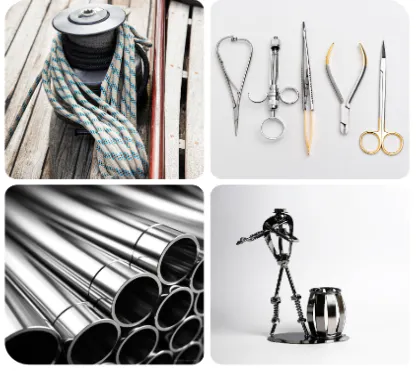
When performance in pressure (or saline) environments is uncompromising, 316 stainless steel excels. Its exceptional corrosion resistance, particularly against chlorides, makes it a top choice in marine, medical, and chemical environments.
Common uses for 316 and other stainless steels include:
Marine components: Ship accessories, dock hardware, propeller shafts
Medical devices: Surgical instruments, orthopedic implants
Chemical processing equipment: Storage tanks, valves, pipelines
Pharmaceutical and food processing: Clean room, sanitary pipes
Outdoor structures: Exposed fasteners, sculptures, fences in coastal or industrial areas
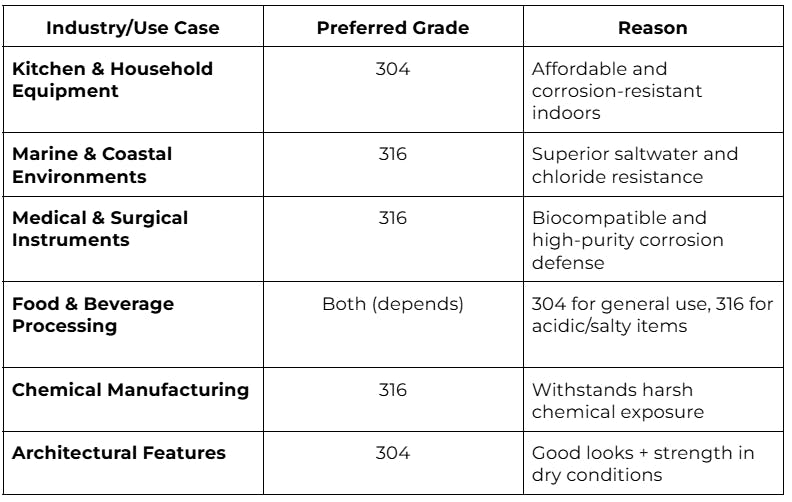
Application Comparison Table

Gnee Steel specializes in the production of a variety of stainless steel products. Gnee Steel's product packaging includes steel strapping: Pipes with an outer diameter of 3 inches or less are typically strapped together with polypropylene film to prevent rust during sea transportation, and then secured with steel strapping. Wooden boxes/crates: Pipes are typically packaged in wooden boxes or crates to protect them during transportation, especially those that are longer or have larger diameters. Seaworthy export packaging: Suppliers typically use standard seaworthy export packaging methods, which may include a variety of materials and techniques to protect the pipes during transportation. Tarpaulin packaging: This prevents rain, seawater, and other external factors from penetrating the export wooden crates during transportation. Gnee Steel specializes in the production and sale of alloy materials. Gnee Steel's products are widely used in the aerospace, chemical, power, automotive, and nuclear energy sectors, and we can provide customized alloy material solutions based on customer needs. For alloy material pricing inquiries or customized alloy material solutions, please contact us for a quote at ru@gneesteelgroup.com


