


316 stainless steel and 304 stainless steel
Gnee Steel
What is the difference between 316 stainless steel and 304 stainless steel
The main difference between 304 and 316 stainless steel is the addition of molybdenum to 316, which enhances its corrosion resistance, particularly against chlorides. While both are austenitic stainless steels, 316 is generally more expensive due to its higher molybdenum content and is better suited for harsh environments such as marine or chemical processing.

Gnee Steel
What are the disadvantages of 316 stainless steel?
While 316 stainless steel offers excellent corrosion resistance, it does have some drawbacks. The main drawbacks are its higher cost compared to other grades, such as 304, and its poorer machinability and formability. It is also susceptible to stress corrosion cracking in certain harsh environments.

316 stainless steel Vs 304 stainless steel
The basics: What's in the mix?
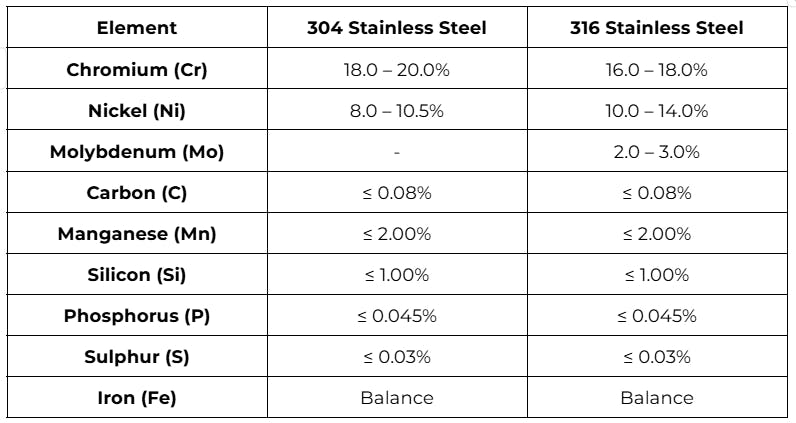
Both 304 and 316 stainless steel are iron-based alloys with added chromium and nickel, which impart unique corrosion resistance and mechanical strength. However, the difference between them lies in one key element: molybdenum.
304 stainless steel contains 18-20% chromium and 8-10.5% nickel, giving it excellent corrosion resistance.
316 stainless steel incorporates 2-3% molybdenum, significantly improving its resistance to chlorides, salt water, and industrial chemicals.
This small amount of molybdenum can have a significant impact, often determining which grade of stainless steel is best suited for harsher environments.
Mechanical Properties
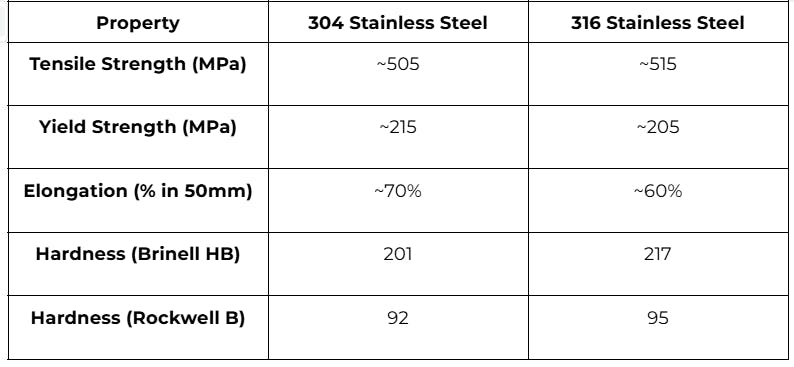
While composition reveals the makeup of each stainless steel, mechanical properties tell us how it performs under pressure-critical when selecting materials for manufacturing, construction, or high-load applications.
Both 304 and 316 stainless steel are known for their exceptional mechanical properties, especially compared to mild steel or ferritic stainless steels. However, subtle differences can help engineers and designers select the most efficient and durable material for their projects.
Corrosion Resistance
If there's one area where 316 stainless steel truly shines, it's here.
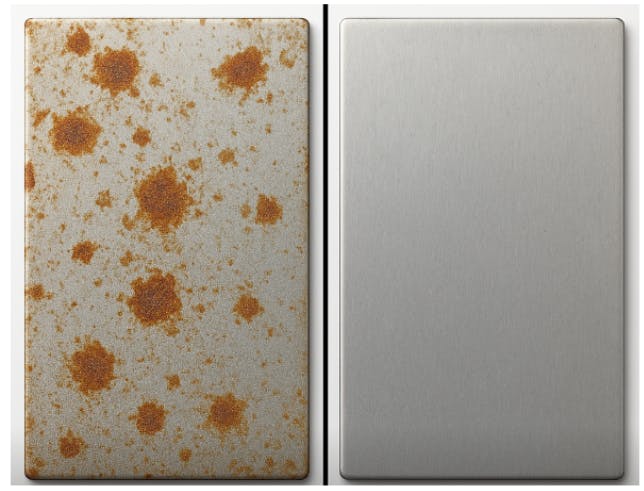
While both 304 and 316 stainless steel are extremely resistant to rust and corrosion, the inclusion of molybdenum in 316 stainless steel significantly improves its performance in corrosive environments, particularly those containing chlorides (such as salt water) and harsh chemicals.
A side-by-side comparison of 304 and 316 stainless steel in a salt spray test:
304: General Corrosion Resistance
304 stainless steel offers excellent corrosion resistance to the following environments:
Most oxidizing acids
Everyday environmental conditions (humidity, rain)
Exposure to food and beverages
It performs well in both indoor applications and mild outdoor environments and is a top choice for the following applications:
Kitchen appliances
Food processing equipment
Building structures
Storage tanks
Limitations: 304 stainless steel is more susceptible to pitting corrosion in chloride-rich environments, such as seawater, road salt, or poolside applications.
316: Superior Resistance in Harsh Conditions
Due to its 2-3% molybdenum content, 316 withstands:
Saltwater and marine environments
Industrial chemicals (acids, chlorides, alkalis)
De-icing salts and road chemicals
This makes 316 an ideal choice for the following applications:
Marine components (ship fittings, dock fasteners)
Chemical processing equipment
Outdoor enclosures in coastal or polluted areas
Medical and pharmaceutical equipment (where contamination is a concern)
Added benefit: 316 is also more resistant to crevice corrosion and stress corrosion cracking than 304-a key advantage in highly stressed or underwater environments.

Gnee Steel specializes in the production and sale of a wide range of stainless steel products, including 304, 316, 321, 904, 904L, duplex 2205, 2205, and 316L stainless steel. Gnee Steel's products are widely used in aerospace, chemical, power, automotive, and nuclear energy sectors, and we offer customized stainless steel solutions tailored to customer needs. For stainless steel pricing inquiries or customized alloy solutions, please contact us for a quote at ru@gneesteelgroup.com.


