


ASME SA312 TP321H high-frequency welded finned tubes are high-performance heat exchanger components made from high-carbon, titanium-stabilized stainless steel (321H) with fins welded to the tube surface. They are suitable for high-temperature and high-pressure applications due to their enhanced high-temperature strength, creep resistance, and excellent corrosion resistance. The fins significantly increase the heat transfer area, making them highly efficient in applications such as power generation, chemical processing, and oil and gas.

What is the difference between A312 and SA312?

ASME SA12 pipe is a grade of pressure vessel piping designed for high-pressure, high-temperature equipment. These pipes offer excellent strength and are resistant to bending or deformation under any conditions. This grade of ASTM A312 seamless pipe is a high-strength component manufactured through an extrusion process.
ASME SA312 TP321H High-Frequency Welded (HFW) Finned Tube
The ASME SA312 TP321H High-Frequency Welded (HFW) finned tube is a high-performance heat transfer component designed for extreme industrial environments. It combines the exceptional high-temperature strength and corrosion resistance of ASME SA312 TP321H stainless steel with the superior thermal efficiency of integrally welded fins. This makes it a key solution for demanding applications such as power generation, petrochemicals, and process heating.
321H is a high-carbon austenitic stainless steel grade: the "H" designates the high carbon content (0.04–0.10%), which increases its high-temperature strength. Key alloying element: titanium (Ti). This is a crucial stabilizer, preventing chromium carbide precipitation at high temperatures (450-900°C / 842-1652°F), which in turn prevents sensitization and intergranular corrosion.
Chemical Composition(%)
| TP321H Chemical Composition(%) | ||||||
| Element | C | Si | Cr | Mn | Ni | Ti |
| Range | 0.04-0.10 | ≤0.75 | 17.00-19.00 | ≤2.00 | 9.00-123.00 | 4*C-0.7 |
Mechanical Properties
| ASME SA312 TP321H Mechanical Properties | |||
| Tensile Strength | Yield Strength | Hardness | Elongation |
| 515MPa | ≥205MPa | ≤ 192HB | ≥35% |
Equivalent Material of TP321H
| ASTM/AISI | UNS NO | EN | ISO | JIS | GOST |
| TP321H | UNS32109 | 1.4874 | X7CrNiTi18-10 | SUS 321H | 08Ch18N12T |
Advantages of HFW finned tubes:
1. Stronger Bond: Metallurgical fusion technology provides superior resistance to vibration, thermal cycling, and fin peeling.
2. Higher Efficiency: Eliminates air gaps and flux residue, improving heat transfer efficiency by 5-15% compared to rolled or brazed finned tubes.
3. Material Flexibility: Can weld dissimilar metals (e.g., stainless steel to carbon steel) without requiring ductility or specific alloys.
4. Higher Durability: Withstands high temperatures (800-850°C) and pressure without brazing softening or stress cracking.
5. Lower Lifecycle Cost: High-speed production and a 2-3x longer service life reduce total cost of ownership.
ASME SA312 TP321H High-Frequency Welded (HFW) Finned Tube Applications
1. Power Generation: Boiler superheaters, reheaters, economizers, and air preheaters in coal-fired and combined cycle power plants. 2. Petrochemical and Refining: Heat exchangers in catalytic reforming, hydrocracking, and ethylene pyrolysis furnaces; feed gas coolers.
3. Industrial Furnaces: Convection sections, radiant tubes, and waste heat recovery units in chemical, steel, and glass manufacturing.
4. Waste Heat Recovery Systems: Capture and reuse energy from high-temperature exhaust gases.
Manufacturing and Construction
High-Frequency Electric Resistance Welding (HFERW): The fins are continuously welded to the base tube using high-frequency resistance welding.
Welding Process: A high-frequency current is introduced into the contact surface of the tube and fin, heating them to their melting or semi-melting point. Pressure is then applied, completing the weld without the use of flux or solder.
Construction: This process creates a strong, reliable, and continuous thermal connection between the tube and fin, maximizing heat transfer efficiency.
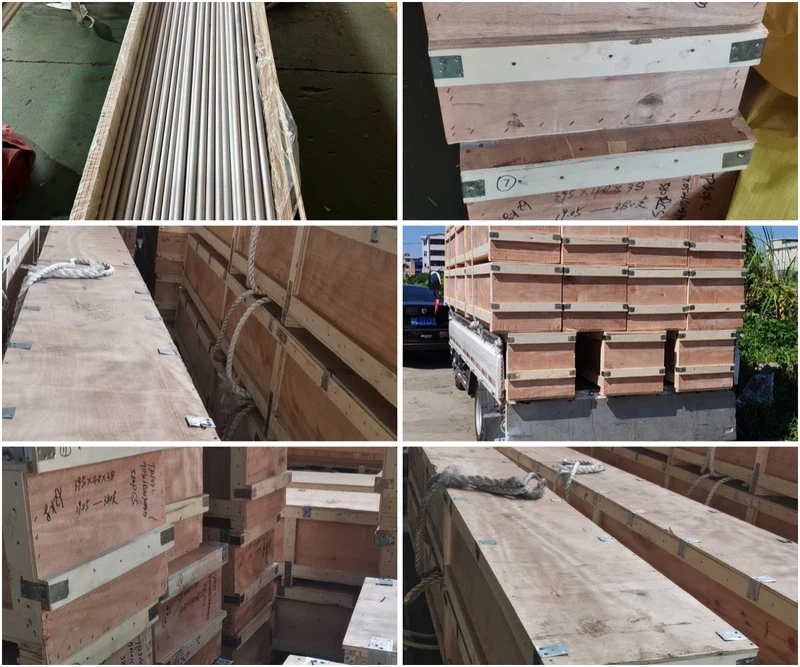
Gnee Steel specializes in the production of a wide range of stainless steel products. Gnee Steel's product packaging includes: Steel Strapping: Pipes with an outer diameter of 3 inches or less are typically strapped together with polypropylene film to prevent rust during ocean shipping, and then secured with steel strapping. Wooden Cases/Crates: Pipes are typically packaged in wooden cases or crates to protect the pipes during transportation, especially those that are longer or have larger diameters. Seaworthy Export Packaging: Suppliers typically use standard seaworthy export packaging methods, which may include a variety of materials and techniques to protect the pipes during transportation. Tarpaulin Packaging: This prevents rain, seawater, and other external factors from penetrating the export crates during transportation. Gnee Steel specializes in the production and sale of alloy materials. Gnee Steel's products are widely used in the aerospace, chemical, power, automotive, and nuclear energy sectors, and we can provide customized alloy material solutions based on customer needs. For alloy material pricing or customized alloy material solutions, please contact us for a quote: ru@gneesteelgroup.com


