


304 stainless steel vs. 316 stainless steel: Which is more suitable for marine applications?
316 stainless steel is better suited for marine applications because it contains molybdenum, giving it excellent resistance to seawater and chloride corrosion; while 304 stainless steel is suitable for general-purpose applications with relatively lower environmental requirements. The main difference is that 316 stainless steel contains 2-3% molybdenum, which enhances its corrosion resistance, making it ideal for marine fittings and coastal equipment. 304 stainless steel is cheaper, but it is more susceptible to corrosion in chloride-rich environments such as seawater.
Which is better for food-grade stainless steel: 304 or 316?
For general food-grade applications, 304 is a suitable and economical choice. However, if the food processing environment involves high salinity, corrosive chemicals, or frequent exposure to high temperatures, 316 is better. The advantage of 316 stainless steel lies in its molybdenum content, which significantly improves its corrosion resistance, especially its resistance to pitting and crevice corrosion.

304 Stainless Steel vs. 316 Stainless Steel: Which is Better for Marine Applications?
Given the harsh conditions of marine environments, selecting the right stainless steel for marine applications is crucial. 304 and 316 stainless steels are two of the most frequently discussed choices, each offering unique advantages depending on the specific application. This article will delve into the key differences between the two, focusing on corrosion resistance, durability, and cost-all important considerations for ships and marine equipment.
Composition and Corrosion Resistance
The main difference between 304 and 316 stainless steel lies in their composition. Both steels consist of iron, chromium, and nickel, but 316 stainless steel contains an additional 2-3% molybdenum. This key element significantly improves its corrosion resistance, especially in chloride-rich environments such as seawater.
304 Stainless Steel: Contains approximately 18% chromium and 8-10% nickel. More prone to pitting corrosion when exposed to chlorides.
316 Stainless Steel: Contains molybdenum, making it a marine-grade stainless steel with excellent resistance to seawater corrosion.
Durability and Strength
In terms of strength, 316 stainless steel is superior because the molybdenum content enhances its toughness and durability under extreme marine conditions. This makes it ideal for applications such as:
Marine hardware, such as bollards, shackles, and rigging.
Marine fittings requiring long-term exposure to seawater.
Although 304 stainless steel has high strength, it is more suitable for fresh water or indoor environments because the corrosion problems caused by chlorides are less in these environments.
Applications in the Marine Industry
For marine industry professionals and ship owners, the choice between 304 and 316 stainless steel depends on the intended use of the steel:
316 stainless steel is best suited for marine components such as hinges, propeller shafts, and deck fittings, as well as structures like docks and marinas.
304 stainless steel is suitable for interior fittings or components exposed to fresh water.
Which is better suited for marine applications?
316 stainless steel is the better choice for marine applications. Its lower molybdenum content makes it more resistant to corrosion from seawater and chlorides, which can cause pitting and rust in 304 stainless steel.
While 304 is cheaper and more readily available, it requires more maintenance and has a shorter service life in marine environments compared to 316.
316 offers greater durability and lower maintenance costs, making it a better long-term investment for marine hardware, fittings, and other equipment exposed to wave spray and seawater.
Why Choose Gnee Steel (Supplier Example)?
✅ Large stock of 304/316 stainless steel strip/coil, fast shipping.
✅ Factory direct sales, highly competitive prices, excellent value for money.
✅ Comprehensive quality assurance: Material Testing Certificate (MTC), Chemical Composition Certificate, and Mechanical Properties Certificate.
✅ Value-added services: Slitting, cutting, polishing, surface treatment.
✅ Worldwide shipping, secure and reliable packaging, and provision of export-required documentation.
Email: ru@gneesteelgroup.com
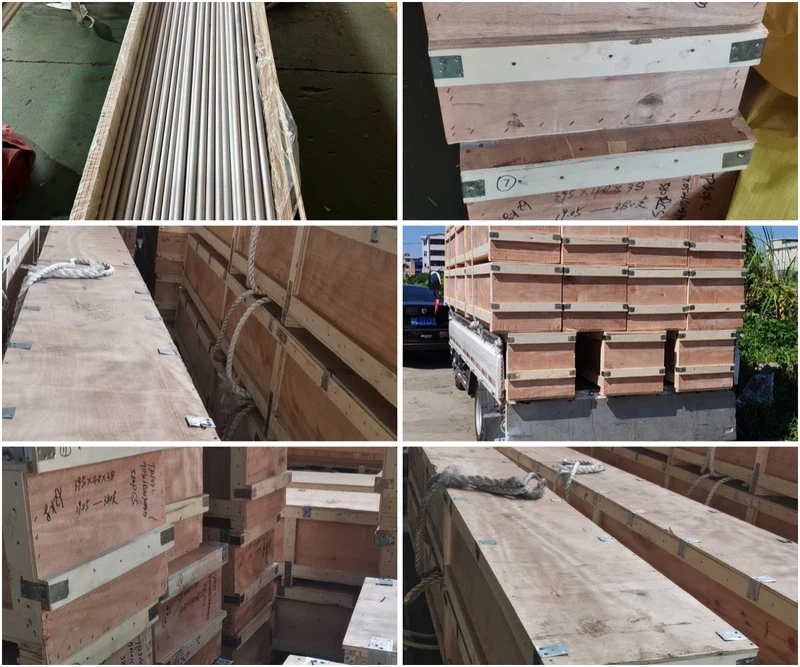
Gnee Steel specializes in the production of a wide range of stainless steel products. Gnee Steel's product packaging includes: Steel Strapping: Pipes with an outer diameter of 3 inches or less are typically strapped together with polypropylene film to prevent rust during ocean shipping, and then secured with steel strapping. Wooden Cases/Crates: Pipes are typically packaged in wooden cases or crates to protect the pipes during transportation, especially those that are longer or have larger diameters. Seaworthy Export Packaging: Suppliers typically use standard seaworthy export packaging methods, which may include a variety of materials and techniques to protect the pipes during transportation. Tarpaulin Packaging: This prevents rain, seawater, and other external factors from penetrating the export crates during transportation. Gnee Steel specializes in the production and sale of alloy materials. Gnee Steel's products are widely used in the aerospace, chemical, power, automotive, and nuclear energy sectors, and we can provide customized alloy material solutions based on customer needs. For alloy material pricing or customized alloy material solutions, please contact us for a quote: ru@gneesteelgroup.com


