


GH3030 is a nickel-based solid-solution strengthened high-temperature alloy (formerly known as GH30), featuring a chromium content of 19% to 22%, a nickel matrix, and minor additions of titanium and aluminum. It lacks precipitation-hardening capability, instead deriving its performance from solid-solution strengthening.
It exhibits good oxidation resistance below 800°C (with a short-term service temperature up to approximately 1000°C), stable microstructure at high temperatures, good plasticity, ease of processing, and weldability, making it a well-established and mature superalloy widely applied in the aerospace and industrial fields.
Contact us for the latest export price quote for GH3030 Alloy
GH3030 Nickel Alloy Equivalent Material
| Standard | GB/T 15062 |
| Material | GH3030 (GH 30) |
| Equivalent Material | ЗИ435,XH78T |
GH3030 Nickel Alloy Chemistry Composition
|
C |
Cr |
Ni |
Ti |
Al |
Fe |
Mn |
Si |
P |
S |
|
≤0.12 |
19.0~22.0 |
Balance |
0.15~0.35 |
≤0.15 |
≤1.5 |
≤0.7 |
≤0.8 |
≤0.03 |
≤0.02 |
GH3030 Nickel Alloy Mechanical Properties
|
Yield Rp0.2, Mpa |
Tensile Rm, MPa |
Impact KV/Ku, J |
Elongation, |
Reduction in cross section on fracture,Z% |
As-Heat-Treated Condition |
Brinell hardness, HBW |
|
963 (≥) |
953 (≥) |
33 |
23 |
33 |
Solution and Aging, Annealing, Ausaging, Q |
424 |
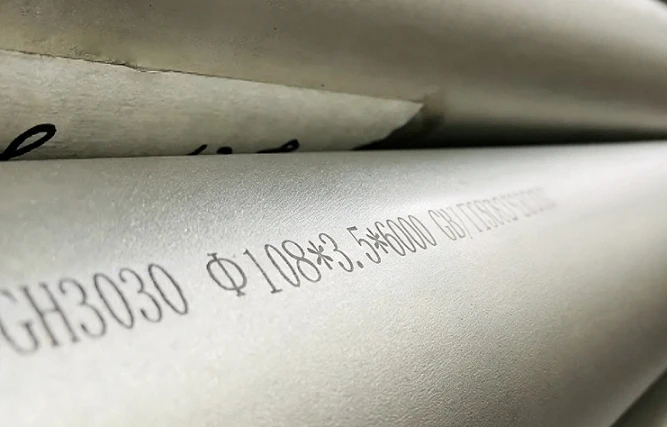
Heat Treatment Status of GH3030 High-Temperature Nickel-Based Alloy
GH3030 is supplied and used in the solid-solution state: solution treatment is conducted at approximately 980 to 1020°C (commonly around 1000°C), followed by rapid cooling or air cooling after holding to ensure a uniform microstructure and high plasticity. The alloy cannot be precipitation-hardened, and its microstructure remains stable at service temperatures. It exhibits excellent weldability, and specialized post-weld heat treatment is generally unnecessary.
How to distinguish solution-treated and cold-worked GH3030?
GH3030 (UNS N06030, W.Nr.2.4640) is a nickel-chromium alloy widely used for high-temperature components. Many buyers receive materials with ambiguous delivery conditions, which leads to failed forming, cracking and performance non-compliance. Below is the clear difference between solution-treated state and cold-worked state.
Solution-treated GH3030 is produced by heating the alloy to 980–1020℃, holding for sufficient time then rapid air or water quenching. This process dissolves precipitated phases and releases internal residual stress. It features low hardness (typically ≤220 HV), high elongation and excellent ductility. It suits bending, deep drawing and complex fabrication for furnace parts and combustion liners.
Cold-worked GH3030 is formed by cold rolling or cold drawing after solution annealing. Plastic deformation refines grains and raises dislocation density. Its hardness rises to 260–360 HV, tensile strength increases obviously, while elongation drops sharply. It is selected when higher strength is required, but not recommended for heavy forming or bending.
You can identify them through three practical inspection methods. First, check MTC: the certificate must mark delivery condition clearly. Second, hardness test is the fastest on-site screening method. Third, metallographic test can verify grain structure; solution-treated material shows uniform equiaxed grains, while cold-worked material presents elongated deformed grain texture.
Improper state selection brings direct risks. If cold-worked GH3030 is mistakenly used for U-bending, cracks easily occur at bending sections. If solution-treated material is used for structural parts requiring high rigidity, the component may deform under sustained load. Confirm the delivery condition before order placement. Send your drawing and working condition to ss@gneesteel.com, we provide GH3030 with specified heat treatment and full test reports.
Common Specifications for GH3030
GH3030 (formerly GH33) is a solid-solution strengthened nickel-based superalloy manufactured in accordance with GB/T 14992. The tables below list standard available sizes by product form. Non-standard dimensions, tolerances and heat treatment conditions outside the scope can be customized upon request.
Table 1: GH3030 Round Bar Size Specification
| Product Type | Diameter Φ (mm) | Standard Single Length | Surface Condition | Remarks |
|---|---|---|---|---|
| Bright Ground Bar | Φ6 ~ Φ150 | 2000–6000 mm, cut-to-length available | Ground, polished | Tight tolerance for precision machining parts |
| Hot Rolled Black Bar | Φ150 ~ Φ300 | 1000–4000 mm, cut-to-length available | Hot rolled, pickled | Large rolled blank for machining; larger diameters negotiable |
Table 2: GH3030 Plate & Strip Size Specification
| Product Type | Thickness (mm) | Width Range (mm) | Length Range (mm) | Surface Condition |
|---|---|---|---|---|
| Cold Rolled Sheet / Strip | 0.1 ~ 3.0 | 100 ~ 1200 | 500 ~ 3000; strip supplied in coil form | Solution annealed & pickled, bright annealed |
| Hot Rolled Medium & Heavy Plate | 3.0 ~ 30.0 | 200 ~ 1500 | 500 ~ 4000 | Hot rolled + pickled, edge milling available |
Table 3: GH3030 Seamless Tube Size Specification
| Product Type | Outer Diameter Φ (mm) | Wall Thickness (mm) | Standard Single Length | Remarks |
|---|---|---|---|---|
| Cold Drawn Precision Seamless Tube | Φ6 ~ Φ219 | 0.8 ~ 12 | 2000–6000 mm, U-bend tube custom | Regular stock sizes with high dimensional accuracy |
| Hot Extruded Large Diameter Seamless Tube | >Φ219 (custom on request) | 3.0 ~ 25 | Custom cut-to-length | Non-standard large sizes, made to order |
Table 4: Other Product Forms: Forgings, Wire & Welding Consumables
| Product Form | Supply Description |
|---|---|
| Forgings | Rings, blocks, special-shaped forgings, drawing-based customization, NDT supported |
| Wire | Φ0.1~8.0 mm, soft / hard condition, straight wire or coiled wire |
| Welding Consumables | Matching welding wire and electrodes for GH3030, customized per welding procedure |
GH3030 High-temperature Alloy Working Conditions & Typical Applications
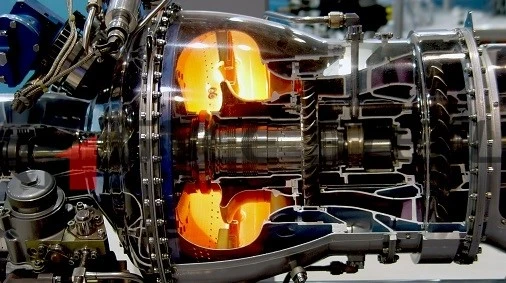
Aero-engine combustion chamber, afterburner and flame tube
Oxidation resistance below 800℃. It runs steadily under cyclic heat load of 700–800℃, tolerates short-term peak temperature up to 1100℃. Applied for flame liners, heat shields and stabilizers. Its Cr₂O₃ scale keeps oxidation rate below 0.12 mm per 1000 h for thin-walled welded components.
Petrochemical high-temperature furnace tubes and internal furnace parts
High-temperature oxidation resistance. It serves continuously at 650–850 ℃ in flue gas with trace sulfur. It resists oxide spalling and gas erosion for cracking furnace supports and radiant liners with 1000-hour stable service life.
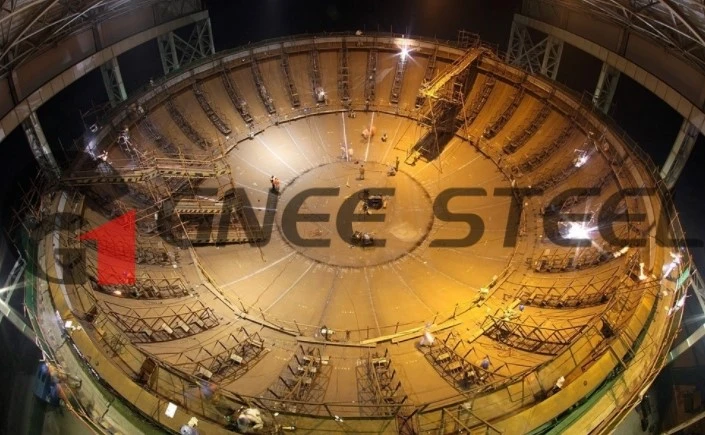
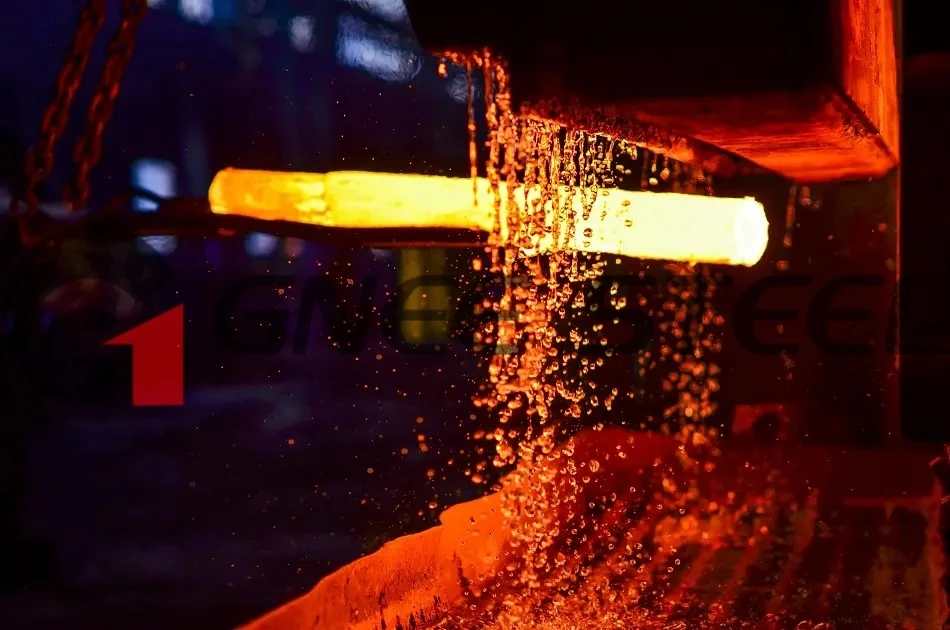
Heat treatment tooling and heater supports
Repeated heating & cooling cycles. It withstands thousands of thermal shocks between 300 ℃ and 900 ℃. Good thermal shock resistance reduces cracking and distortion for furnace trays, baskets and radiant tube brackets.
Gas turbine and boiler heat-resistant parts
Medium & high-temperature service. Used for gas turbine chamber liners and boiler heat shields under continuous temperature ≤800 ℃. The alloy maintains stable microstructure and controlled creep rate for lightly loaded thermal shielding parts.

Attention to GH3030 alloy welding
1. Welding material selection
Selection of suitable welding wire and flux is very important for the welding of GH3030. Commonly used welding wire materials are ERNiCrMo-3, flux can choose the type of magnesium oxide flux without alumina-magnesate. At the same time, it is also necessary to choose according to the specific welding method and conditions.
2. Welding method
GH3030 alloy welding can be used in a variety of ways, such as TIG (tungsten argon arc welding), MIG (metal inert gas shielded welding) and arc welding. Specific welding methods need to be selected according to the welding object and the need to meet the requirements.
3. Welding process control
In the welding process, you need to control the heat input, welding speed and protective atmosphere and other parameters to ensure the quality of welded joints. At the same time, it is also necessary to carry out appropriate preheating and post-heat treatment to reduce the residual stress of welded joints and improve the performance of welded joints.
The executive standards of GH3030 alloy generally refer to ASTM standards, such as ASTM B637 (nickel-based alloy bar for GH3030), ASTM B670 (nickel-based alloy plate for GH3030), etc. Meanwhile, other standards can also be selected and referenced according to the specific requirements of the application.
Why Choose GNEE STEEL as Your Nickel-Based Alloy Supplier?
- Full material traceability & qualified test documentation Every batch of nickel alloy is accompanied by 3.1 / 3.2 test certificates. PMI, tensile, hardness and NDT reports are provided for full traceability, meeting aerospace, petrochemical and heat-treatment furnace project audit requirements.
- Complete product portfolio & flexible custom sizes We supply round bars, sheets, seamless tubes, forgings, wire and welding consumables of GH series, Inconel and Hastelloy grades. Non-standard dimensions, wall thicknesses and cutting services are supported according to drawings.
- Strict multi-stage inspection before shipment We carry out 100% visual, dimensional and PMI inspection. Mandatory eddy current and ultrasonic testing are available for seamless tubes to eliminate internal and surface defects.
- Stable heat treatment control Our workshop implements standardized solution annealing and stress relief processes. Mechanical properties, grain structure and surface status are consistent within each heat lot.
- Export-oriented packaging & global logistics support Products are protected with anti-rust film, anti-collision gaskets and reinforced export wooden cases. We arrange stable sea and air shipping and mark clear handling labels for long-distance transit.
- Professional technical support for material selection Our engineering team helps distinguish similar grades such as GH3030 / GH3039 / GH3044. We offer working condition analysis to avoid wrong material selection and reduce project risks.
Packaging & Shipping
GH3030 has thin-walled stamped parts and sensitive pickled/bright surfaces that are prone to scratches and salt fog contamination in sea freight. We adopt differentiated protective packaging for bars, sheets and seamless tubes:
- VCI moisture-proof inner wrapping All GH3030 products are wrapped with nickel-alloy compatible VCI anti-rust paper and sealed aluminum foil moisture barrier film. Desiccants are added inside to block salt mist and condensation during long ocean transit.
- Isolation protection against surface scratch Sheets are separated with soft non-abrasive separators between layers. Round bars and tubes use foam spacers; tube ends are fitted with plastic end caps to prevent internal contamination and edge chipping.
- Custom export plywood crates with internal supports Reinforced plywood cases are used instead of ordinary timber. Built-in fixed brackets lock sheets, bars and tubes tightly to avoid shifting, bending and friction damage in transit.
- Clear traceability marking & document attachment Each package is printed with heat number, grade GH3030, standard GB/T 14992, dimensions and handling warning signs. Material test certificates are sealed inside every crate.
- Global logistics coordination We support sea, air and express shipment. Loading guidance is provided to avoid dragging, impact and improper lifting, to keep the annealed surface and dimensional tolerance intact upon arrival.


Contact us for the latest export price quote for GH3030 Alloy
FAQ:
Q1: What are the differences between GH3030 and GH3039?
Answer: Both are nickel-based solid-solution strengthened alloys. GH3030 features higher molybdenum and aluminum content [Note: referring to GH3039 in the source text logic, but preserving direct translation] and a slightly higher maximum service temperature (around the 850°C level). GH3030 is more mature and cost-effective, perfectly sufficient for operating conditions below 800°C.
Q2: Can GH3030 be precipitation-hardened?
Answer: No. It is a solid-solution strengthened alloy and cannot be precipitation-hardened; its high-temperature performance is ensured by its solid-solution microstructure.
Q3: Which standards apply to GH3030?
Answer: The Chinese National Standard GB/T 14992 covers bars, plates, and tubes, alongside an aerospace standard system.
Q4: How should GH3030 be inspected upon receipt?
Answer: Perform spectral analysis to verify Cr, Ni, Ti, and Al contents, cross-check the executive standards, quality certificate (MTC), and heat/batch numbers, and conduct high-temperature tensile or oxidation tests for critical components.