


Comparison of 304 and 304L stainless steel sheets
304 stainless steel is an austenitic stainless steel known for its excellent corrosion resistance, high strength, and good formability. It is one of the most commonly used stainless steel alloys and is designated 304 in the American Iron and Steel Institute (AISI) classification. Compared to 316/316L stainless steel, 304 stainless steel is relatively inexpensive. Relevant standards include ASTM A-240 and ASME SA-240.
What are the uses of 304L stainless steel?
304L is a low-carbon version of 304. It is often used for thicker components to improve weldability. Some products, such as plates and pipes, may be supplied as "dual-certified" materials, meeting both 304 and 304L standards.

Chemical Composition 304 vs 304L stainless steel
|
Elements (%) |
304 (S30400) |
304L (S30403) |
||
|---|---|---|---|---|
|
Carbon, Max |
0.07 |
0.030 |
||
|
Manganese, Max |
2.00 |
2.00 |
||
|
Phosphorus, Max |
0.045 |
0.045 |
||
|
Sulphur, Max |
0.030 |
0.030 |
||
|
Silicon, Max |
0.75 |
0.75 |
||
|
Chromium |
17.5-19.5 |
17.5-19.5 |
||
|
Nickel |
8.0-10.5 |
8.0-12.0 |
||
|
Mo |
... |
... |
||
|
Nitrogen |
0.10 |
0.10 |
Mechanical Properties 304 vs 304L stainless steel
|
Mechanical Properties |
304 (S30400) |
304L (S30403) |
||
|---|---|---|---|---|
|
Tensile Strength Min |
75 Ksi [515 Mpa] |
70 Ksi [485 Mpa] |
||
|
Yield Strength Min 0.2% offset |
30 Ksi [205 Mpa] |
25 Ksi [170 Mpa] |
||
|
Yield Strength Min 1% offset |
36 Ksi [250 Mpa] |
35 Ksi [240 Mpa] |
||
|
Elongation Min |
40% |
40% |
||
|
Hardness Max |
92 HRB |
92 HRB |
Application Comparison: 304 vs 304L Stainless Steel Plate
| Application Field | 304 Stainless Steel Plate | 304L Stainless Steel Plate |
|---|---|---|
| Food Processing | Processing equipment, conveyor systems | Welded tanks, storage vessels, piping systems |
| Architectural | Structural panels, decorative facades, handrails | - |
| Chemical Industry | Chemical containers, reaction vessels | Welded chemical equipment, pressure vessels |
| Pharmaceutical | Processing equipment, work surfaces | Sterilization equipment, bioprocessing tanks |
| Marine | Boat components, marine hardware | - |
| Automotive | Exhaust systems, structural components | - |
| Construction | Building structures, support elements | - |
| Heat Exchangers | Plate heat exchangers, thermal equipment | - |
| Water Treatment | - | Water tanks, treatment vessels, piping |
| Oil & Gas | Pipeline components, platform structures | - |
| Energy | Power generation equipment | Nuclear components, energy facility piping |
| Kitchen Equipment | Countertops, kitchen work surfaces | Welded food service equipment |
| Medical | Medical device components | Surgical instrument parts |
| Brewing Industry | Fermentation tanks, brewing equipment | Welded brewing systems, storage tanks |
| Feature | 304 Stainless Steel Plate | 304L Stainless Steel Plate |
|---|---|---|
| Carbon Content | 0.08% maximum | 0.03% maximum |
| Welding | Requires post-weld annealing to avoid intergranular corrosion | No post-weld annealing is needed in most cases |
| Corrosion Resistance | Excellent, but can be susceptible to intergranular corrosion after welding | Excellent, with improved resistance to intergranular corrosion after welding |
| Strength | Slightly higher tensile and proof strength due to higher carbon content | Slightly lower tensile and proof strength |
| Applications | High-strength applications, structural components | Welded tanks, thick sections, multi-pass welding, general purpose |
| Other Properties | Shared properties include corrosion resistance, high temperature performance, and suitability for applications like food processing and architecture | Shared properties include corrosion resistance, high temperature performance, and suitability for applications like food processing and architecture |
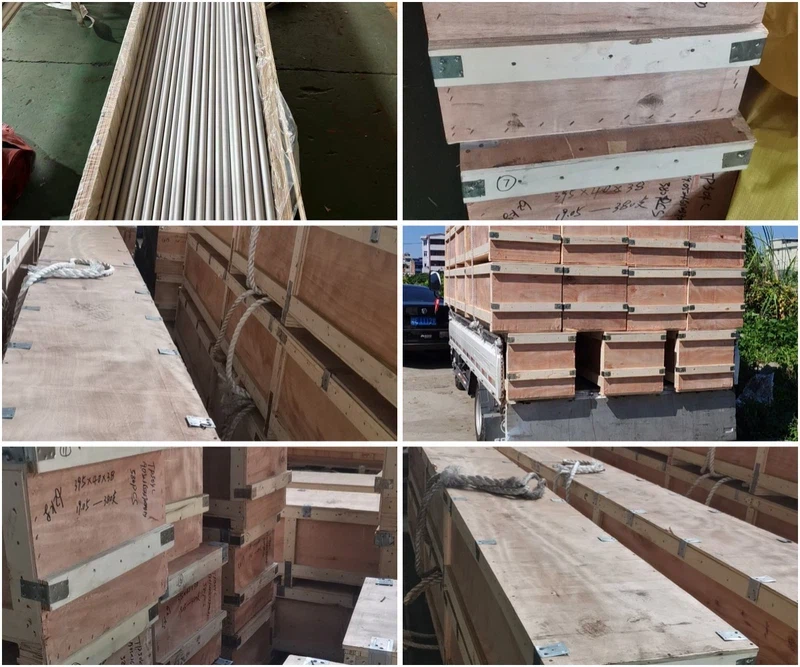
Gnee Steel specializes in the production of a wide range of stainless steel products. Gnee Steel's product packaging includes: Steel Strapping: Pipes with an outer diameter of 3 inches or less are typically strapped together with polypropylene film to prevent rust during ocean shipping, and then secured with steel strapping. Wooden Cases/Crates: Pipes are typically packaged in wooden cases or crates to protect the pipes during transportation, especially those that are longer or have larger diameters. Seaworthy Export Packaging: Suppliers typically use standard seaworthy export packaging methods, which may include a variety of materials and techniques to protect the pipes during transportation. Tarpaulin Packaging: This prevents rain, seawater, and other external factors from penetrating the export crates during transportation. Gnee Steel specializes in the production and sale of alloy materials. Gnee Steel's products are widely used in the aerospace, chemical, power, automotive, and nuclear energy sectors, and we can provide customized alloy material solutions based on customer needs. For alloy material pricing or customized alloy material solutions, please contact us for a quote: ru@gneesteelgroup.com