


18-10 Stainless Steel Vs 304 Stainless Steel

18-10 Stainless Steel Vs 304 Stainless Steel
18/10 stainless steel is a special type of 304 stainless steel with a nickel content of 10%, while the nickel content of 304 stainless steel ranges from 8% to 10.5%. Therefore, 18/10 is a higher-quality subclass of 304 stainless steel. Due to its higher nickel content, it has slightly better corrosion resistance and stain resistance, and is often used in high-end tableware and cookware. In most applications, the performance difference is negligible, but 18/10 stainless steel performs better in harsh environments.
Are 18-10 and 316 the same?
316 stainless steel contains 16% chromium, 10% nickel, and other elements; therefore, it is also known as 18-10 stainless steel. There are other grades of 316 stainless steel, such as the low-carbon grade 316L, the free-machining grade 316F, and the high-nitrogen grade 316N.

What is 304 Stainless Steel?
304 stainless steel is the most common austenitic stainless steel, containing 18% to 20% chromium and 8% to 10.5% nickel. This composition gives 304 excellent corrosion resistance and good formability, making it ideal for applications such as medical devices, food processing systems, piping, and structural components. In CNC machining, 304 stainless steel has stable cutting performance, making it the preferred material for high-volume precision parts machining.
What is 18/10 Stainless Steel?
18/10 stainless steel refers to stainless steel containing 18% chromium and 10% nickel. It is essentially a variant of the 304 stainless steel family. Due to its slightly higher nickel content, it has a higher gloss, stronger corrosion resistance, and a longer service life.
In multi-axis CNC milling and turning processes, 18/10 stainless steel provides excellent surface finish, especially suitable for parts requiring mirror polishing or high-precision surface treatment.
18/10 and 304 Stainless Steel: Chemical Composition
| Element | 18/10 Stainless Steel (%) | 304 Stainless Steel (%) | Notes |
| Iron (Fe) | Balance | Balance | Base metal for both alloys |
| Chromium (Cr) | ~18 | 17.5 – 18.5 | Provides corrosion and oxidation resistance |
| Nickel (Ni) | ~10 | 8 – 10.5 | Enhances corrosion resistance and luster |
| Manganese (Mn) | 1.0 – 2.0 | 1.0 – 2.0 | Improves hot working and strength |
| Silicon (Si) | 0.5 – 1.0 | 0.5 – 1.0 | Enhances oxidation resistance |
| Carbon (C) | ≤ 0.08 | ≤ 0.08 | Controls hardness and strength |
| Nitrogen (N) | Trace – 0.1 | Trace – 0.1 | Improves strength and corrosion resistance |
| Phosphorus (P) | ≤ 0.045 | ≤ 0.045 | Impurity, kept low to maintain ductility |
| Sulfur (S) | ≤ 0.03 | ≤ 0.03 | Impurity, affects machinability |
The Differences Between 18 10 Stainless Steel vs 304 Stainless Steel:
|
Property |
18 10 Stainless Steel |
304 Stainless Steel |
|---|---|---|
|
Chemical Composition |
18% Chromium, 10% Nickel |
18% Chromium, 8% Nickel |
|
Nickel Content |
Higher |
Lower |
|
Corrosion Resistance |
Excellent, especially against chlorides |
Good, versatile |
|
Price |
Higher |
Relatively Lower |
|
Typical Applications |
High-end cutlery, cookware, medical equipment, coastal building |
General containers, furniture, railings, interior decoration |
Advantages and Disadvantages 18-10 and 304
Below are some of the pros and cons of both grades:
18/10 Stainless Steel
| Advantages | Disadvantages |
| High corrosion resistant | Non magnetic |
| Aesthetic appeal | Weight |
| Durability | Susceptible to chlorides |
| High heat resistant | |
| Non reactive surface |
304 Stainless Steel
| Advantages | Disadvantages |
| Versatility | Easy to scratch |
| Good corrosion resistant | Poor high temperature resistant |
| Fabrication ease | |
| Non magnetic | |
| Recyclable |
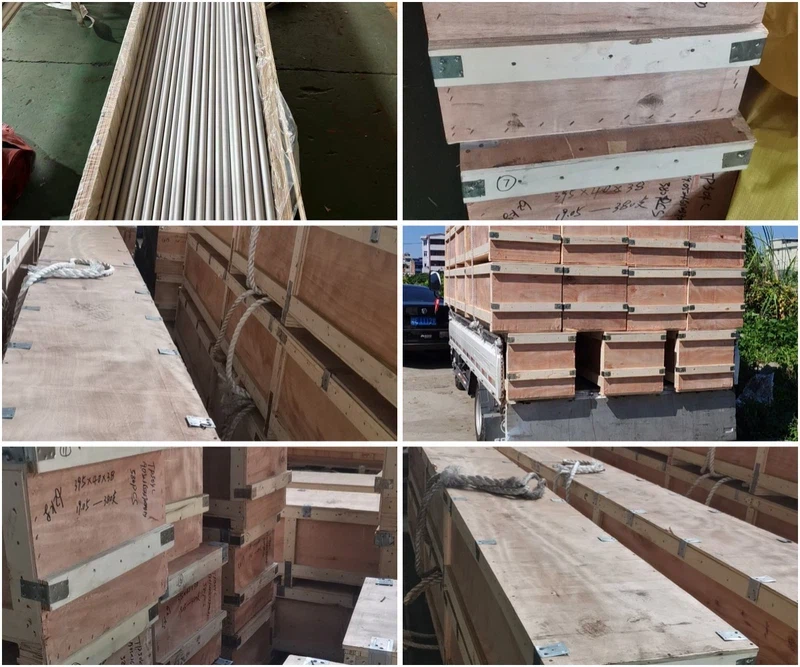
Gnee Steel specializes in the production of a wide range of stainless steel products. Gnee Steel's product packaging includes: Steel Strapping: Pipes with an outer diameter of 3 inches or less are typically strapped together with polypropylene film to prevent rust during ocean shipping, and then secured with steel strapping. Wooden Cases/Crates: Pipes are typically packaged in wooden cases or crates to protect the pipes during transportation, especially those that are longer or have larger diameters. Seaworthy Export Packaging: Suppliers typically use standard seaworthy export packaging methods, which may include a variety of materials and techniques to protect the pipes during transportation. Tarpaulin Packaging: This prevents rain, seawater, and other external factors from penetrating the export crates during transportation. Gnee Steel specializes in the production and sale of alloy materials. Gnee Steel's products are widely used in the aerospace, chemical, power, automotive, and nuclear energy sectors, and we can provide customized alloy material solutions based on customer needs. For alloy material pricing or customized alloy material solutions, please contact us for a quote: ru@gneesteelgroup.com