


What's the Difference Between Grade 304 and 304L Stainless Steel?
304/304L stainless steel has a chromium content of at least 18% and a nickel content of at least 8%. The only difference between the two is the carbon content. 304 stainless steel has a maximum carbon content of 0.07%, while 304L stainless steel has a maximum carbon content of 0.030%. This difference in carbon content affects the steel's corrosion resistance. 304/304L stainless steel is available in various forms, including plates, coils, round bars, machined flat bars, and pipes, for further processing.
What does the "L" in 304L stainless steel represent?
The letter "L" after the grade (e.g., 304L) indicates that the carbon content is limited to 0.03% or less (normally, the carbon content can be up to 0.08%, and some grades can be up to 0.15%).

What is 304 Stainless Steel?
304 stainless steel, also known as A2 or 18/8 stainless steel, contains 18% chromium and 8% nickel, and has good corrosion resistance, formability, and durability. It cannot be hardened by heat treatment, so it is usually used in the annealed state. It is weldable and machinable, and is commonly used in the manufacture of sinks, food storage tanks, surgical instruments, and exhaust systems.
What is 304L Stainless Steel?
304L stainless steel is a silver-gray solid alloy composed of 70% iron, 18% chromium, and 8% nickel. The "L" stands for "low carbon," meaning its carbon content is 0.03%, lower than 304. This prevents carbide buildup during welding and improves corrosion resistance. It works well in corrosive environments without annealing. This material is mainly used in industries such as chemical processing, food and beverage manufacturing, and construction.
Chemical Composition of 304 vs 304L (by Weight%)
| Element | 304 Stainless Steel | 304L Stainless Steel |
| Carbon (C) | ≤ 0.08% | ≤ 0.03% |
| Chromium (Cr) | 18.0-20.0% | 18.0-20.0% |
| Nickel (Ni) | 8.0-10.5% | 8.0-12.0% |
| Manganese (Mn) | ≤ 2.00% | ≤ 2.00% |
| Silicon (Si) | ≤ 0.75% | ≤ 0.75% |
| Phosphorus (P) | ≤ 0.045% | ≤ 0.045% |
| Sulfur (S) | ≤ 0.030% | ≤ 0.030% |
| Nitrogen (N) | ≤ 0.10% | ≤ 0.10% |
| Molybdenum (Mo) | No | No |
Corrosion Resistance
304 and 304L have almost the same corrosion resistance in most environments. However, 304L has a lower carbon content, so it is better at preventing intergranular corrosion, especially after welding or heating.
Weldability
304L has better weldability than 304. It does not require post-weld annealing, thus reducing the risk of corrosion in the weld area, while 304 may require post-weld annealing to maintain its corrosion resistance.
Physical Property of 304 vs 304L
| Property | 304 Stainless Steel | 304L Stainless Steel |
| Density | 8.0 g/cm³ | 8.0 g/cm³ |
| Melting Point | 1400°C – 1450°C | 1400°C – 1450°C |
| Thermal Conductivity | 16.2 W/m·K at 100°C | 16.2 W/m·K at 100°C |
| Modulus of Elasticity | 193 GPa | 193 GPa |
| Tensile Strength | ~515 MPa | ~485 MPa |
Mechanical Properties of 304 vs 304L
| Property | 304 Stainless Steel | 304L Stainless Steel |
| Tensile Strength | 515 MPa | 485 MPa |
| Yield Strength | 205 MPa | 170 MPa |
| Elongation at Break | 40% | 40% |
| Hardness (Rockwell B) | 82 | 82 |
| Impact Toughness | High | High |
Equivalent Grades of 304 and 304L
| Country/Standard | Specification | Grade (304) | Grade (304L) |
| United States | ASTM A240, ASTM A312 | 304 | 304L |
| China | GB/T 1220, GB/T 14975 | 0Cr18Ni9 | 00Cr19Ni10 |
| Japan | JIS G4304, JIS G4305 | SUS304 | SUS304L |
| International | ISO 15510 | X5CrNi18-10 | X2CrNi19-11 |
| Europe | EN 10088-2 | 1.4301 | 1.4307 |
Applications of 304 and 304L Stainless Steel
While 304 and 304L stainless steels share similar chemical and physical properties, their applications differ due to their varying carbon content. These differences influence the optimal application areas for each type of stainless steel.
Applications of 304 Stainless Steel
Structural Components: Used for building frames, bridges, and load-bearing structures.
Automotive Parts: Commonly found in exhaust systems, engine components, and trim pieces.
Industrial Equipment: Suitable for storage tanks, piping, and machinery exposed to various chemicals.
Consumer Products: Used for kitchen sinks, cookware, and household appliances.
Medical Devices: Used for surgical instruments, dental tools, and hospital equipment.
Food Processing Equipment: Used for food storage, handling, and processing equipment, such as containers, utensils, and conveying systems.
Applications of 304L Stainless Steel
Welded Structures: Suitable for welded piping, storage tanks, and heat exchangers.
Chemical Processing: Used for equipment handling corrosive chemicals, such as reactors and mixing tanks.
Marine Environments: Suitable for shipbuilding, offshore platforms, and underwater pipelines.
Pharmaceutical Equipment: Used in pharmaceutical production equipment requiring extremely high purity.
Food Processing: Ideal for handling acidic foods and beverages, such as fermentation tanks and food storage units.
Common Applications of 304 and 304L:
Building Components: Used for cladding, handrails, and decorative facades.
Heat Exchangers: Used in power generation and HVAC systems.
Pressure Vessels: Used for boilers, gas cylinders, and industrial pressure vessels.
Pipeline Systems: Used in water treatment plants, refineries, and distribution systems.
Food and Beverage Equipment: Commonly found in brewing, dairy processing, and cooking equipment.
In summary, 304 is best suited for high-strength applications, such as structural components, while 304L is ideal for welding and corrosive environments. Due to their shared properties, both are widely used in construction, food processing, and piping systems.
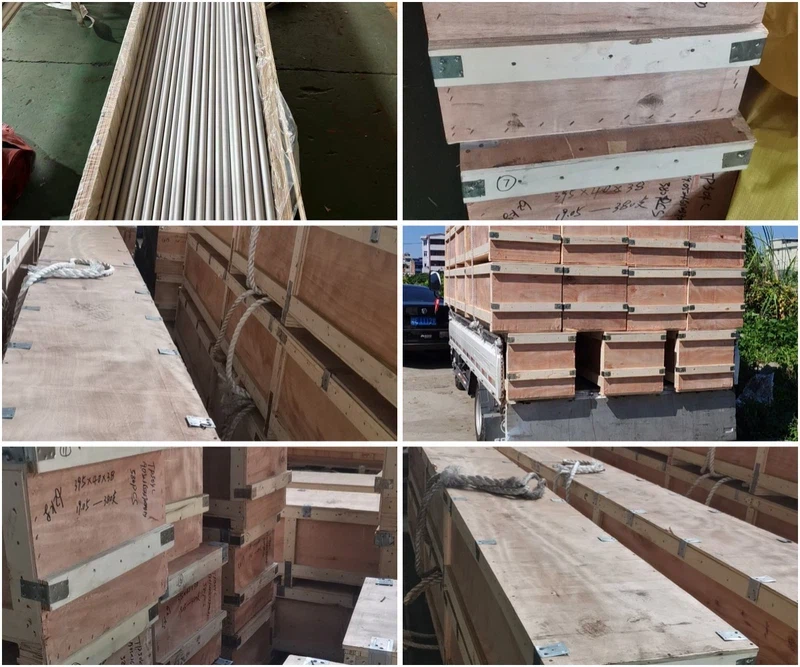
Gnee Steel specializes in the production of a wide range of stainless steel products. Gnee Steel's product packaging includes: Steel Strapping: Pipes with an outer diameter of 3 inches or less are typically strapped together with polypropylene film to prevent rust during ocean shipping, and then secured with steel strapping. Wooden Cases/Crates: Pipes are typically packaged in wooden cases or crates to protect the pipes during transportation, especially those that are longer or have larger diameters. Seaworthy Export Packaging: Suppliers typically use standard seaworthy export packaging methods, which may include a variety of materials and techniques to protect the pipes during transportation. Tarpaulin Packaging: This prevents rain, seawater, and other external factors from penetrating the export crates during transportation. Gnee Steel specializes in the production and sale of alloy materials. Gnee Steel's products are widely used in the aerospace, chemical, power, automotive, and nuclear energy sectors, and we can provide customized alloy material solutions based on customer needs. For alloy material pricing or customized alloy material solutions, please contact us for a quote: ru@gneesteelgroup.com