


A comprehensive comparison between 316 stainless steel and 316L stainless steel

A comprehensive comparison between 316 stainless steel and 316L stainless steel
316 and 316L stainless steels are two similar marine-grade alloys, with the main difference being their carbon content: 316 stainless steel has a carbon content of up to 0.08%, resulting in higher strength; while 316L (low-carbon) stainless steel has a carbon content below 0.03%, making it more suitable for welding due to its resistance to "weld decay" (intergranular corrosion), although 316 stainless steel can also achieve similar properties through annealing. Choose 316 stainless steel if high strength is required, extensive welding is not needed, and the application involves high-temperature environments; choose 316L stainless steel if welding is required and the application involves corrosive environments, such as chemical processing or marine applications.
What is 316L stainless steel?
316L stainless steel is medical-grade surgical steel. It has a lower carbon content than other types of steel and boasts a perfect luster, making it suitable for various jewelry items, including bracelets, rings, pendants, earrings, necklaces, and more. In fact, the "L" in 316L (maximum carbon content of 0.03%) stands for low carbon content.

What is 316 stainless steel?
316 stainless steel is a common austenitic stainless steel. It possesses excellent corrosion resistance and wear resistance, especially in harsh and acidic environments. 316 stainless steel contains 0.08% carbon and 2-3% molybdenum, which gives it good corrosion resistance. Furthermore, this composition allows it to maintain good performance even in high-temperature environments.
Properties of 316 Steel
The application of 316 steel in different prototyping processes depends on its properties. Furthermore, manufacturer requirements and the intended future use of the product also have a significant impact. Here are some of the important properties of 316 steel that we can list:
High ductility and high strength
Good corrosion resistance and pitting resistance
Stable performance even at high temperatures
Good weldability and acid resistance
Melting point: 1371℃ – 1399℃
Elastic modulus: 193 GPa
Density: 7.98 g/cm³
Minimum tensile strength: 515 MPa
What is 316L stainless steel?
316L is another variant of 316 stainless steel, but with a lower carbon content. 316L has a carbon content of only 0.03%, which gives it even greater corrosion resistance. Therefore, it is ideal for applications that are frequently exposed to dusty environments. In addition, its composition also contains molybdenum. It produces fewer carbides during metal processing.
Properties of 316L Stainless Steel
Like 316 steel, 316L stainless steel also possesses many impressive properties. Based on its characteristics, it can be used in different manufacturing processes. In addition, it has good mechanical properties and strain resistance. Here are some of these properties:
High corrosion resistance
Wear resistance
Good tensile strength
Low carbon and low molybdenum content
Excellent machinability and formability
Good weldability
316 vs 316L Stainless Steel
| Feature | 316 Stainless Steel | 316L Stainless Steel | The Huaxiao Expert Verdict |
| Weldability | Good, but risks sensitization | Excellent | Choose 316L for all welded applications to prevent weld decay and ensure long-term integrity. |
| Corrosion Resistance | Excellent | Excellent (Superior in as-welded state) | In a non-welded state, their performance is identical. After welding, 316L is far more reliable. |
| Mechanical Strength | Slightly Higher (Yield & Tensile) | Slightly Lower | The difference is minimal and often not a deciding factor in most applications. |
| Cost | Slightly Lower | Slightly Higher | The small price premium for 316L is excellent insurance against weld-related corrosion failure. |
Composition Differences
The "L" in 316L stands for "low carbon." This is the most significant difference between these two grades of stainless steel.
316 stainless steel: Maximum carbon content of 0.08%.
316L stainless steel: Maximum carbon content of 0.03%.
The lower carbon content of 316L stainless steel helps prevent carbide precipitation during welding, thus reducing the risk of corrosion at the weld joint. Therefore, 316L is the more ideal choice for applications requiring welding and high corrosion resistance.
Mechanical Properties: 316 vs 316L Stainless Steel
| Property | 316 | 316L |
|---|---|---|
| Tensile Strength (MPa) | ~515 | ~485 |
| Yield Strength (MPa) | ~205 | ~170 |
| Elongation (%) | 40 | 40 |
| Hardness (HV) | ~150 | ~150 |
Summary
316 stainless steel has slightly higher strength.
316L stainless steel exhibits superior corrosion resistance in the welded state.
Both grades of stainless steel maintain excellent toughness at low temperatures and also possess good stability at high temperatures.
Properties of 316 and 316L Stainless Steel
| Property | 316 Stainless Steel | 316L Stainless Steel |
|---|---|---|
| Corrosion Resistance | High | Very high, especially in welded joints |
| Strength | Slightly stronger than 316L | Slightly less due to lower carbon |
| Weldability | Good | Excellent, due to lower carbon |
| Hardness | Slightly harder than 316L | Slightly less hard due to carbon reduction |
| Cost | Slightly lower than 316L | Higher, due to specialized low-carbon processing |
316 vs 316L Stainless Steel Equivalent Grades
| Standard / Country | 316 Equivalent Grade | 316L Equivalent Grade |
|---|---|---|
| ASTM / ASME | 316 | 316L |
| EN / DIN | X5CrNiMo17-12-2 (1.4401) | X2CrNiMo17-12-2 (1.4404) |
| JIS (Japan) | SUS316 | SUS316L |
| GB / China | 022Cr17Ni12Mo2 | 022Cr17Ni12Mo2 (Same grade, but different carbon content range) |
| BS (British Standard) | 316S31 | 316S11 |
| ISO | 316 | 316L |
| AFNOR (France) | Z6CND17-12 | Z2CND17-12 |
316 Stainless Steel Typical Applications
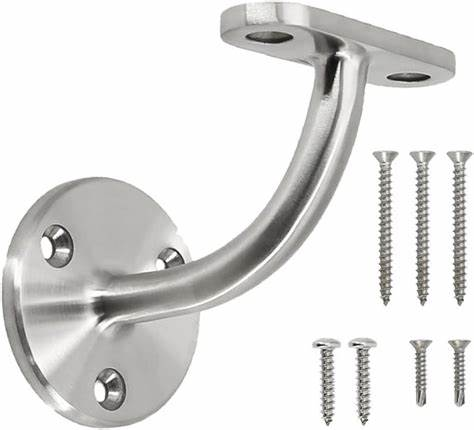
High-strength structural components, such as brackets, plates, and fasteners
Heat exchangers and reactors handling high-temperature/corrosive chemicals
Piping and equipment in seawater desalination plants
Pressure vessels and pipelines requiring high stress resistance
316L Stainless Steel Typical Applications
Complex shaped parts manufactured through bending/forming processes, such as piping systems
Components frequently joined by welding or brazing
Thin-walled tanks and containers used in the food/beverage industry
Medical/dental/pharmaceutical applications involving machining

Conclusion
In summary, both 316 and 316L are widely used stainless steel grades with excellent corrosion resistance. Their main difference lies in their strength: 316 has higher strength, while 316L offers better machinability.
With the appropriate material selection, both 316 and 316L can be reliably used in various applications and industries requiring corrosion resistance.

Gnee Steel specializes in the production of a wide range of stainless steel products. Gnee Steel's product packaging includes: Steel Strapping: Pipes with an outer diameter of 3 inches or less are typically strapped together with polypropylene film to prevent rust during ocean shipping, and then secured with steel strapping. Wooden Cases/Crates: Pipes are typically packaged in wooden cases or crates to protect the pipes during transportation, especially those that are longer or have larger diameters. Seaworthy Export Packaging: Suppliers typically use standard seaworthy export packaging methods, which may include a variety of materials and techniques to protect the pipes during transportation. Tarpaulin Packaging: This prevents rain, seawater, and other external factors from penetrating the export crates during transportation. Gnee Steel specializes in the production and sale of alloy materials. Gnee Steel's products are widely used in the aerospace, chemical, power, automotive, and nuclear energy sectors, and we can provide customized alloy material solutions based on customer needs. For alloy material pricing or customized alloy material solutions, please contact us for a quote: ru@gneesteelgroup.com