


What are the differences between 316L stainless steel and titanium alloy?

What are the differences between 316L stainless steel and titanium alloy?
316L stainless steel is heavier, less expensive, and easier to process, making it suitable for general purposes; while titanium alloy is much lighter, has a higher strength-to-weight ratio, boasts excellent corrosion resistance (especially in chloride environments), offers superior biocompatibility for implants, and has better high-temperature resistance. However, it is more expensive and more difficult to process. You can consider using 316L stainless steel for cost-effective industrial needs, and titanium alloy for high-performance, lightweight, medical, or extreme environment applications where its superior properties justify the higher cost.
What are the disadvantages of 316 stainless steel?
The main disadvantages of 316 stainless steel include its higher cost (due to the presence of molybdenum and nickel), difficulty in processing and forming (high hardness, prone to work hardening and wear), and potential problems during welding (intergranular corrosion and weld seam corrosion), requiring special techniques to maintain its corrosion resistance. Furthermore, it has low thermal conductivity, and can still corrode if improperly processed in extreme chloride/high-temperature environments.

316L Stainless Steel
316L stainless steel is one of the most commonly used materials in watches and jewelry due to its durability and low maintenance requirements. It is highly resistant to corrosion and rust, making it an ideal choice for people living in humid climates. Furthermore, as a type of stainless steel, it does not tarnish easily, so you don't have to worry about regular polishing or cleaning. The "L" in 316L stands for low carbon content; this metal undergoes electrochemical treatment to reduce its carbon content, further enhancing its corrosion resistance.
Titanium
Titanium is a very lightweight metal with an excellent strength-to-weight ratio, and it is very durable and corrosion-resistant. However, titanium is not as malleable as other metals like gold or silver, making it more difficult to work with-therefore, it is more expensive than other materials like 316L stainless steel when manufacturing jewelry or watches. Additionally, titanium is prone to scratching; while scratches can be removed through polishing, professional treatment may be required in some cases.
Chemical Composition
| Material | Main Elements | Key Feature |
|---|---|---|
| 316L Stainless Steel | Fe, 16–18% Cr, 10–14% Ni, 2–3% Mo, ≤0.03%C | Excellent corrosion resistance, weldability |
| Titanium Grade 2 / 5 | 99% Ti (with Al, V in Grade 5) | Lightweight, high strength, biocompatibility |
Mechanical Properties
| Property | 316L Stainless Steel | Titanium Grade 2 | Titanium Grade 5 (Ti-6Al-4V) |
|---|---|---|---|
| Density (g/cm³) | 8.0 | 4.5 | 4.43 |
| Tensile Strength (MPa) | ≥ 485 | ~ 350 | ~ 895 |
| Yield Strength (MPa) | ≥ 170 | ~ 275 | ~ 828 |
| Elongation (%) | ≥ 40 | ~ 20 | ~ 10 |
| Hardness (HB) | ≤ 217 | ~ 160 | ~ 349 |
Diference Between 316l Stainless Steel and Titanium
Cost Comparison
| Material | Average Price per kg (2025 est.) |
|---|---|
| 316L Stainless Steel | $4 – $6 / kg |
| Titanium Grade 2 | $25 – $30 / kg |
| Titanium Grade 5 | $35 – $50 / kg |
Strength
Another key difference between these two metals is strength. Titanium is much stronger than 316L stainless steel. This is because titanium has a higher tensile strength than stainless steel. This means it can withstand greater force before breaking.
Weight
A third difference between these two metals is weight. Titanium is much lighter than 316L stainless steel. This is because titanium has a lower density than stainless steel. This makes it ideal for applications where weight is a critical factor, such as aircraft manufacturing.
Corrosion Resistance
A fourth difference between these two metals is corrosion resistance. Titanium is more corrosion-resistant than 316L stainless steel. This means it is less likely to rust or corrode when exposed to moisture or other chemicals.
Biocompatibility
The final difference between these two metals is biocompatibility. Titanium is more biocompatible than 316L stainless steel, meaning it is less likely to cause allergic reactions in people who are allergic to metals.
Application Areas
316L: Pharmaceutical equipment, non-critical surfaces, general construction.
Titanium: Aerospace, high-performance marine vessels, medical implants, chemical processing.
Summary:
Choose 316L for greater cost-effectiveness if weight and superior corrosion resistance are not primary considerations. Choose titanium if the application requires lightweight and high strength, superior corrosion resistance, or medical-grade biocompatibility.
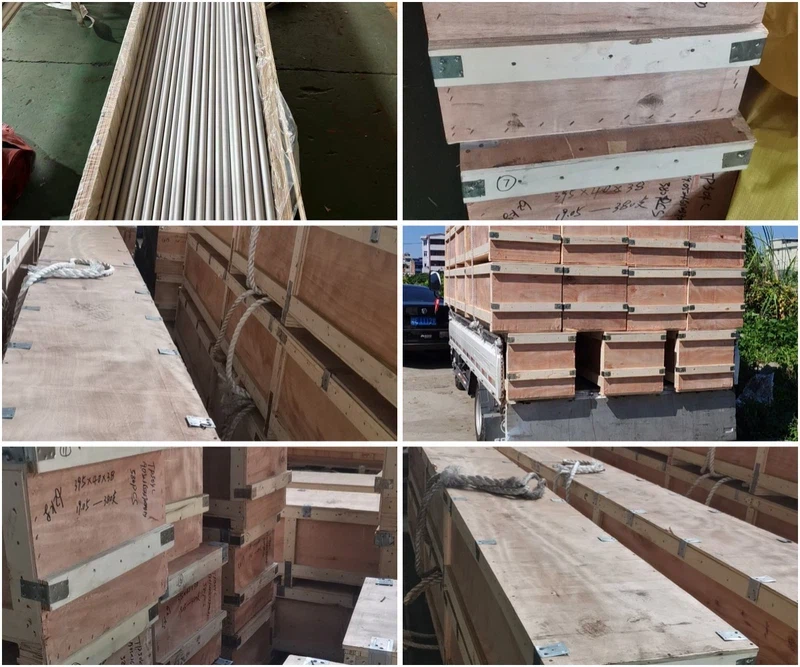
Gnee Steel specializes in the production of a wide range of stainless steel products. Gnee Steel's product packaging includes: Steel Strapping: Pipes with an outer diameter of 3 inches or less are typically strapped together with polypropylene film to prevent rust during ocean shipping, and then secured with steel strapping. Wooden Cases/Crates: Pipes are typically packaged in wooden cases or crates to protect the pipes during transportation, especially those that are longer or have larger diameters. Seaworthy Export Packaging: Suppliers typically use standard seaworthy export packaging methods, which may include a variety of materials and techniques to protect the pipes during transportation. Tarpaulin Packaging: This prevents rain, seawater, and other external factors from penetrating the export crates during transportation. Gnee Steel specializes in the production and sale of alloy materials. Gnee Steel's products are widely used in the aerospace, chemical, power, automotive, and nuclear energy sectors, and we can provide customized alloy material solutions based on customer needs. For alloy material pricing or customized alloy material solutions, please contact us for a quote: ru@gneesteelgroup.com