


316L vs. 904L Stainless Steel: What's the Difference?

316L vs. 904L Stainless Steel: What's the Difference?
The main difference between 316L and 904L stainless steel lies in their composition. 904L stainless steel contains higher levels of nickel, chromium, and molybdenum, and also includes copper, resulting in superior corrosion resistance, particularly against chloride corrosion. This makes it more suitable for harsh marine or chemical environments, but it is also more expensive and more difficult to process than the more widely used 316L stainless steel.
How does 904L stainless steel resist corrosion?
Its high copper content improves its resistance to strong reducing acids (especially sulfuric acid, phosphoric acid, acetic acid, and other organic acids), while the high nickel and molybdenum content provides excellent resistance to chloride-induced stress corrosion cracking and pitting corrosion.

What is 316L stainless steel?
316L stainless steel is an austenitic stainless steel alloy highly valued for its excellent corrosion resistance and weldability. The "L" in "316L" stands for "low carbon," which helps reduce intergranular corrosion during welding. Its main components include iron, chromium, nickel, and molybdenum, which give it a combination of strength, formability, and corrosion resistance.
What is 904L stainless steel?
904L stainless steel (or SS 904L) is a high-alloy austenitic stainless steel known for its superior corrosion resistance, especially in highly corrosive environments. The main components of 904L stainless steel are iron, nickel, chromium, molybdenum, and a small amount of copper, which enhances its resistance to chemicals such as sulfuric acid, chlorides, and phosphoric acid.
Chemical Composition of 904L vs 316L Stainless Steel
| Element | 316L (%wt) | 904L (%wt) | Function in Stainless Steel |
| Carbon (C) | ≤ 0.03 | ≤ 0.02 | Reduces risk of intergranular corrosion; improves weldability by minimizing carbide precipitation. |
| Chromium (Cr) | 16.0 – 18.0 | 19.0 – 23.0 | Provides corrosion and oxidation resistance by forming a stable passive film on the steel surface. |
| Nickel (Ni) | 10.0 – 14.0 | 23.0 – 28.0 | Stabilizes the austenitic structure; improves ductility, toughness, and resistance to stress corrosion cracking. |
| Molybdenum (Mo) | 2.0 – 3.0 | 4.0 – 5.0 | Enhances resistance to pitting and crevice corrosion, especially in chloride environments. |
| Manganese (Mn) | ≤ 2.0 | ≤ 2.0 | Acts as a deoxidizer; improves hot-working properties and resistance to scaling. |
| Silicon (Si) | ≤ 1.0 | ≤ 1.0 | Improves oxidation resistance; also used as a deoxidizer in the melting process. |
| Phosphorus (P) | ≤ 0.045 | ≤ 0.045 | Kept low to avoid embrittlement and maintain ductility. |
| Sulfur (S) | ≤ 0.03 | ≤ 0.035 | Improves machinability in small amounts; excess can reduce toughness and corrosion resistance. |
| Copper (Cu) | ≤ 0.5 | 1.0 – 2.0 | Increases resistance to reducing acids, especially sulfuric acid; enhances corrosion resistance in harsh chemical environments. |
| Nitrogen (N) | ≤ 0.10 | ≤ 0.10 | Strengthens the austenitic structure and improves pitting resistance and tensile strength. |
| Iron (Fe) | Balance | Balance | Base metal of stainless steel, contributes to strength and magnetic properties. |
Mechanical and Physical Properties of 904L vs 316L Stainless Steel
| Property | 316L Stainless Steel | 904L Stainless Steel | Remarks |
| Tensile Strength (MPa) | 485 – 620 | 490 – 740 | 904L has higher upper-end strength, beneficial for structural applications. |
| Yield Strength (0.2% Offset, MPa) | ≥ 170 – 310 | ≥ 220 – 290 | 904L has slightly better yield strength, with good ductility retained. |
| Elongation (% in 50 mm) | ≥ 40 | ≥ 35 | 316L is slightly more ductile; better for cold forming. |
| Hardness (Brinell HBW) | ≤ 217 | ≤ 220 | Similar hardness levels; both are suitable for machining and fabrication. |
| Density (g/cm³) | 7.99 | 8.05 | 904L is slightly denser due to higher alloying content. |
| Modulus of Elasticity (GPa) | ~193 | ~195 | Nearly identical; determines stiffness under load. |
| Thermal Conductivity (W/m·K) | 16.3 | 12.5 | 316L has better thermal conductivity; important in heat exchangers. |
| Specific Heat Capacity (J/kg·K) | 500 | 450 | 316L retains heat slightly better. |
| Coefficient of Thermal Expansion (μm/m·°C) | 16.0 × 10⁻⁶ | 15.0 × 10⁻⁶ | 904L has lower thermal expansion; better dimensional stability at high temps. |
| Electrical Resistivity (µΩ·cm) | ~74 | ~94 | 904L has higher resistivity; relevant for electrical and EMI-sensitive uses. |
| Magnetic Permeability (μr) | ~1.02 (non-magnetic in annealed condition) | Non-magnetic (μr ≈ 1.0) | 904L is fully non-magnetic; beneficial in sensitive equipment. |
Corrosion Resistance Comparison of 904L and 316L Stainless Steel
316L Stainless Steel: While 316L stainless steel has strong corrosion resistance to chlorides and seawater, its performance may be inferior to 904L stainless steel in highly corrosive environments (such as those containing sulfuric or phosphoric acid).
904L Stainless Steel: Compared to 316L stainless steel, 904L stainless steel exhibits superior corrosion resistance, especially in highly corrosive chemical environments. Therefore, 904L stainless steel is an ideal choice for applications handling highly corrosive materials such as sulfuric acid.
Strength and Durability Comparison of 904L and 316L Stainless Steel
316L Stainless Steel: 316L stainless steel is strong and durable, but generally not as robust or durable as 904L stainless steel under extreme conditions.
904L Stainless Steel: Due to its high nickel and molybdenum content, 904L stainless steel is more durable and wear-resistant, especially in highly corrosive or high-temperature environments.
Comparison of Applications for 904L and 316L Stainless Steel
316L Stainless Steel: Suitable for applications in marine environments, food processing, medical equipment, and general chemical processing, where the corrosive environment is moderately aggressive.
904L Stainless Steel: Best suited for extremely corrosive environments, such as those found in chemical processing, pharmaceuticals, oil and gas, and offshore drilling operations.
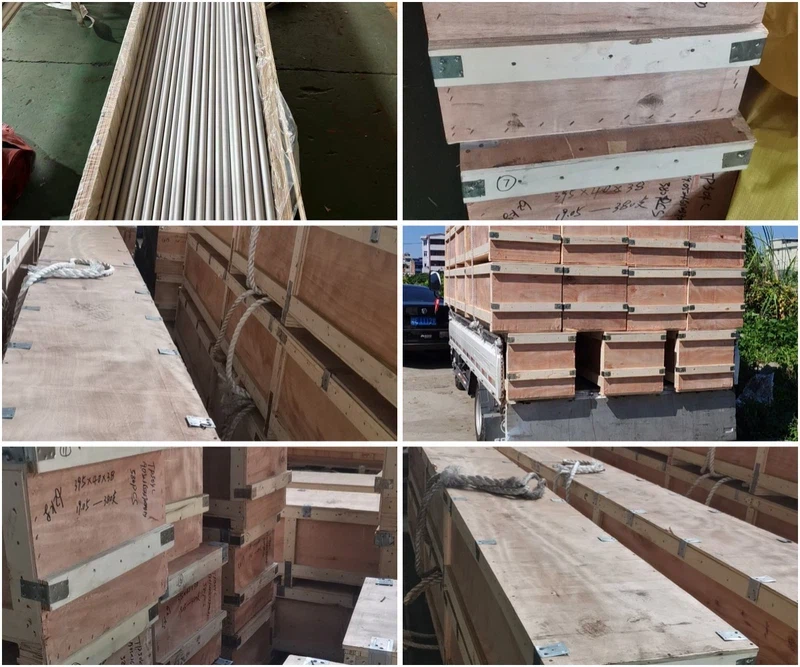
Gnee Steel specializes in the production of a wide range of stainless steel products. Gnee Steel's product packaging includes: Steel Strapping: Pipes with an outer diameter of 3 inches or less are typically strapped together with polypropylene film to prevent rust during ocean shipping, and then secured with steel strapping. Wooden Cases/Crates: Pipes are typically packaged in wooden cases or crates to protect the pipes during transportation, especially those that are longer or have larger diameters. Seaworthy Export Packaging: Suppliers typically use standard seaworthy export packaging methods, which may include a variety of materials and techniques to protect the pipes during transportation. Tarpaulin Packaging: This prevents rain, seawater, and other external factors from penetrating the export crates during transportation. Gnee Steel specializes in the production and sale of alloy materials. Gnee Steel's products are widely used in the aerospace, chemical, power, automotive, and nuclear energy sectors, and we can provide customized alloy material solutions based on customer needs. For alloy material pricing or customized alloy material solutions, please contact us for a quote: ru@gneesteelgroup.com