


Everything you need to know about 904L stainless steel
Gnee Steel
Everything you need to know about 904L stainless steel
904L stainless steel is a high-alloy, low-carbon austenitic stainless steel known for its exceptional corrosion resistance, particularly in corrosive acidic (sulfuric acid, phosphoric acid, acetic acid) and chloride-rich environments. This is due to its high content of nickel, chromium, molybdenum, and copper. Compared to standard grades such as 316L, it exhibits superior resistance to pitting and crevice corrosion, maintains toughness at low temperatures, is non-magnetic (when not cold-worked), and can be welded without preheating or post-heating. It is widely used in chemical processing, seawater systems, and pollution control applications.

Gnee Steel
What is stainless steel 904L?
904L alloy (UNS N08904) is a super austenitic stainless steel designed to provide moderate to high corrosion resistance in a variety of process environments. The high content of chromium and nickel, along with the addition of molybdenum and copper, ensures its good to excellent corrosion resistance.

What is 904L steel?
904L stainless steel is a high-alloy austenitic stainless steel known for its exceptional corrosion resistance. It performs excellently in terms of resistance to pitting corrosion, crevice corrosion, and stress corrosion cracking, especially in chloride-rich environments such as seawater. Its low carbon content minimizes intergranular corrosion during welding, thus ensuring structural integrity.
It is an austenitic stainless steel with good formability and weldability. It is comparable to 316L stainless steel, but due to its properties and composition, it is more expensive.
What Is The Composition of 904L Stainless Steel?
The chemical composition of 904L alloy is carefully designed to enhance its performance in corrosive environments. The alloy designation is UNS N08904. 904L steel contains high levels of nickel, chromium, and molybdenum. It also contains a small amount of copper to significantly improve corrosion resistance. The following is a detailed composition of 904L stainless steel:
| Element | Composition (% by weight) |
| Carbon (C) | ≤ 0.020 |
| Manganese (Mn) | ≤ 2.00 |
| Silicon (Si) | ≤ 1.00 |
| Phosphorus (P) | ≤ 0.045 |
| Sulfur (S) | ≤ 0.035 |
| Chromium (Cr) | 19.0 – 23.0 |
| Nickel (Ni) | 23.0 – 28.0 |
| Molybdenum (Mo) | 4.0 – 5.0 |
| Copper (Cu) | 1.0 – 2.0 |
| Nitrogen (N) | ≤ 0.10 |
904L stainless steel is considered a high-purity steel with a low sulfur content, which contributes to its improved machinability.
This composition gives 904L stainless steel excellent resistance to pitting and crevice corrosion, especially in chloride-rich environments. The specific combination of alloying elements in 904L enables it, as well as other grades of stainless steel, to resist various corrosive environments. It is this characteristic that sets it apart from other grades of stainless steel, such as 304L and 316L.
Properties of 904L Stainless Steel
| Property | Metric Value | Lbs conversion |
| Density | 8.00 g/cm³ | 0.289 lb/in³ |
| Tensile Strength, Ultimate | 490 – 700 MPa | 71 – 102 ksi |
| Tensile Strength, Yield | 220 MPa (at 0.2% offset) | 32 ksi |
| Elongation at Break | ≥ 35% | ≥ 35% |
| Modulus of Elasticity | 190 GPa | 27.6 ksi |
| Poisson's Ratio | 0.30 | 0.30 |
| Hardness, Brinell | ≤ 192 | ≤ 192 |
| Thermal Conductivity | 11.5 W/m·K (at 20°C) | 79.9 BTU-in/hr-ft²-°F |
| Specific Heat Capacity | 450 J/kg·K | 0.107 BTU/lb-°F |
| Electrical Resistivity | 9.52e-5 ohm·cm | 9.52e-5 ohm·cm |
Equivalent Grades
| Standard | Grade | Equivalent |
|---|---|---|
| UNS | N08904 | 904L |
| EN | 1.4539 | X1NiCrMoCu25-20-5 |
| Werkstoff | 904L | 1.4539 |
| Others | – | Alloy 20 (similar but lower Mo/Cu) |
Corrosion Resistance

The high content of nickel and molybdenum gives 904L alloy excellent corrosion resistance. 904L stainless steel has good resistance to chloride corrosion, making it suitable for warm seawater and other chloride-rich environments. This steel exhibits excellent corrosion resistance when exposed to corrosive media such as sulfuric acid, phosphoric acid, and chloride solutions.
Compared to 316L stainless steel, 904L stainless steel has superior corrosion resistance in both harsh and mild environments, particularly in resistance to pitting corrosion, crevice corrosion, and chloride stress corrosion cracking.
The chromium content contributes to the formation of a passive oxide layer, further enhancing its resistance to pitting and crevice corrosion in chloride-rich environments (such as seawater or chemical plants). 904L is suitable for applications requiring good corrosion resistance, maintaining excellent performance even in warm seawater and other harsh environments.
Weldability

904L Stainless Steel Welding
Due to its low carbon content, 904L stainless steel exhibits excellent weldability, which reduces the likelihood of carbide precipitation and thus lowers the risk of intergranular corrosion in the weld area.
By employing appropriate welding techniques, such as controlling low heat input and using optimal filler materials, 904L stainless steel can maintain its corrosion resistance. 904L stainless steel can be welded using standard welding processes such as TIG, MIG, and SMAW, which are compatible with its alloy characteristics.
Therefore, 904L stainless steel is an ideal choice for manufacturing complex components in the chemical processing industry, as these components often require welding.
904L Stainless Steel Common Applications:
Chemical processing: Equipment used in the production of sulfuric acid, phosphoric acid, organic acids, and fertilizers.
Environmental protection: Air pollution control (scrubbers) and gas purification equipment.
Marine: Seawater cooling systems, heat exchangers, and brackish water pipelines.
Oil and gas: Components for offshore platforms and refineries.
Pulp and paper: Processing machinery.
Special applications: High-end watch cases (e.g., Rolex), electrostatic precipitators.
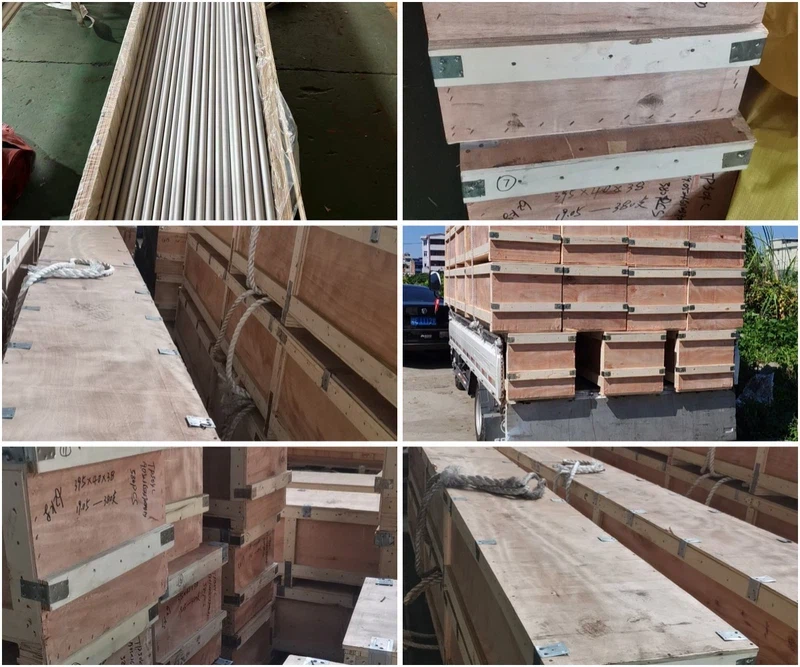
Gnee Steel specializes in the production of a wide range of stainless steel products. Gnee Steel's product packaging includes: Steel Strapping: Pipes with an outer diameter of 3 inches or less are typically strapped together with polypropylene film to prevent rust during ocean shipping, and then secured with steel strapping. Wooden Cases/Crates: Pipes are typically packaged in wooden cases or crates to protect the pipes during transportation, especially those that are longer or have larger diameters. Seaworthy Export Packaging: Suppliers typically use standard seaworthy export packaging methods, which may include a variety of materials and techniques to protect the pipes during transportation. Tarpaulin Packaging: This prevents rain, seawater, and other external factors from penetrating the export crates during transportation. Gnee Steel specializes in the production and sale of alloy materials. Gnee Steel's products are widely used in the aerospace, chemical, power, automotive, and nuclear energy sectors, and we can provide customized alloy material solutions based on customer needs. For alloy material pricing or customized alloy material solutions, please contact us for a quote: ru@gneesteelgroup.com