


316 316L Stainless Steel Tube: The Ultimate Guide

tire change & repair
Both 316 and 316L stainless steel pipes are durable, corrosion-resistant alloys. 316L is a low-carbon version, making it more suitable for welding applications due to its excellent weldability and resistance to intergranular corrosion. Thanks to the addition of molybdenum, both grades are well-suited for high-chloride exposure environments, such as marine applications, and have a wide range of uses in industrial and sanitary fields. The main difference lies in the carbon content, which affects mechanical properties such as tensile strength; 316 typically has a slightly higher minimum tensile strength than 316L.
Is 316 stainless steel better suited for high-temperature environments than 316L stainless steel?
Heat Resistance: 316L stainless steel is more resistant to carbide precipitation than standard 316 and 316H stainless steel and can be used in the aforementioned temperature range. However, for applications requiring higher high-temperature strength, a higher carbon content is necessary.

What are 316 and 316L stainless steel?
316 and 316L stainless steel are austenitic stainless steels, primarily composed of iron, chromium, nickel, and molybdenum. The addition of molybdenum (2-3%) enhances their corrosion resistance, especially in chloride-rich environments. The main difference between 316 and 316L stainless steel lies in their carbon content:
316 stainless steel has a maximum carbon content of 0.08%.
316L stainless steel ("L" stands for low carbon) has a maximum carbon content of 0.03%, which reduces carbide precipitation during welding, thus improving weldability.
Both stainless steels possess excellent mechanical strength and corrosion resistance, but in industries requiring welding to prevent intergranular corrosion, 316L stainless steel pipes are a superior choice.
Chemical Composition of 316 and 316L Stainless Steel Tubes
| Element | 316 Stainless Steel (%) | 316L Stainless Steel (%) |
| Carbon (C) | ≤ 0.08 | ≤ 0.03 |
| Chromium (Cr) | 16.0 - 18.0 | 16.0 - 18.0 |
| Nickel (Ni) | 10.0 - 14.0 | 10.0 - 14.0 |
| Molybdenum (Mo) | 2.0 - 3.0 | 2.0 - 3.0 |
| Manganese (Mn) | ≤ 2.0 | ≤ 2.0 |
| Silicon (Si) | ≤ 1.0 | ≤ 1.0 |
| Phosphorus (P) | ≤ 0.045 | ≤ 0.045 |
| Sulfur (S) | ≤ 0.03 | ≤ 0.03 |
Mechanical Properties of 316 and 316L Stainless Steel Tubes
| Property | 316 Stainless Steel | 316L Stainless Steel |
| Tensile Strength (MPa) | ≥ 515 | ≥ 485 |
| Yield Strength (MPa) | ≥ 205 | ≥ 170 |
| Elongation (%) | ≥ 40 | ≥ 40 |
| Hardness (Brinell) | ≤ 217 | ≤ 217 |
Advantages of 316 316L Stainless Steel Tube
1. Excellent Corrosion Resistance
Its molybdenum content provides excellent resistance to pitting corrosion, crevice corrosion, and oxidation in harsh environments.
2. High Strength and Durability
316L stainless steel pipes possess excellent tensile and yield strength, ensuring a long service life and superior performance even under extreme conditions.
3. Good Weldability and Machinability
The low carbon content of 316L stainless steel makes it more suitable for welding and less prone to carbide precipitation.
4. Hygienic Properties
Its non-reactive surface makes it ideal for industries with extremely high cleanliness requirements, such as food, pharmaceuticals, and medical.
5. Heat Resistance
Due to its high melting point and high-temperature oxidation resistance, these pipes perform exceptionally well in high-temperature applications.
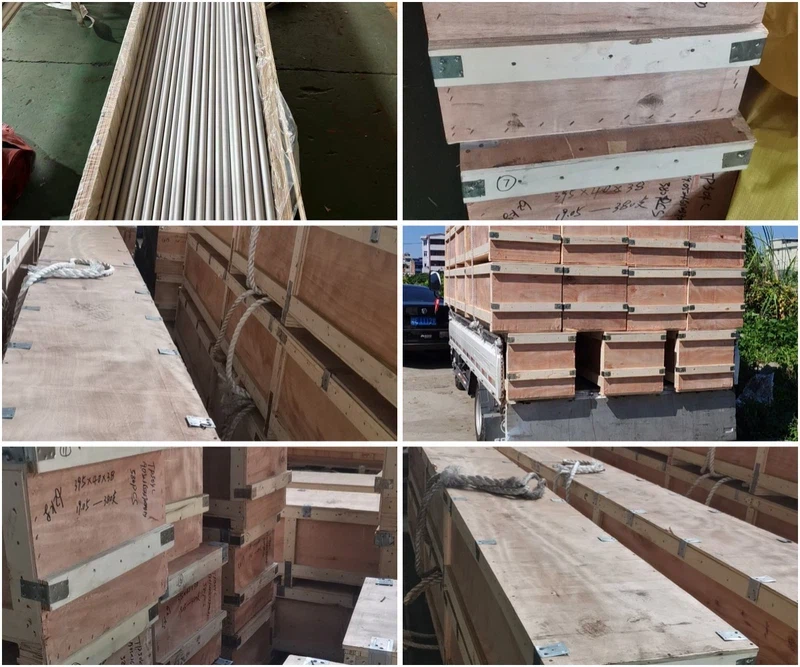
Gnee Steel specializes in the production of a wide range of stainless steel products. Gnee Steel's product packaging includes: Steel Strapping: Pipes with an outer diameter of 3 inches or less are typically strapped together with polypropylene film to prevent rust during ocean shipping, and then secured with steel strapping. Wooden Cases/Crates: Pipes are typically packaged in wooden cases or crates to protect the pipes during transportation, especially those that are longer or have larger diameters. Seaworthy Export Packaging: Suppliers typically use standard seaworthy export packaging methods, which may include a variety of materials and techniques to protect the pipes during transportation. Tarpaulin Packaging: This prevents rain, seawater, and other external factors from penetrating the export crates during transportation. Gnee Steel specializes in the production and sale of alloy materials. Gnee Steel's products are widely used in the aerospace, chemical, power, automotive, and nuclear energy sectors, and we can provide customized alloy material solutions based on customer needs. For alloy material pricing or customized alloy material solutions, please contact us for a quote: ru@gneesteelgroup.com