


Comparison of 316 stainless steel pipe with other grades of stainless steel pipe

Comparison of 316 stainless steel pipe with other grades of stainless steel pipe
316 stainless steel pipes, containing molybdenum, possess excellent corrosion resistance, especially in chloride-rich environments, and their mechanical strength is also higher than that of 304 stainless steel. However, their cost is also higher. For general applications with less stringent corrosion requirements, 304 stainless steel pipes are a more economical choice; while for marine, chemical, and other harsh environments, 316 stainless steel pipes are the superior option, with their superior durability and service life more than compensating for their price disadvantage.
What is SS316 pipe?
SS316 seamless pipe refers to pipe without weld seams or fillet welds. These pipes range in outer diameter from 0.5 inches to 16 inches. They are widely used in marine systems, pulp and paper, chemical industries, and more. This marine-grade 316 stainless steel pipe will not corrode or rust in harsh marine environments.

Stainless steel is a common material for pipes and tubing.
Stainless steel is a popular choice for pipes and tubing due to its corrosion resistance, durability, and strength. 316 and 316L are widely used across various industries for their excellent corrosion resistance. However, understanding the differences between these grades and other stainless steel grades is crucial when considering the use of stainless steel pipes for specific applications.
316L stainless steel pipe and the 304 grade are another commonly used stainless steel grade, known for their excellent corrosion resistance and strength. However, compared to 316L stainless steel, 304 has a lower molybdenum content, which reduces its resistance to pitting and crevice corrosion. Therefore, 316L stainless steel is more suitable for harsher environments such as marine and chemical industries.
Duplex Stainless Steel
Duplex stainless steels, such as type 2205 low-carbon steel, offer even higher corrosion resistance and strength than 316L stainless steel, making them ideal for highly corrosive environments such as oil and gas production. However, duplex stainless steel can be more expensive and more difficult to process, making 316L stainless steel a more cost-effective choice for less demanding applications.
High-Temperature Applications
For applications requiring high temperatures, such as electric resistance furnace components and exhaust systems, type 310 stainless steel is a better choice due to its higher chromium and nickel content, resulting in excellent high-temperature resistance. In conclusion, understanding the differences between different grades of stainless steel and their suitability for specific applications is crucial when considering the use of stainless steel pipes. While 316L stainless steel offers excellent corrosion resistance in harsh environments, other grades may be more suitable for high-temperature or highly corrosive applications.
Chemical Composition Comparison: 316 Stainless Steel Tube vs. Other Grades
| Element | 316 (%) | 304 (%) | 304L (%) | 321 (%) | 310S (%) | 317L (%) | 904L (%) |
|---|---|---|---|---|---|---|---|
| Carbon (C) | ≤ 0.08 | ≤ 0.08 | ≤ 0.03 | ≤ 0.08 | ≤ 0.08 | ≤ 0.03 | ≤ 0.02 |
| Chromium (Cr) | 16.0 - 18.0 | 18.0 - 20.0 | 18.0 - 20.0 | 17.0 - 19.0 | 24.0 - 26.0 | 18.0 - 20.0 | 19.0 - 23.0 |
| Nickel (Ni) | 10.0 - 14.0 | 8.0 - 10.5 | 8.0 - 12.0 | 9.0 - 12.0 | 19.0 - 22.0 | 11.0 - 15.0 | 23.0 - 28.0 |
| Molybdenum (Mo) | 2.0 - 3.0 | - | - | - | - | 3.0 - 4.0 | 4.0 - 5.0 |
| Manganese (Mn) | ≤ 2.0 | ≤ 2.0 | ≤ 2.0 | ≤ 2.0 | ≤ 2.0 | ≤ 2.0 | ≤ 2.0 |
| Silicon (Si) | ≤ 0.75 | ≤ 0.75 | ≤ 0.75 | ≤ 0.75 | ≤ 1.50 | ≤ 0.75 | ≤ 1.00 |
| Phosphorus (P) | ≤ 0.045 | ≤ 0.045 | ≤ 0.045 | ≤ 0.045 | ≤ 0.045 | ≤ 0.045 | ≤ 0.045 |
| Sulfur (S) | ≤ 0.03 | ≤ 0.03 | ≤ 0.03 | ≤ 0.03 | ≤ 0.03 | ≤ 0.03 | ≤ 0.035 |
| Nitrogen (N) | - | ≤ 0.10 | ≤ 0.10 | - | - | ≤ 0.10 | ≤ 0.10 |
| Copper (Cu) | - | - | - | - | - | - | 1.0 - 2.0 |
| Titanium (Ti) | - | - | - | ≥ 5×C | - | - | - |
| Other Elements | - | - | - | - | - | - | - |
Application and Composition Comparison: 316 Stainless Steel Tube vs. Other Grades
| Grade | Key Composition Features | Primary Application Areas |
|---|---|---|
| 316 | Cr 16-18%, Ni 10-14%, Mo 2-3% | Chemical processing, marine environments, pharmaceutical equipment, coastal architecture |
| 304 | Cr 18-20%, Ni 8-10.5%, Mo 0% | Food processing equipment, kitchen utensils, architectural trim, water tanks, general industrial |
| 304L | Low Carbon (≤0.03%), Cr 18-20%, Ni 8-12%, Mo 0% | Welded chemical containers, heat exchangers (where welding is required to prevent sensitization) |
| 321 | Ti-stabilized (≥5×C%), Cr 17-19%, Ni 9-12% | Aerospace, automotive exhaust systems, high-temperature applications (400-900°C) |
| 310S | High Cr (24-26%) & Ni (19-22%) | High-temperature furnace parts, heat treatment equipment, thermal processing |
| 317L | Higher Mo (3-4%), Low C (≤0.03%) | More corrosive chemical environments (e.g., pulp & paper bleach plants), flue gas desulfurization |
| 904L | High Mo (4-5%), High Ni (23-28%), Cu (1-2%) | Severe corrosive environments: sulfuric acid plants, phosphoric acid equipment, seawater cooling systems |
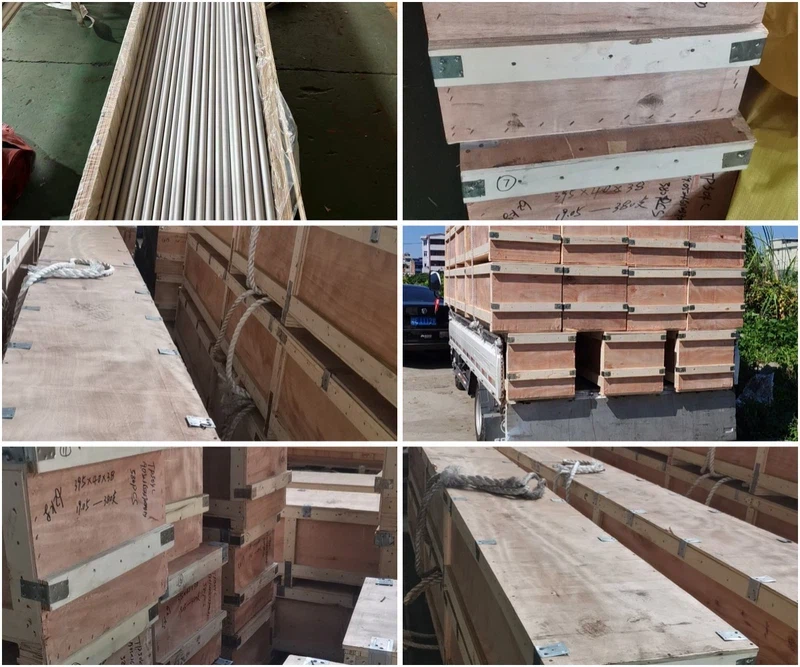
Gnee Steel specializes in the production of a wide range of stainless steel products. Gnee Steel's product packaging includes: Steel Strapping: Pipes with an outer diameter of 3 inches or less are typically strapped together with polypropylene film to prevent rust during ocean shipping, and then secured with steel strapping. Wooden Cases/Crates: Pipes are typically packaged in wooden cases or crates to protect the pipes during transportation, especially those that are longer or have larger diameters. Seaworthy Export Packaging: Suppliers typically use standard seaworthy export packaging methods, which may include a variety of materials and techniques to protect the pipes during transportation. Tarpaulin Packaging: This prevents rain, seawater, and other external factors from penetrating the export crates during transportation. Gnee Steel specializes in the production and sale of alloy materials. Gnee Steel's products are widely used in the aerospace, chemical, power, automotive, and nuclear energy sectors, and we can provide customized alloy material solutions based on customer needs. For alloy material pricing or customized alloy material solutions, please contact us for a quote: ru@gneesteelgroup.com