


304 vs. 430 stainless steel: what's the difference?

304 vs. 430 stainless steel: what's the difference?
304 stainless steel has a higher nickel content, making it more corrosion-resistant and non-magnetic, but it is also more expensive. 430 stainless steel, on the other hand, is magnetic, has moderate corrosion resistance, and is more affordable, often used in indoor applications such as appliance panels. 304 is austenitic stainless steel, while 430 is ferritic stainless steel.
What are the uses of 430 stainless steel?
430 stainless steel has a low nickel content, with a maximum of approximately 0.75%, making it less expensive than austenitic stainless steel. 430 stainless steel is commonly used in applications requiring corrosion resistance, such as kitchen appliances, automotive trim, architectural components, and industrial equipment.

What is 304 Stainless Steel?
304 stainless steel is a chromium-nickel alloy with excellent corrosion resistance. This makes it ideal for applications requiring extremely high durability and rust resistance.
Furthermore, compared to many other types of stainless steel, 304 stainless steel is easier to form, making it the preferred choice for projects requiring high precision or intricate details.
What is 430 Stainless Steel?
430 stainless steel is known for its corrosion resistance and low allergenicity. It also has strong resistance to harsh environments and chemicals, making it suitable for a wide range of applications.
Because 430 stainless steel can withstand high temperatures and acidic environments, it is often used in food packaging and medical equipment.
430 Stainless Steel vs. 304 Stainless Steel
Cost: The cost of stainless steel depends primarily on the prices of its constituent elements, which are affected by global market fluctuations. 304 stainless steel is generally more expensive than 430 stainless steel because it contains 8-10.5% nickel, an expensive element that enhances corrosion resistance. 430 stainless steel contains no nickel, making it more affordable, but its corrosion resistance is also poorer.
Magnetic Properties: 304 stainless steel is an austenitic stainless steel and is generally non-magnetic, but it may exhibit slight magnetism after cold working, especially on cut edges. While 430 stainless steel is magnetic, and 304 stainless steel is generally non-magnetic, not all magnetic stainless steel is 430 stainless steel, and not all non-magnetic stainless steel is 304 stainless steel.
These differences make each type of stainless steel suitable for different applications, depending on budget, corrosion resistance requirements, and magnetism.
Chemical Composition 430 Stainless Steel vs 304
| Grade | C | Si | Mn | P | S | N | Cr | Ni |
|---|---|---|---|---|---|---|---|---|
| 304 | 0.07 | 1.00 | 2.00 | 0.045 | 0.015 | 0.10 | 17.5 – 19.5 | 8.0 – 10.5 |
| 430 | 0.08 | 1.00 | 1.00 | 0.040 | 0.015 | – | 16.0 – 18.0 | – |
Physical Properties of 304 and 430 Stainless Steel
| Physical Property | 304 Stainless Steel | 430 Stainless Steel |
| Magnetism | Non-magnetic | Magnetic |
| Density | 7.93 g/cm³ | 7.7 g/cm³ |
| Melting Point | 1400-1450°C (2552-2642°F) | 1425-1510°C (2597-2750°F) |
| Elastic Modulus | 193-200 GPa | 200 GPa |
| Thermal Conductivity | 16.2 W/m·K (at 100°C) | 23.9 W/m·K (at 100°C) |
| Thermal Expansion Coefficient | 16.0 x 10⁻⁶ /K | 10.4 x 10⁻⁶ /K |
Mechanical Properties of 304 and 430 Stainless Steel
| Mechanical Property | 304 Stainless Steel | 430 Stainless Steel |
| Yield Strength | 205 MPa (30 ksi) | 275 MPa (40 ksi) |
| Tensile Strength | 505 MPa (73 ksi) | 450 MPa (65 ksi) |
| Elongation | 40-50% | 20-30% |
| Reduction of Area | 55% | 45% |
| Brinell Hardness | 201 HB | 187 HB |
| Weldability | Excellent | Good |
| Machinability | Moderate | Fair |
Applications Comparison: 304 vs 430 Stainless Steel
| Industry | 304 Stainless Steel Applications | Why 304 is Suitable | 430 Stainless Steel Applications | Why 430 is Suitable |
|---|---|---|---|---|
| Food Processing | Food and beverage processing equipment | High corrosion resistance and ease of cleaning | - | - |
| Kitchenware | Sinks, countertops, cookware | Non-reactive and durable surface, easy to clean | Cookware, sinks, and kitchen appliances | Cost-effective and decent corrosion resistance |
| Medical | Surgical instruments, medical devices | High hygiene standards and corrosion resistance | - | - |
| Construction | Architectural panels, building facades, handrails | Aesthetic appeal and durability in various weather conditions | Wall cladding, roofing sheets | Good appearance and durability in architectural elements |
| Chemical | Storage tanks, pipelines, chemical processing equipment | Excellent resistance to chemicals and corrosion | - | - |
| Marine | Marine equipment, boat fittings | Resists saltwater corrosion effectively | Boat fittings, marine hardware | Corrosion-resistant in less aggressive marine environments |
| Automotive | Exhaust systems, trim components | High strength and resistance to heat | Automotive trim, exhaust systems | Good corrosion resistance and ability to hold up to wear |
| Appliances | - | - | Oven linings, dishwasher interiors, refrigerator trims | Magnetic properties and resistance to heat and corrosion |
| Household | - | - | Bathroom fittings, door handles, and decorative trims | Cost-effective with good magnetic properties |
| HVAC | - | - | Air ducts, furnace parts | Good resistance to heat and corrosion |
| Industrial | - | - | Industrial equipment housings, machinery parts | Good durability and resistance to wear |
| Pipelines | Water and gas pipelines | Good corrosion resistance and strength | - | - |
| Energy | Power generation equipment, reactor components | High strength and resistance to harsh conditions | - | - |
| Textiles | Dyeing and finishing equipment | Corrosion resistance to chemicals used in processing | - | - |
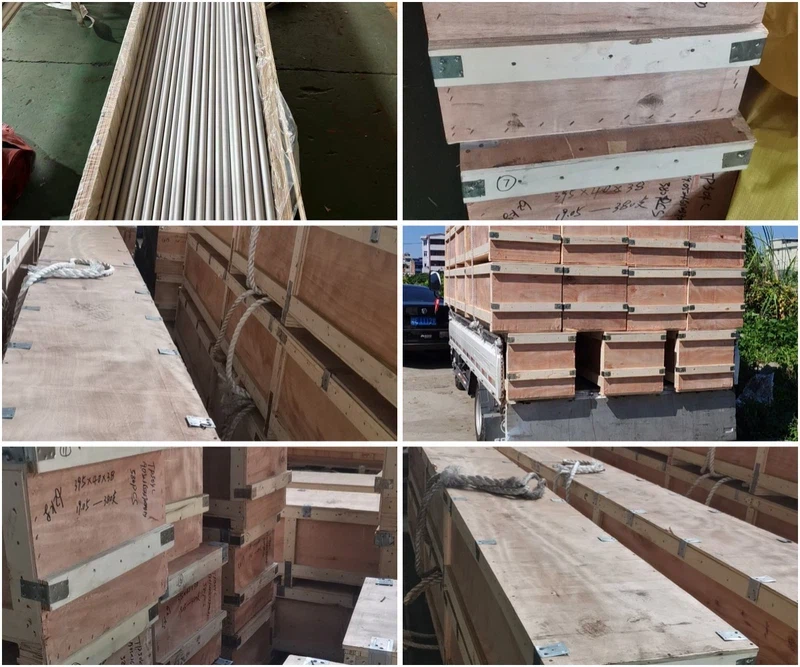
Gnee Steel specializes in the production of a wide range of stainless steel products. Gnee Steel's product packaging includes: Steel Strapping: Pipes with an outer diameter of 3 inches or less are typically strapped together with polypropylene film to prevent rust during ocean shipping, and then secured with steel strapping. Wooden Cases/Crates: Pipes are typically packaged in wooden cases or crates to protect the pipes during transportation, especially those that are longer or have larger diameters. Seaworthy Export Packaging: Suppliers typically use standard seaworthy export packaging methods, which may include a variety of materials and techniques to protect the pipes during transportation. Tarpaulin Packaging: This prevents rain, seawater, and other external factors from penetrating the export crates during transportation. Gnee Steel specializes in the production and sale of alloy materials. Gnee Steel's products are widely used in the aerospace, chemical, power, automotive, and nuclear energy sectors, and we can provide customized alloy material solutions based on customer needs. For alloy material pricing or customized alloy material solutions, please contact us for a quote: ru@gneesteelgroup.com