


What is the difference between 17-4 PH and 304 stainless steel?

What is the difference between 17-4 PH and 304 stainless steel?
The main difference lies in the type of stainless steel. 17-4 PH stainless steel is a high-strength, heat-treatable alloy, ideal for high-stress applications; while 304 stainless steel is a more versatile, easier-to-process, and cost-effective option, offering excellent corrosion resistance in a variety of environments. 17-4 PH stainless steel exhibits significantly increased strength and hardness after heat treatment, while 304 stainless steel offers better ductility and is more suitable for parts requiring mass forming or used in marine environments.
What are the applications of 17-4 PH stainless steel?
17-4 PH stainless steel is suitable for applications requiring high strength, high hardness, and corrosion resistance, with a maximum temperature resistance of 300 °C (600 °F). It is widely used in the aerospace industry due to its high strength and in the marine industry due to its corrosion resistance. However, it should be noted that it is prone to crevice corrosion in stagnant saltwater environments.


What Is 17-4 Stainless Steel (17-4 PH)?
17-4 stainless steel, designated UNS S17400, belongs to the precipitation-hardening martensitic stainless steel category. Its name derives from its typical composition: 17% chromium and 4% nickel. This grade uniquely combines high strength, moderate corrosion resistance, and the ability to finely control mechanical properties through heat treatment.
In the solution-annealed state, 17-4 stainless steel is relatively soft, making it easy to machine and form. However, after aging heat treatment, its tensile strength can reach 900–1310 MPa, significantly higher than common austenitic stainless steels such as 304. This superior performance makes it highly attractive for components requiring a balance of strength, wear resistance, and fatigue resistance.
What Is 304 Stainless Steel?
304 stainless steel, UNS designation S30400, is the most widely used austenitic stainless steel grade. Its composition is 18% chromium and 8% nickel, also known as 18-8 stainless steel. 304 stainless steel is popular because it combines excellent corrosion resistance, reliable weldability, and good formability, performing well over a wide temperature range.
Unlike 17-4 PH stainless steel, 304 stainless steel cannot be strengthened by heat treatment. It offers stable corrosion resistance and ease of processing. Although its strength is lower than 17-4 stainless steel, its excellent performance in harsh environments and ample supply make it a reliable choice for everyday applications.

Chemical Composition Comparison
| Element (%) | 17-4 PH (S17400) | 304 (S30400) |
| Chromium (Cr) | 15.0–17.5 | 18.0–20.0 |
| Nickel (Ni) | 3.0–5.0 | 8.0–10.5 |
| Carbon (C) | ≤0.07 | ≤0.08 |
| Manganese (Mn) | ≤1.0 | ≤2.0 |
| Silicon (Si) | ≤1.0 | ≤1.0 |
| Phosphorus (P) | ≤0.04 | ≤0.045 |
| Sulfur (S) | ≤0.03 | ≤0.03 |
| Copper (Cu) | 3.0–5.0 | – |
| Niobium + Tantalum (Nb+Ta) | 0.15–0.45 | – |
| Nitrogen (N) | – | ≤0.10 |
17-4 stainless steel vs 304: Corrosion Resistance
304 stainless steel is renowned for its exceptional corrosion resistance. Its high chromium and nickel content gives it strong resistance to oxidation and a wide range of chemicals, making it ideal for food processing equipment, kitchenware, and chemical containers.
17-4 stainless steel also offers good corrosion resistance, but its performance is generally inferior to 304 stainless steel in highly corrosive environments. However, it strikes a good balance between corrosion resistance and mechanical strength, making it commonly used in high-strength marine components, aerospace hardware, and chemical equipment.
17-4 PH vs. 304 Stainless Steel: Physical Properties Comparison
| Property | 17-4 PH Stainless Steel | 304 Stainless Steel |
| Density (g/cm³) | 7.75 – 7.80 | 7.90 |
| Melting Point (°C) | ~1400 – 1440°C | ~1390 – 1450°C |
| Specific Heat Capacity (J/kg·K) | ~500 | ~500 |
| Thermal Conductivity (W/m·K) | ~17.0 at 100°C | ~16.2 at 100°C |
| Thermal Expansion (20–100°C) | 10.8 × 10⁻⁶ /K | 17.2 × 10⁻⁶ /K |
| Linear Thermal Expansion Coefficient (10⁻⁶/K) | ~10.8 (20–100°C) | ~17.2 (20–100°C) |
| Electrical Resistivity (μΩ·m) | ~0.90 – 1.00 | ~0.73 |
| Elastic Modulus (kN/mm² or GPa) | ~200 kN/mm² (200 GPa) | ~193 kN/mm² (193 GPa) |
| Magnetic Properties | Magnetic (ferritic-martensitic, especially after aging) | Non-magnetic in annealed condition (austenitic) |
| Electrical Conductivity (% IACS) | ~2 – 3% IACS (very low) | ~2.5 – 3% IACS (very low) |
Machining Implications of 17-4 PH vs. 304 Stainless Steel
| Factor | 17-4 PH Stainless Steel | 304 Stainless Steel |
| Dimensional Stability | Excellent due to low thermal expansion; ideal for tight-tolerance parts | More thermal expansion can cause distortion in high-temp operations |
| Tool Wear | Can be abrasive, especially when hardened | Softer than 17-4 PH; generally easier on tools |
| Machinability | Moderate; improves after aging heat treatment | Good, but prone to work hardening if not machined correctly |
| Coolant Use | Essential to control heat during cutting | Also important, but less critical compared to 17-4 PH |
| Cutting Speed | Lower speeds required due to hardness and strength | Allows higher speeds but may require chip breaking to avoid clogging |
| Magnetism Consideration | Magnetic – must be considered in precision or sensitive applications | Non-magnetic – preferred in electronics or MRI-related components |
| Welding & Post-Processing | Weldable, but properties change after welding (may require re-aging) | Excellent weldability with stable structure |
| Property | 17/4 PH Stainless Steel | 304 Stainless Steel |
| Type | Martensitic, precipitation-hardening | Austenitic |
| Hardenability | Yes, via heat treatment (H900–H1150) | No, only via cold working |
| Tensile/Yield Strength | High | Moderate |
| Corrosion Resistance | Good, but less than 304 in chloride environments | Excellent in many environments including marine |
| Magnetism | Magnetic | Non-magnetic (in annealed state) |
| Machinability | Moderate (improves after heat treatment) | Fair (work-hardens quickly) |
| Weldability | Weldable (requires post-weld heat treatment) | Excellent weldability |
| Cost | Higher (due to alloying and treatment) | Lower (more economical and available) |
| Common Applications | Aerospace, nuclear, high-stress parts, CNC machining components | Food processing, kitchenware, medical devices, general use |
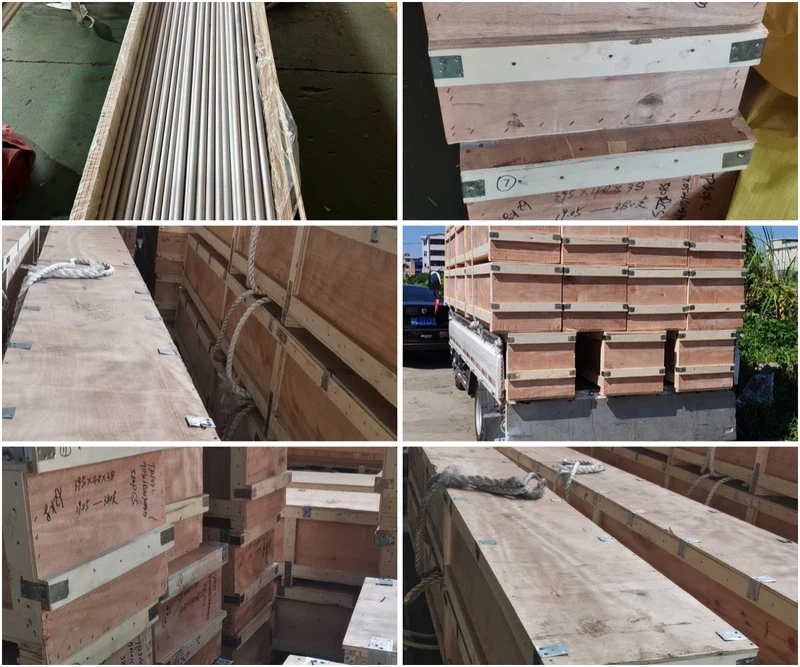
Gnee Steel specializes in the production of a wide range of stainless steel products. Gnee Steel's product packaging includes: Steel Strapping: Pipes with an outer diameter of 3 inches or less are typically strapped together with polypropylene film to prevent rust during ocean shipping, and then secured with steel strapping. Wooden Cases/Crates: Pipes are typically packaged in wooden cases or crates to protect the pipes during transportation, especially those that are longer or have larger diameters. Seaworthy Export Packaging: Suppliers typically use standard seaworthy export packaging methods, which may include a variety of materials and techniques to protect the pipes during transportation. Tarpaulin Packaging: This prevents rain, seawater, and other external factors from penetrating the export crates during transportation. Gnee Steel specializes in the production and sale of alloy materials. Gnee Steel's products are widely used in the aerospace, chemical, power, automotive, and nuclear energy sectors, and we can provide customized alloy material solutions based on customer needs. For alloy material pricing or customized alloy material solutions, please contact us for a quote: ru@gneesteelgroup.com