


904L vs 304L Stainless Steel – What's the Difference

904L vs 304L Stainless Steel – What's the Difference
The main difference is that 904L is a super austenitic stainless steel. Due to its significantly higher chromium, nickel, and molybdenum content compared to 304L, and the addition of copper, it has superior corrosion resistance. This makes 904L suitable for harsh environments such as sulfuric acid or brine, while 304L is a more common and cheaper general-purpose stainless steel.
Which is better, 904L or 316L?
904L Stainless Steel: Compared to 316L, 904L stainless steel has superior corrosion resistance, especially in highly corrosive chemical environments. Therefore, 904L stainless steel is the preferred material for applications handling highly corrosive substances such as sulfuric acid.

What is 904L Stainless Steel?
904L stainless steel is a low-carbon, unstabilized austenitic stainless steel. Compared to other steels on the market, this steel has excellent formability, weldability, and toughness. Due to its low-carbon, high-nickel composition, it also has high resistance to crevice corrosion and stress corrosion cracking. 904L is widely used in chemical equipment, food processing equipment, medical devices, chemical storage tanks, heat exchangers, pressure vessels, valves, pumps, nuclear reactors, and other fields.
What is 304L Stainless Steel?
304L stainless steel is an austenitic stainless steel containing 18-20% chromium and 8-10% nickel, with iron as the main alloying element. Compared to other steels on the market, this steel has excellent formability and weldability. Its excellent oxidation resistance makes it ideal for applications where oxidation problems may occur, such as marine applications or chemical processing areas where chlorine or sulfur compounds may be present. Furthermore, it has excellent resistance to chloride solutions, making it ideal for food processing equipment or medical devices that frequently come into contact with salt water or brine solutions.
Chemical Composition Comparison: 304L vs 904L Stainless Steel
| Element | 304L Stainless Steel (%) | 904L Stainless Steel (%) |
|---|---|---|
| Chromium (Cr) | 18.0 - 20.0 | 19.0 - 23.0 |
| Nickel (Ni) | 8.0 - 12.0 | 23.0 - 28.0 |
| Molybdenum (Mo) | < 0.5 | 4.0 - 5.0 |
| Copper (Cu) | - | 1.0 - 2.0 |
| Carbon (C) | ≤ 0.030 | ≤ 0.020 |
| Manganese (Mn) | ≤ 2.0 | ≤ 2.0 |
| Iron (Fe) | Balance | Balance (~40-50%) |
| Silicon (Si) | ≤ 1.0 | ≤ 1.0 |
| Sulfur (S) | ≤ 0.030 | ≤ 0.035 |
Corrosion Resistance Comparison: 304L vs 904L Stainless Steel
| Corrosion Type/Environment | 304L Stainless Steel | 904L Stainless Steel |
|---|---|---|
| General Corrosion | Satisfactory resistance in less demanding environments | Excellent resistance in various corrosive environments |
| Pitting Corrosion | More susceptible in chloride-rich environments | Excellent resistance due to high molybdenum content (4-5%) |
| Crevice Corrosion | More susceptible in chloride-rich settings | Excellent resistance, particularly in chloride-rich environments |
| Stress Corrosion Cracking | Moderate resistance | High resistance due to high nickel content (23-28%) |
| Acid Resistance | Less effective in acidic environments | Excellent resistance to reducing acids like sulfuric acid, enhanced by copper addition |
| Marine Environments | More vulnerable to chloride-induced corrosion | Superior resistance to chloride-induced corrosion, ideal for seawater handling |
| Chloride-rich Environments | Limited performance | Excellent performance due to high Mo and Ni content |
| Chemical Processing | Suitable for mild chemical environments | Highly effective in aggressive chemical processing applications |
| Offshore Oil & Gas | Limited suitability | Ideal for offshore production environments |
Application Comparison Based on Corrosion Resistance: 304L vs 904L Stainless Steel
| Application Field | 304L Stainless Steel Applications | 904L Stainless Steel Applications |
|---|---|---|
| Oil & Gas Industry | - | Offshore oil and gas production equipment, seawater-exposed components |
| Chemical Processing | Mild chemical environments, storage tanks | Reactors, piping and vessels for sulfuric acid and other reducing acids |
| Marine Applications | - | Seawater handling equipment, pumps, valves, heat exchangers |
| Food Processing | Equipment, utensils, processing machinery | - |
| Architectural | Building facades, railings, decorative elements | - |
| Pharmaceutical | Processing equipment, containers | - |
| Pulp & Paper | - | Bleaching equipment, chemical recovery systems |
| Water Treatment | Fresh water systems, storage tanks | Seawater desalination plants, aggressive water treatment |
| Energy | - | Flue gas desulfurization systems, pollution control equipment |
| Mining | - | Acid mine drainage handling, processing equipment |
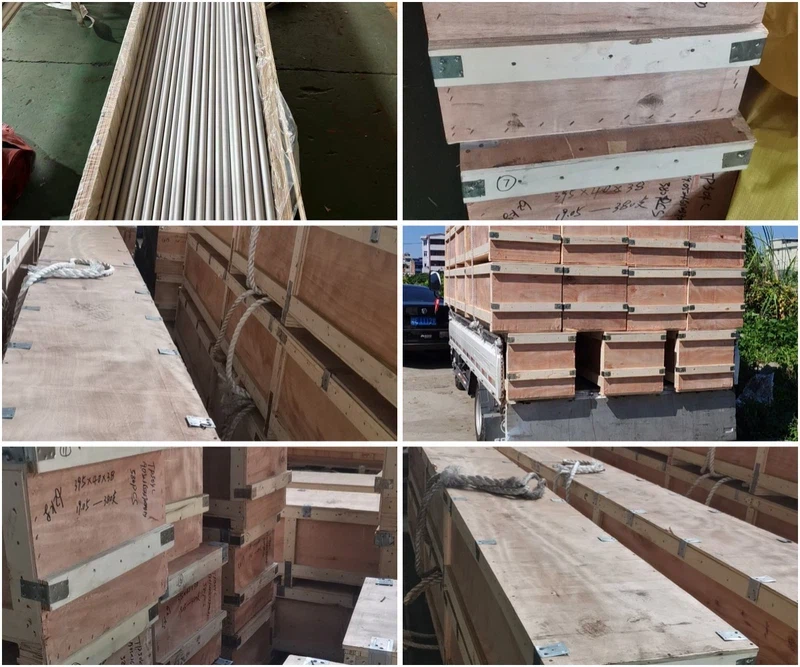
Gnee Steel specializes in the production of a wide range of stainless steel products. Gnee Steel's product packaging includes: Steel Strapping: Pipes with an outer diameter of 3 inches or less are typically strapped together with polypropylene film to prevent rust during ocean shipping, and then secured with steel strapping. Wooden Cases/Crates: Pipes are typically packaged in wooden cases or crates to protect the pipes during transportation, especially those that are longer or have larger diameters. Seaworthy Export Packaging: Suppliers typically use standard seaworthy export packaging methods, which may include a variety of materials and techniques to protect the pipes during transportation. Tarpaulin Packaging: This prevents rain, seawater, and other external factors from penetrating the export crates during transportation. Gnee Steel specializes in the production and sale of alloy materials. Gnee Steel's products are widely used in the aerospace, chemical, power, automotive, and nuclear energy sectors, and we can provide customized alloy material solutions based on customer needs. For alloy material pricing or customized alloy material solutions, please contact us for a quote: ru@gneesteelgroup.com