


Which is better, 304 stainless steel or 316 stainless steel?
Gnee Steel
Which is better, 304 stainless steel or 316 stainless steel?
In applications requiring high corrosion resistance, especially against chloride corrosion, 316 stainless steel is superior to 304 stainless steel; however, 304 stainless steel, due to its excellent performance in mild environments, is a more economical choice for general-purpose applications. The main difference lies in the fact that 316 stainless steel contains molybdenum, which enhances its corrosion resistance, making it ideal for marine or chemical environments; while 304 stainless steel is more suitable for everyday uses such as kitchen equipment and interior hardware.

Gnee Steel
What are the disadvantages of 304 stainless steel?
The main disadvantages of 304 stainless steel are: it is prone to stress corrosion cracking in high chloride environments; its high-temperature resistance is limited; and its strength is lower compared to other steels. Furthermore, it is relatively soft, easily scratched, and its price may be higher due to the presence of alloying elements.

What is 304 stainless steel?
304 stainless steel alloy contains at least 18% chromium and 8% to 10.5% nickel, with a carbon content not exceeding 0.08%.
Austenitic stainless steel is characterized by its high chromium and nickel content, which gives it excellent corrosion resistance. Chromium helps form a protective oxide layer, while nickel enhances the material's toughness and ductility, making it easier to work. Compared to ferritic stainless steel, austenitic stainless steel has a lower iron content and is therefore generally non-magnetic, although some variants may exhibit slight magnetism.
304 stainless steel is the most widely used type of stainless steel due to its excellent properties. It exhibits excellent resistance to a wide range of environmental conditions and corrosive substances, making it suitable for a variety of applications, including kitchen equipment, chemical containers, and building panels. Its versatility and ease of processing make it a preferred material for the food and beverage industry, medical facilities, and residential environments. Its ability to maintain structural integrity at high temperatures further expands its applications in industrial and engineering projects. In summary, 304 stainless steel combines durability, corrosion resistance, and ease of processing, making it an indispensable material in many industries.
Properties of 304 Stainless Steel
Chemical Composition
| Grade | Carbon | Manganese | Silicon | Phosphorus | Sulfur | Chromium | Nickel | Nitrogen |
| 304 | 0.08 | 2 | 0.75 | 0.045 | 0.03 | 18.0/20.0 | 8.0/10.6 | 0.1 |
What are the Physical Properties of 304 SS?
| Physical Property | Value |
| Melting Point | 1450℃ |
| Density | 8.00 g/cm^3 |
| Thermal Expansion | 17.2 x10^-6/K |
| Modulus of Elasticity | 193 GPa |
| Thermal Conductivity | 16.2 W/m.K |
Mechanical Properties of 304 Stainless Steel
| Tensile Strength | 500-700 Mpa |
| Elongation A50 mm | 45 Min % |
| Hardness (Brinell) | 215 Max HB |
What is 304 stainless steel used for?
Some of its common industrial applications include:
| Industry | Typical applications | Why |
|---|---|---|
| Food processing equipment | Tanks, pipes & containers | Resistance to corrosion, easy to clean |
| Consumer appliances | Sinks, refrigerators, dishwashers | Durability, resistance to corrosion, aesthetic appeal |
| Automotive | Exhaust systems, trim & grilles | Resistance to corrosion, aesthetic appeal |
| Medical equipment | Surgical instruments, dental instruments & implants | Biocompatibility, resistance to corrosion & withstands high-temperature cleaning processes |
| Chemical processing equipment | Reactors, tanks & pipelines | Resistance to corrosion, stands up to a range of chemicals |
| Aerospace components | Aircraft structures, engines | High strength-to-weight ratio, resistance to corrosion, thermal stability |
What is 316 stainless steel?
316 stainless steel is another type of austenitic stainless steel. As a member of the 300 series of austenitic stainless steels, it contains nickel, just like 304. 304 stainless steel alloys have a chromium content of at least 18%, while 316 stainless steel has a lower chromium content of 16%. 316 also has a higher nickel content of 10%.
You might think that 304 stainless steel is more corrosion-resistant, but 316 contains 2% molybdenum. Molybdenum helps resist corrosion caused by chlorides (such as seawater and de-icing salt) and enhances 316's resistance to chemical corrosion.
While both have excellent corrosion resistance, 316 stainless steel is actually more corrosion-resistant than 304 stainless steel. 316 generally exhibits better strength at high temperatures, although both have excellent heat resistance.
304 and 316 stainless steel are difficult to distinguish with the naked eye-they look almost identical; the only difference is the price. 316 stainless steel is more expensive because of its higher nickel content and the addition of molybdenum.
Properties of 316 Stainless Steel
316 Ss Chemical Composition
| Carbon | 0.08 |
| Manganese | 2.00 |
| Phosphorus | 0.045 |
| Sulfur | 0.030 |
| Silicon | 0.75 |
| Chromium | 16.00 - 18.00 |
| Nickel | 10.00 - 14.00 |
| Nitrogen | 0.10 |
| Molybdenum | 2.00 – 3.00 |
| Iron | Bal. |
Physical Properties of 316 SS
| Melting point | 1400℃ |
| Density | 8.00 g/cm^3 |
| Modulus of Elasticity | 193 GPa |
| Thermal Expansion | 15.9 x 10^-6 |
| Thermal Conductivity | 16.3 W/m.K |
Mechanical Properties
| Tensile Strength | 400-620 Mpa |
| Elongation A50 mm | 45% min |
| Hardness (Brinell) | 149 max HB |
What is 316 stainless steel used for?
304 vs. 316 stainless steel uses often comes down to budget. Grade 316 can be used for the same applications as 304 – as you'll see below – but 304 can't always be used instead of 316. Here are just some of the industries and applications where 316 is put to work.
| Industry | Typical applications | Why |
|---|---|---|
| Food processing equipment | Tanks, pipes & containers | Non-reactive – does not impart any unwanted flavors or odors to food & easy to clean |
| Oil and gas | Pipelines, valves & fittings | Resistance to corrosive fluids and gases |
| Energy/power generation | Turbine blades | High-temperature strength & corrosion resistant |
| Medical equipment | Surgical instruments, dental instruments & implants | Biocompatibility, corrosion resistant & withstands high-temperature cleaning processes |
| Chemical processing equipment | Production of organic acids, storage tanks & reactors | Molybdenum enhances corrosion resistance, high-temperature strength |
| Marine | Boat fittings & seawater piping | Highly corrosion resistant in marine environments |
Why Choose Gnee Steel (Supplier Example)?
✅ Large stock of 304/316 stainless steel strip/coil, fast shipping.
✅ Factory direct sales, highly competitive prices, excellent value for money.
✅ Comprehensive quality assurance: Material Testing Certificate (MTC), Chemical Composition Certificate, and Mechanical Properties Certificate.
✅ Value-added services: Slitting, cutting, polishing, surface treatment.
✅ Worldwide shipping, secure and reliable packaging, and provision of export-required documentation.
Email: ru@gneesteelgroup.com
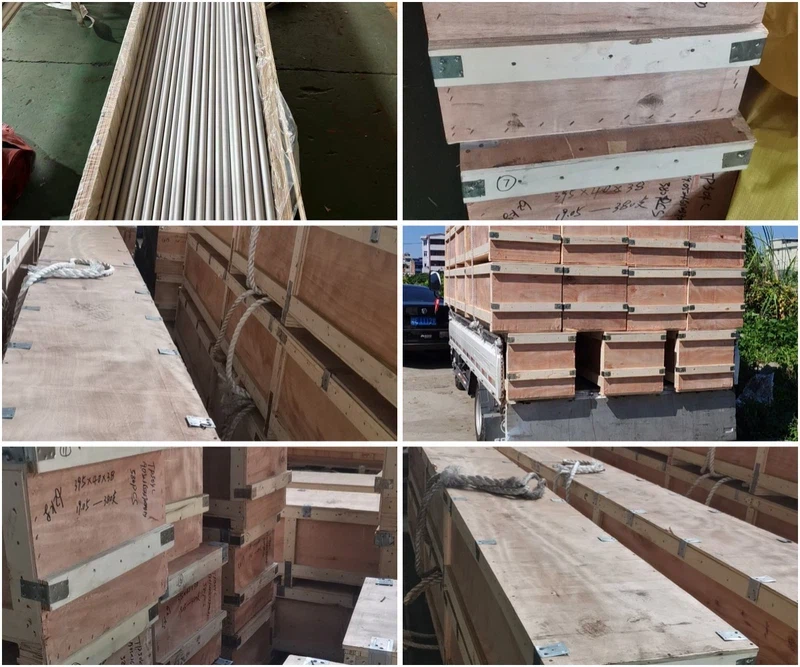
Gnee Steel specializes in the production of a wide range of stainless steel products. Gnee Steel's product packaging includes: Steel Strapping: Pipes with an outer diameter of 3 inches or less are typically strapped together with polypropylene film to prevent rust during ocean shipping, and then secured with steel strapping. Wooden Cases/Crates: Pipes are typically packaged in wooden cases or crates to protect the pipes during transportation, especially those that are longer or have larger diameters. Seaworthy Export Packaging: Suppliers typically use standard seaworthy export packaging methods, which may include a variety of materials and techniques to protect the pipes during transportation. Tarpaulin Packaging: This prevents rain, seawater, and other external factors from penetrating the export crates during transportation. Gnee Steel specializes in the production and sale of alloy materials. Gnee Steel's products are widely used in the aerospace, chemical, power, automotive, and nuclear energy sectors, and we can provide customized alloy material solutions based on customer needs. For alloy material pricing or customized alloy material solutions, please contact us for a quote: ru@gneesteelgroup.com


