


ASTM A554 TP304 stainless steel welded pipe for construction

ASTM A554 TP304 stainless steel welded pipe for construction
ASTM A554 TP304 welded pipe is suitable for building construction due to its corrosion resistance and mechanical properties, making it an ideal choice for structural framing, railings, and other applications where appearance is important. It is welded from flat-rolled steel without filler metal and has a tensile strength of approximately 85,000 PSI and a minimum yield strength of 35,000 PSI. Key construction considerations include ensuring the appropriate shape (round, square, or rectangular), specifying the desired surface finish (e.g., polished or rolled), and verifying that the grade meets the project's environmental and mechanical requirements.
What are the specifications for 304 stainless steel pipe?
304 stainless steel pipe is available in ASTM A312 or ASME SA312 standards, in various wall thicknesses (e.g., SCH 5, 10, 40, 80) and nominal pipe diameters (NPS), and in both seamless and welded (ERW/EFW) configurations. Its chemical composition limits carbon content to a maximum of 0.08% and chromium to approximately 20%. This pipe is known for its good corrosion resistance, high-temperature strength, and excellent weldability.

ASTM A554 TP304 Welded Stainless Steel Pipe for Construction Applications
ASTM A554 is the standard specification for welded stainless steel mechanical pipe. It covers pipe used in mechanical applications where corrosion resistance or aesthetics are important.
TP304 refers to grade 304 stainless steel, widely used for its excellent corrosion resistance, high strength, and good formability. It belongs to the austenitic stainless steel family and contains 18% chromium and 8% nickel, providing excellent resistance to oxidation and corrosion.
Key Features of ASTM A554 TP304 Pipe
Material Composition:
Chromium (Cr): 18%-20%.
Nickel (Ni): 8%-10.5%.
Carbon (C): Maximum 0.08%.
Manganese (Mn), silicon (Si), and trace elements meet ASTM standards.
Manufacturing Process:
Welded pipe (not seamless) is welded from stainless steel strips and formed into a tubular shape. Further processing includes polishing and finishing to meet aesthetic or functional requirements.
Applications:
Architectural uses (e.g., railings, handrails).
Automotive components.
Furniture and fixtures.
Structural applications.
Food and beverage processing equipment.
Surface finish options:
Satin finish.
Mirror polish.
Brushed finish (depending on the application).
Key Features:
High corrosion resistance in a wide range of environments.
Good mechanical strength and durability.
Easy to fabricate and weld.
Non-magnetic in the annealed condition.
Chemical Composition of ASTM A249 TP321 Stainless Steel Welded Tubes
| Grade | Carbon | Nickel | Manganese | Sulfur | Chromium | Phosphorus | Silicon |
| 304 | 0.08 | 8.0-11.0 | 2 | 0.03 | 18.0-20.0 | 0.045 |
1 |
Mechanical Property of ASTM A554 TP304 Stainless Steel Welded Tubes
| Material | Temperure | Heat | Yield Strength | Tensile Strength | Elongation |
| Min.º F(º C) | Treatment | Ksi (MPa), Min. | Ksi (MPa), Min. | ||
| 304 | 1900 (1040) | Solution | 30(205) | 75(515) | 35 |
Specifications and Finishes
Sizes: This specification covers tubing with an outside diameter up to 16 inches (406.4 mm) and a wall thickness of 0.020 inches (0.51 mm) and greater.
Surface Finish: While a basic "unrolled" finish is typically provided, you can specify other finishes, such as a polish (e.g., No. 4 or 600 grit), for a more refined appearance.
Delivery Condition: Typically delivered in the "as-welded" condition, with or without a protective coating. If special protection is required, this should be specified on the order.
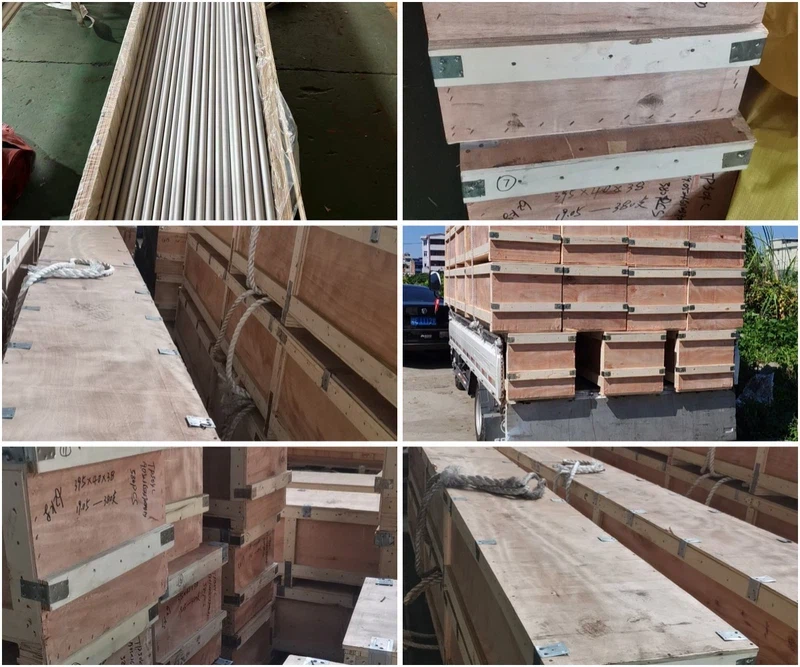
Gnee Steel specializes in the production of a wide range of stainless steel products. Gnee Steel's product packaging includes: Steel Strapping: Pipes with an outer diameter of 3 inches or less are typically strapped together with polypropylene film to prevent rust during ocean shipping, and then secured with steel strapping. Wooden Cases/Crates: Pipes are typically packaged in wooden cases or crates to protect the pipes during transportation, especially those that are longer or have larger diameters. Seaworthy Export Packaging: Suppliers typically use standard seaworthy export packaging methods, which may include a variety of materials and techniques to protect the pipes during transportation. Tarpaulin Packaging: This prevents rain, seawater, and other external factors from penetrating the export crates during transportation. Gnee Steel specializes in the production and sale of alloy materials. Gnee Steel's products are widely used in the aerospace, chemical, power, automotive, and nuclear energy sectors, and we can provide customized alloy material solutions based on customer needs. For alloy material pricing or customized alloy material solutions, please contact us for a quote: ru@gneesteelgroup.com


