


ASTM A249 TP304 stainless steel welding for oil industry pipe
Gnee Steel
ASTM A249 TP304 stainless steel welding for oil industry pipe
Welding ASTM A249 TP304 in oil industry pipe requires maintaining a clean and stable weld pool, using appropriate welding techniques (such as RMD), and ensuring proper post-weld heat treatment, particularly a solution anneal and quench to at least 1900°F (1038°C). Proper welding is crucial to achieving the corrosion resistance and mechanical properties required for this versatile material, which is commonly used in applications such as heat exchangers, boilers, and oil and gas transportation.

Gnee Steel
What does T304 mean?
T304 is a variety of 304 stainless steel, a versatile and widely used austenitic stainless steel with exceptional corrosion resistance due to its minimum 18% chromium and 8% nickel content. It's favored for applications such as kitchen sinks, food processing equipment, and exhaust systems for its durability, ease of cleaning, and long-lasting luster, although its specific "T" designation may refer to thicker premium or aircraft-grade versions.

ASME SA249 Stainless Steel Tubing Specification
| ASTM A249 TP304 Standard Specification | Stainless Steel Welded Superheater, Condenser, Hydraulic, Boiler and Heat-Exchanger Tubes |
| Manufacturing Type | ERW / Welded / Fabricated / CDW / DOM / CEW / 100% X Ray Welded |
| Delivery Condition | Annealed and Pickled (AP), Polished, Bright Annealed (BA), Cold Drawn, MF |
| Surface Finish | BA, 2B, No.4, No.1, No.3, No.8, 8K, HL, 2D, 1D, Mirror Polished, 180G, 320G, 400G Satin/ Hairline, 400G, 500G, 600G or 800G Mirror finish ASME SA249 Standard Tubing or Custom Finish as per customer's specification |
| Outside Diameter (OD) | 6 to 304.8 mm |
| Wall Thickness Range | 0.5 to 6 mm |
| Standard | SUS, JIS, AISI, ASTM, GB, DIN, EN |
| Value Added Services |
Cutting Beveling Threading Polishing (Electro & Commercial) Draw & Expansion as per required Size & Length Destructive and Non Destructive Ultrasonic Testing Annealed & Pickled Bending |
| Processing Service | Bending, Welding, Decoiling, Punching, Cutting, Moulding |
| Technique | ASTM A249 Welded Austenitic Steel Cold drawn, Cold rolled, Hot rolled, Extrusion Tube |
| Tolerance |
Outer Diameter: +/- 0.2mm Thickness: +/- 10% OR as customer request Length: +/- 10mm |
Welding Considerations
Welding Process: Conventional welding techniques, such as controlled short-circuiting, are suitable. This helps to create a stable weld pool for good penetration.
Backing Gas: Because stainless steel shrinks significantly during welding, resulting in a tighter root opening that requires shielding, processes that minimize the need for backing gas, such as controlled metal deposition (RMD), should be used.
Weld Pool Control: Maintain a clean, straight weld pool during fusion to ensure a good seal. A backoff of approximately one-quarter inch is required at the start and end points to ensure a seal.
Post-Weld Treatment: After welding, the material must be supplied in a heat-treated condition, including a solution anneal at a minimum of 1900°F (1038°C) followed by a quench.
Key Properties and Applications
Corrosion Resistance: TP304 stainless steel offers excellent corrosion resistance in normal atmospheric conditions and moderately oxidizing environments, which is critical for oil industry applications.
Versatility: This grade is known for its ease of machining, forming, and welding.
Heat Treatment: This material is supplied in the heat-treated condition specified in ASTM A249 to meet its mechanical property and corrosion resistance requirements.
Common Uses: Due to its properties, this material is commonly used in boiler, superheater, heat exchanger, and condenser piping, as well as various fluid conveying and distribution systems in the oil and gas industry.
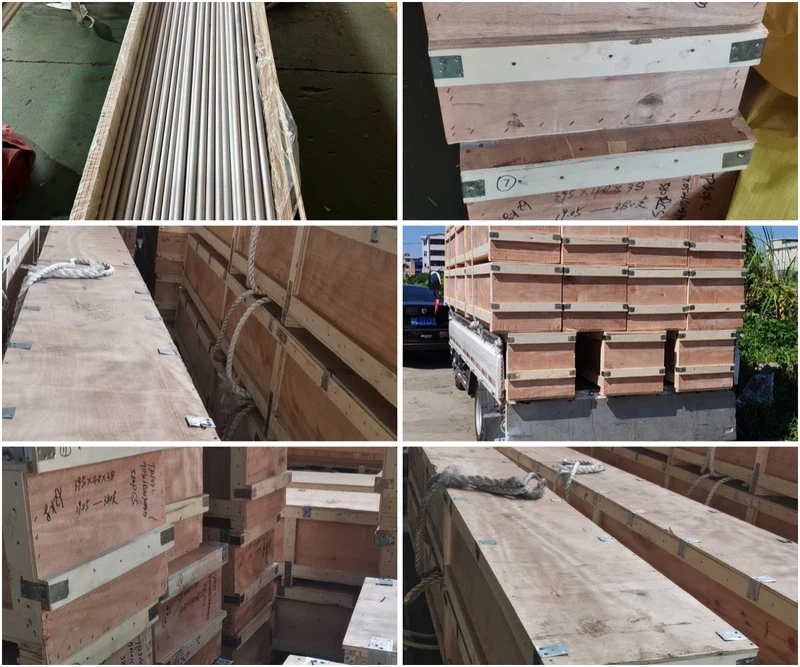
Gnee Steel specializes in the production of a wide range of stainless steel products. Gnee Steel's product packaging includes: Steel Strapping: Pipes with an outer diameter of 3 inches or less are typically strapped together with polypropylene film to prevent rust during ocean shipping, and then secured with steel strapping. Wooden Cases/Crates: Pipes are typically packaged in wooden cases or crates to protect the pipes during transportation, especially those that are longer or have larger diameters. Seaworthy Export Packaging: Suppliers typically use standard seaworthy export packaging methods, which may include a variety of materials and techniques to protect the pipes during transportation. Tarpaulin Packaging: This prevents rain, seawater, and other external factors from penetrating the export crates during transportation. Gnee Steel specializes in the production and sale of alloy materials. Gnee Steel's products are widely used in the aerospace, chemical, power, automotive, and nuclear energy sectors, and we can provide customized alloy material solutions based on customer needs. For alloy material pricing or customized alloy material solutions, please contact us for a quote: ru@gneesteelgroup.com


