


What is the difference between 316 and 304

What is the difference between 316 and 304
The main difference lies in the fact that 316 stainless steel contains molybdenum, which gives it greater corrosion resistance than 304 stainless steel, especially in chloride-rich environments such as seawater. Therefore, 316 stainless steel is the preferred choice for marine and harsh chemical environments, while 304 stainless steel is sufficient for general-purpose applications and is more cost-effective, particularly suitable for situations where high corrosion resistance is not required.
What are the uses of 304 stainless steel?
304 stainless steel is widely used in various fields due to its excellent corrosion resistance, durability, and versatility. It is commonly found in kitchen and food processing equipment, medical devices, automotive parts, and the construction industry. Its inert and easy-to-clean properties also make it suitable for hygienic environments.

304 Stainless Steel vs. 316 Stainless Steel
Cost: The cost of stainless steel depends primarily on its alloy composition. All stainless steels contain at least 10.5% chromium and are alloyed with iron, which is the main component of their final composition. However, various other elements also affect the properties and characteristics of stainless steel, ultimately impacting its cost.
316 stainless steel contains at least 2.0% molybdenum, giving it greater corrosion resistance than 304 stainless steel. However, because molybdenum is a more expensive element, 316 stainless steel is generally more expensive.
Magnetic Properties
Both of these stainless steels are austenitic, meaning they are not inherently magnetic, but cold working can affect their magnetism. When stainless steel is formed or cut, its magnetism is slightly enhanced, but this enhancement is very minor.
Chemical composition
| Grade | C | Si | Mn | P | S | N | Cr | Ni | Mo |
|---|---|---|---|---|---|---|---|---|---|
| 304 | 0.07 | 1.00 | 2.00 | 0.045 | 0.015 | 0.10 | 17.5 - 19.5 | 8.0 - 10.5 | - |
| 316 | 0.07 | 1.00 | 2.00 | 0.045 | 0.015 | 0.10 | 16.5 - 18.5 | 10.0 - 13.0 | 2.0 - 2.5 |

Applications for 304 Stainless Steel
Most applications of 304 stainless steel are attributed to its high chromium content, which gives the alloy excellent corrosion resistance. These applications include:
• Manufacturing kitchen appliances such as refrigerators and dishwashers
• Manufacturing heat exchangers
• Manufacturing commercial food processing equipment and kitchen accessories, such as sinks and backsplashes
• Manufacturing pans, cutlery, and knives and forks
• Building paneling
• Manufacturing nuts, bolts, and screws
• Manufacturing equipment for brewing, food, and pharmaceutical production
Generally, stainless steel is used in applications where ordinary carbon steel would corrode.
Applications for 316 Stainless Steel
316 stainless steel was originally developed for paper mills. Now, it is widely used in a variety of fields, including:
· Manufacturing of equipment for food, chemical, and petroleum production and processing
· Manufacturing of laboratory workbenches and equipment
· Building paneling in coastal areas
· Marine fittings
· Mining screens
· Kitchenware, sanitary ware, and sinks
· Piping
· Medical implants
316 stainless steel has better corrosion resistance than ordinary stainless steel and typically exhibits higher strength at high temperatures.

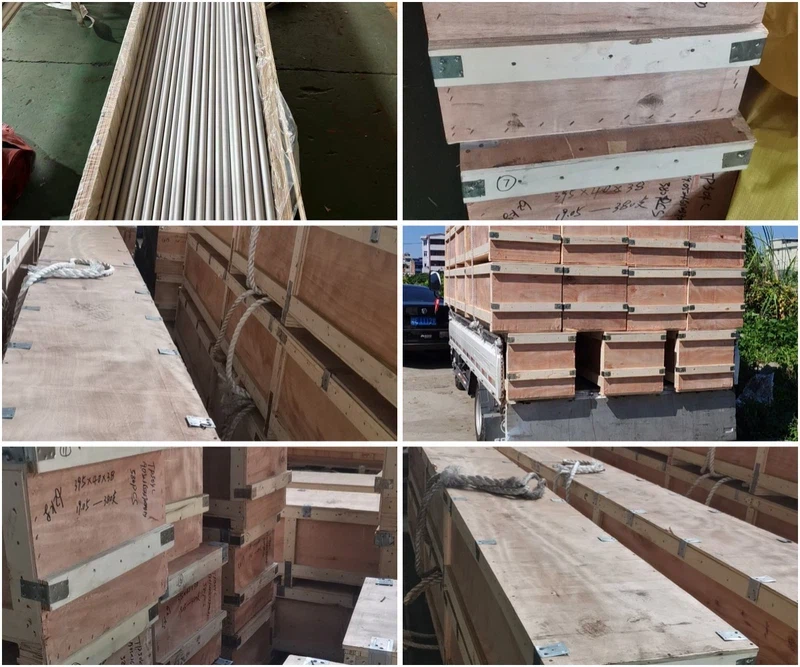
Gnee Steel specializes in the production of a wide range of stainless steel products. Gnee Steel's product packaging includes: Steel Strapping: Pipes with an outer diameter of 3 inches or less are typically strapped together with polypropylene film to prevent rust during ocean shipping, and then secured with steel strapping. Wooden Cases/Crates: Pipes are typically packaged in wooden cases or crates to protect the pipes during transportation, especially those that are longer or have larger diameters. Seaworthy Export Packaging: Suppliers typically use standard seaworthy export packaging methods, which may include a variety of materials and techniques to protect the pipes during transportation. Tarpaulin Packaging: This prevents rain, seawater, and other external factors from penetrating the export crates during transportation. Gnee Steel specializes in the production and sale of alloy materials. Gnee Steel's products are widely used in the aerospace, chemical, power, automotive, and nuclear energy sectors, and we can provide customized alloy material solutions based on customer needs. For alloy material pricing or customized alloy material solutions, please contact us for a quote: ru@gneesteelgroup.com

