


304 vs 316 Stainless Steel: What You Need to Know

304 vs 316 Stainless Steel: What You Need to Know
The main difference lies in the fact that 316 stainless steel, due to the addition of molybdenum, has superior corrosion resistance, making it ideal for harsh environments such as marine or chemical plants; while 304 stainless steel is more economical and suitable for general applications where corrosion resistance requirements are not high. 304 stainless steel has better processing performance, while 316 stainless steel is slightly better in high-temperature applications and weldability.
What is 304 stainless steel pipe?
304 stainless steel is a high-strength material with excellent corrosion resistance, making it ideal for fluid channels. ASTM A312 is the standard specification for seamless and welded stainless steel pipe.

What is 304 stainless steel?
Type 304 stainless steel is an austenitic stainless steel alloy with a high nickel content (8-10.5%), a high chromium content (18-20%), and added manganese, silicon, and carbon. It is widely considered the most widely used austenitic stainless steel.
It is widely used in the following areas:
White goods, such as refrigerators, dishwashers, and freezers
Hose clamps
Automotive exhaust systems
Heat exchangers
Storage tanks
It is a mainstay in modern metals, especially suitable for environments where carbon steel is easily corroded.
What is 316 stainless steel?
Like 304 stainless steel, 316 stainless steel has a high nickel and chromium content, and the same levels of manganese, silicon, and carbon. The main difference lies in the molybdenum content. 316 stainless steel contains 2-3% molybdenum, while 304 stainless steel contains only trace amounts.
Applications of 316 stainless steel:
Surgical and medical devices
Jet engine components
Chemical processing equipment
Marine environmental equipment
Commercial kitchen equipment
Comparison of chemical composition and alloying elements
| Element | 304 Stainless Steel | 316 Stainless Steel |
|---|---|---|
| Chromium (Cr) | 18–20% | 16–18% |
| Nickel (Ni) | 8–10.5% | 10–14% |
| Molybdenum (Mo) | - | 2–3% |
| Carbon (C) | ≤ 0.08% | ≤ 0.08% |
| Manganese (Mn), Silicon (Si), Phosphorus (P), Sulphur (S) | Trace amounts | Trace amounts |
Mechanical and Physical Properties
| Property | 304 Stainless Steel | 316 Stainless Steel |
|---|---|---|
| Tensile Strength (MPa) | ~520 | ~515 |
| Yield Strength (MPa) | ~215 | ~205 |
| Elongation (%) | ~45 | ~40 |
| Density (g/cm³) | 8.00 | 8.03 |
| Melting Point (°C) | 1400–1450 | 1375–1400 |
| Feature | 304 Stainless Steel | 316 Stainless Steel |
|---|---|---|
| Corrosion Resistance | Excellent general corrosion resistance | Superior corrosion resistance, especially against chlorides and salt water |
| Chemical Composition | 18% Chromium, 8% Nickel | 16% Chromium, 10% Nickel, 2-3% Molybdenum |
| Key Advantage | Lower cost, good formability | Higher durability in corrosive environments |
| Best For | Kitchenware, architectural trim, general fabrications | Marine applications, chemical processing, medical devices, food and pharmaceutical equipment with aggressive cleaning agents |
| Strength | Good strength and durability | Slightly higher tensile and yield strength |
| Cost | Less expensive | More expensive due to molybdenum content |
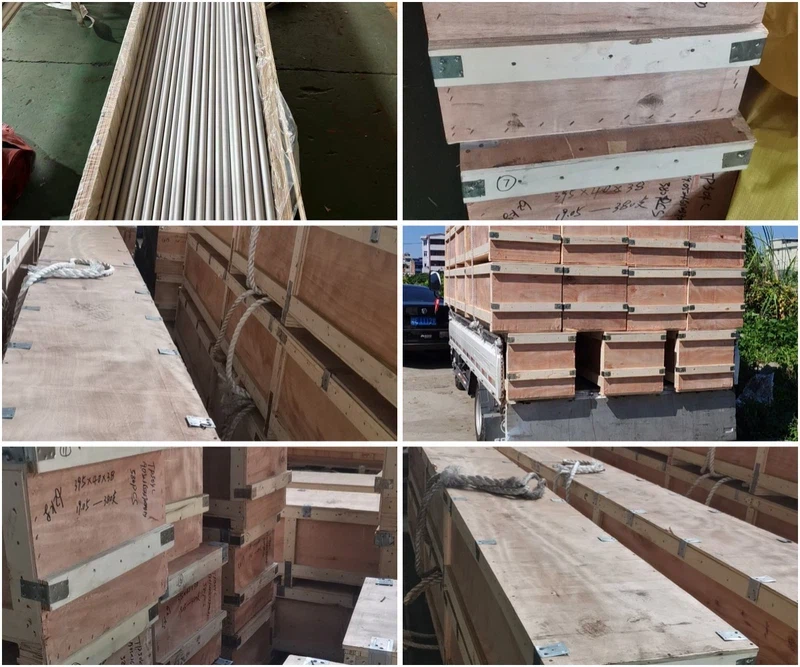
Gnee Steel specializes in the production of a wide range of stainless steel products. Gnee Steel's product packaging includes: Steel Strapping: Pipes with an outer diameter of 3 inches or less are typically strapped together with polypropylene film to prevent rust during ocean shipping, and then secured with steel strapping. Wooden Cases/Crates: Pipes are typically packaged in wooden cases or crates to protect the pipes during transportation, especially those that are longer or have larger diameters. Seaworthy Export Packaging: Suppliers typically use standard seaworthy export packaging methods, which may include a variety of materials and techniques to protect the pipes during transportation. Tarpaulin Packaging: This prevents rain, seawater, and other external factors from penetrating the export crates during transportation. Gnee Steel specializes in the production and sale of alloy materials. Gnee Steel's products are widely used in the aerospace, chemical, power, automotive, and nuclear energy sectors, and we can provide customized alloy material solutions based on customer needs. For alloy material pricing or customized alloy material solutions, please contact us for a quote: ru@gneesteelgroup.com

