


What is 316 stainless steel? What are the differences in applications between 304 and 316 stainless steel?

What is 316 stainless steel? What are the differences in applications between 304 and 316 stainless steel?
316 stainless steel is a high-quality stainless steel known for its excellent corrosion resistance, particularly against chloride corrosion (such as salt). This is due to the addition of molybdenum, making it ideal for marine, chemical, and medical applications. 304 stainless steel, on the other hand, is a standard, general-purpose, and cost-effective option suitable for general applications such as kitchenware and industrial hardware, where extreme corrosion is not a concern. The main difference between the two is that 316 stainless steel contains 2-3% molybdenum, which effectively prevents pitting and crevice corrosion, phenomena that can affect 304 stainless steel in harsh, saline, or acidic environments.
What are the disadvantages of 316 stainless steel?
The main disadvantages of 316 stainless steel include: higher cost (due to the presence of molybdenum); greater difficulty in processing/forming (prone to work hardening); and potential for weld corrosion if welded improperly (carbide precipitation), leading to corrosion, especially in environments rich in chloride ions. Although its corrosion resistance is superior to 304 stainless steel, pitting corrosion can still occur. Furthermore, 316 stainless steel is heavier and requires specific tools and techniques for processing.

316 Stainless Steel: Introduction
Composition: An austenitic stainless steel, similar to 304 stainless steel, but with the addition of molybdenum (2-3%) and increased nickel content.
Main Advantages: Enhanced corrosion resistance to chlorides (seawater, de-icing salts), industrial chemicals, and acids, and superior performance in high-temperature environments.
304 Stainless Steel vs. 316 Stainless Steel
When choosing heavy-duty stainless steel tables, carts, and shelving, 304 and 316 stainless steel are common choices, especially in healthcare, commercial, and industrial applications.
300 series stainless steel is known for its austenitic structure, which gives it excellent mechanical properties and corrosion resistance. Both 304 and 316 stainless steel contain high levels of chromium and nickel, which gives the material excellent heat, wear, and corrosion resistance. They also have excellent welding and forming properties, making them widely used in many industries. Both 304 and 316 stainless steel are considered surgical or medical-grade stainless steel and are two of the most common types of stainless steel.
While similar, their compositional differences result in different performance characteristics, making them suitable for specific applications. The most significant difference is the addition of molybdenum; 316 stainless steel contains molybdenum, while 304 stainless steel does not. This alloying element significantly enhances corrosion resistance, especially in saltwater or high-chloride environments.
SAE 304 Stainless Steel
Contains approximately 18% chromium and 8% nickel.
Often referred to as 18/8 stainless steel.
Sometimes contains small amounts of carbon, manganese, and silicon.
Offers good corrosion resistance and is suitable for a variety of environments, including those involving contact with chemicals and moisture.
SAE 316 Stainless Steel
Contains 16-18% chromium, 10-14% nickel, and 2-3% molybdenum.
The addition of molybdenum significantly enhances its resistance to corrosion from chlorides and other corrosive elements.
Provides superior corrosion resistance, especially in chloride and other industrial solvent environments.
Has slightly higher overall strength, especially at elevated temperatures, and is resistant to pitting and crevice corrosion.
Maintains stability and strength at higher temperatures.
Advantages of 316 Stainless Steel Compared to 304 Stainless Steel
While both 304 and 316 stainless steel offer excellent corrosion resistance and durability, 316 stainless steel has an advantage in its resistance to chlorides and other corrosive substances.
Due to the presence of molybdenum and a higher nickel content, 316 stainless steel exhibits superior corrosion resistance at high temperatures to a wider range of chemicals, including sulfuric acid, bromides, iodides, and fatty acids. This makes 316 stainless steel the preferred material for equipment and surfaces in industries that frequently come into contact with corrosive chemicals and require frequent use of corrosive cleaning agents.
Many industries, from food service and marine industries to chemical and pharmaceutical industries, specify the use of 316 stainless steel because of its greater durability in more corrosive environments and under frequent cleaning. Cleanrooms require more frequent and aggressive cleaning, thus requiring a material that can withstand strong corrosive chemicals.
Product contact surfaces and equipment feet in contact with the floor are most susceptible to corrosive substances, including but not limited to bleach, ammonia-based cleaners, hydrogen peroxide, and cleaning agents such as Sporeklenz.
Because of its greater resistance to chloride corrosion, 316 stainless steel is often referred to as marine-grade stainless steel, as it is more resistant to corrosion from salt (sodium chloride) in seawater than other stainless steel alloys.
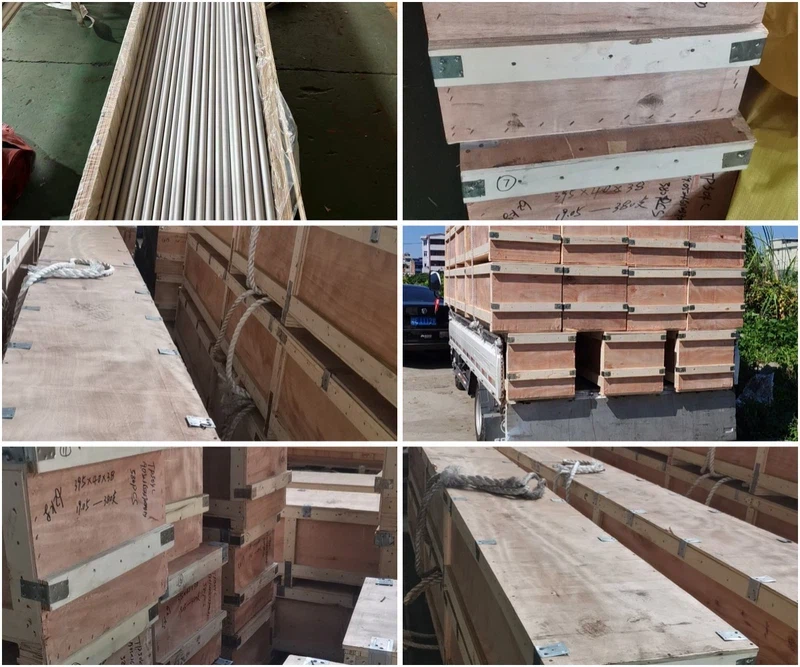
Gnee Steel specializes in the production of a wide range of stainless steel products. Gnee Steel's product packaging includes: Steel Strapping: Pipes with an outer diameter of 3 inches or less are typically strapped together with polypropylene film to prevent rust during ocean shipping, and then secured with steel strapping. Wooden Cases/Crates: Pipes are typically packaged in wooden cases or crates to protect the pipes during transportation, especially those that are longer or have larger diameters. Seaworthy Export Packaging: Suppliers typically use standard seaworthy export packaging methods, which may include a variety of materials and techniques to protect the pipes during transportation. Tarpaulin Packaging: This prevents rain, seawater, and other external factors from penetrating the export crates during transportation. Gnee Steel specializes in the production and sale of alloy materials. Gnee Steel's products are widely used in the aerospace, chemical, power, automotive, and nuclear energy sectors, and we can provide customized alloy material solutions based on customer needs. For alloy material pricing or customized alloy material solutions, please contact us for a quote: ru@gneesteelgroup.com