


What are the differences between 303 stainless steel and 304 stainless steel?

What are the differences between 303 stainless steel and 304 stainless steel?
The main difference lies in the fact that 303 stainless steel contains sulfur to improve its machinability, while 304 stainless steel has higher corrosion resistance and better weldability. This means that 303 stainless steel is ideal for parts requiring extensive machining, such as screws and bolts, but 304 stainless steel is a better choice for corrosive environments or applications requiring welding.
What are the disadvantages of 304 stainless steel?
304 stainless steel does have one disadvantage-it is susceptible to corrosion from chloride solutions or saline environments (such as near the sea). Chloride ions can form corrosion points in localized areas, called "pitting corrosion," which can spread beneath the chromium protective layer, thus damaging the internal structure.

What is 303 Stainless Steel?
303 stainless steel is an austenitic stainless steel made by adding sulfur and phosphorus to 304 stainless steel. The addition of these elements reduces stickiness, giving 303 stainless steel excellent machinability and cutting performance. It also has good anti-stick properties, with minimal adhesion caused by friction. While 303 stainless steel itself is non-magnetic, changes in its crystal structure during processing can cause it to exhibit magnetism.
What is 304 Stainless Steel?
304 stainless steel is a widely used stainless steel, renowned for its excellent corrosion resistance and versatility. It consists of 18% chromium and 8% nickel, forming a robust alloy with excellent durability and oxidation resistance. Chromium helps form a passivating oxide layer on the surface, preventing corrosion and extending service life. Due to its non-magnetic nature, 304 stainless steel is widely used in various industries, including kitchenware, building structures, and industrial equipment manufacturing. 304 stainless steel possesses excellent mechanical properties, such as tensile strength and toughness, making it ideal for applications requiring both strength and corrosion resistance. This alloy is particularly important in environments susceptible to corrosive elements.
Chemical Composition Comparison: Stainless Steel 303 vs 304
| Element | 303 Stainless Steel (%) | 304 Stainless Steel (%) |
|---|---|---|
| Carbon (C) | ≤ 0.15 | ≤ 0.08 |
| Chromium (Cr) | 17.0 - 19.0 | 18.0 - 20.0 |
| Nickel (Ni) | 8.0 - 10.0 | 8.0 - 10.5 |
| Manganese (Mn) | ≤ 2.00 | ≤ 2.00 |
| Silicon (Si) | ≤ 1.00 | ≤ 0.75 |
| Phosphorus (P) | ≤ 0.20 | ≤ 0.045 |
| Sulfur (S) | ≥ 0.15 (min) | ≤ 0.03 |
| Iron (Fe) | Balance | Balance |
| Other Elements | - | - |
Corrosion Resistance Comparison: Stainless Steel 303 vs 304
| Corrosion Type/Environment | 303 Stainless Steel | 304 Stainless Steel |
|---|---|---|
| General Corrosion | Good | Very Good |
| Intergranular Corrosion | Poor (sensitization prone) | Good (low carbon version 304L available) |
| Pitting Corrosion | Fair | Good |
| Crevice Corrosion | Fair | Good |
| Stress Corrosion Cracking | Fair | Good |
| Atmospheric Corrosion | Good | Very Good |
| Fresh Water | Good | Very Good |
| Sea Water | Poor to Fair | Fair to Good |
| Organic Acids | Good | Very Good |
| Inorganic Acids | Poor to Fair | Fair to Good |
| Alkaline Solutions | Good | Very Good |
| Salt Solutions | Fair | Good |
| Oxidizing Environments | Fair | Good |
| Reducing Environments | Poor | Fair |
| Weldability | Not Recommended | Excellent |
Applications of 303 and 304 Stainless Steel
303 Stainless Steel
303 stainless steel is commonly used in industrial products such as bolts, nuts, and shafts, and also in mechanical parts. This material is usually supplied in round bar form and can be machined into various shapes.
304 Stainless Steel
Due to its superior corrosion resistance compared to 303 stainless steel, 304 stainless steel is used for the exterior panels of trains. It is also used in applications where a striking silver appearance is desired, such as automatic doors, escalators, columns, and handrails. The applications of 304 stainless steel are very broad, including industrial products such as nuts and bolts, plant equipment such as liquefied natural gas storage tanks and nuclear facilities, and medical, pharmaceutical, and food manufacturing equipment.
Comparison of Stainless Steel 303 and 304
| Feature | 303 Stainless Steel | 304 Stainless Steel |
|---|---|---|
| Primary Benefit | Superior machinability | Superior corrosion resistance and weldability |
| Key Addition | Sulfur (or selenium) | Higher chromium (18-20%) and nickel (8-10.5%) content |
| Corrosion Resistance | Fair; significantly lower than 304 due to added sulfur | Excellent; superior resistance to pitting corrosion |
| Weldability | Poor; prone to cracking due to segregated elements from the sulfur | Excellent; low carbon content makes it ideal for welding |
| Machinability | Excellent; sulfur reduces stickiness | Good; less suitable for extensive machining compared to 303 |
| Common Uses | Screws, bolts, gears, shafts, and other screw machine products | Food processing equipment, tanks, and other applications requiring corrosion resistance |
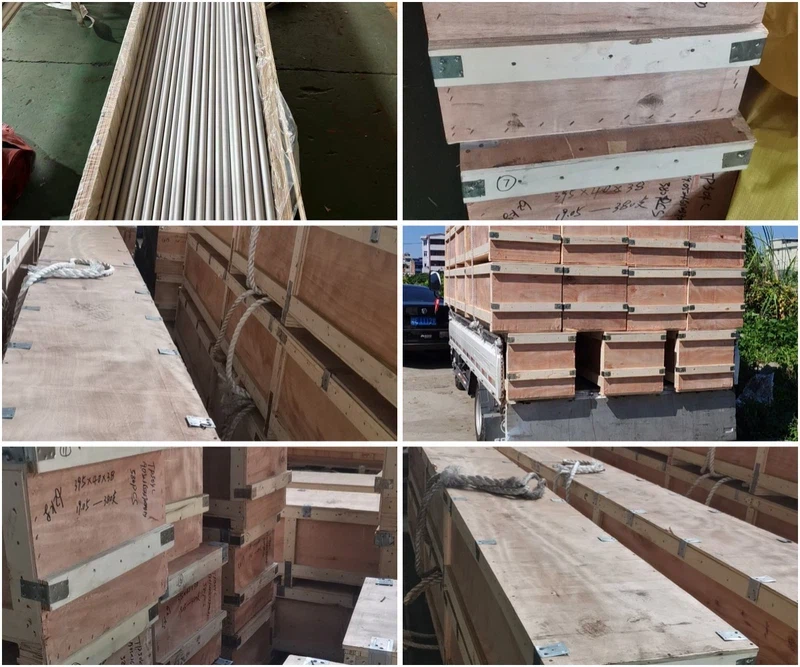
Gnee Steel specializes in the production of a wide range of stainless steel products. Gnee Steel's product packaging includes: Steel Strapping: Pipes with an outer diameter of 3 inches or less are typically strapped together with polypropylene film to prevent rust during ocean shipping, and then secured with steel strapping. Wooden Cases/Crates: Pipes are typically packaged in wooden cases or crates to protect the pipes during transportation, especially those that are longer or have larger diameters. Seaworthy Export Packaging: Suppliers typically use standard seaworthy export packaging methods, which may include a variety of materials and techniques to protect the pipes during transportation. Tarpaulin Packaging: This prevents rain, seawater, and other external factors from penetrating the export crates during transportation. Gnee Steel specializes in the production and sale of alloy materials. Gnee Steel's products are widely used in the aerospace, chemical, power, automotive, and nuclear energy sectors, and we can provide customized alloy material solutions based on customer needs. For alloy material pricing or customized alloy material solutions, please contact us for a quote: ru@gneesteelgroup.com