


What are the differences between 302 stainless steel and 316 stainless steel?

What are the differences between 302 stainless steel and 316 stainless steel?
The main difference between 302 and 316 stainless steel lies in their molybdenum content. The addition of molybdenum gives 316 stainless steel greater corrosion resistance, especially against chlorides (such as seawater) and pitting corrosion, making it ideal for marine or chemical environments. 302 stainless steel, on the other hand, is a high-strength, cost-effective option, similar to 304 stainless steel, suitable for general applications where harsh environmental conditions are not critical. Furthermore, due to the addition of molybdenum, 316 stainless steel requires a slightly increased amount of nickel to maintain its austenitic structure, which, while increasing its overall cost, also improves its performance.
What is the annealing temperature for 302 stainless steel?
1850/2050ºF
Annealing: Heat to 1850/2050ºF (1010/1121ºC) and then water quench. Brinell hardness is approximately 150. Hardening: Hardened only by cold working. Hot working: Carpenter 302 stainless steel is easy to forge, hot upsetting, riveting, and upset.

Difference in composition between 302 stainless steel and 316 stainless steel
| Feature | 302 Stainless Steel | 304 Stainless Steel |
|---|---|---|
| Carbon Content | Up to 0.15% (slightly higher) | Up to 0.08% (lower) |
| Chromium Content | Approximately 17-19% (implied, not specified) | 18-20% |
| Nickel Content | Approximately 8-10% (implied, not specified) | 8-10.5% |
| Strength | Enhanced strength due to higher carbon | Good strength, with emphasis on corrosion resistance |
| Corrosion/Oxidation Resistance | More prone to corrosion under certain conditions if not properly treated | Highly resistant to corrosion and oxidation, especially in moist or chemically harsh environments |
| Primary Characteristic | Higher carbon for increased strength | Balanced composition for superior corrosion resistance |
Corrosion Resistance
One of the most significant differences between 302 and 316 stainless steel sheets is their corrosion resistance. 302 stainless steel exhibits good corrosion resistance in many environments, such as indoor environments and mild outdoor conditions. It can withstand the erosion of air, water, and some non-corrosive chemicals. However, in environments with high chloride concentrations, such as coastal areas or industrial sites with high air salinity, 302 stainless steel may develop pitting and corrosion over time.
In contrast, 316 stainless steel exhibits extremely high corrosion resistance in a wide range of harsh environments. The presence of molybdenum in 316 stainless steel makes it particularly suitable for applications in marine environments, chemical plants, and the food processing industry, where exposure to saltwater, acids, and other corrosive substances is possible. For example, in coastal construction projects, using 4x8-foot 316 stainless steel sheets ensures greater long-term durability than 302 stainless steel sheets.
Physical Properties Comparison: 302 Stainless Steel vs 316 Stainless Steel
| Property | 302 Stainless Steel (UNS S30200) | 316 Stainless Steel (UNS S31600) |
|---|---|---|
| Density | 8.03 g/cm³ | 8.00 g/cm³ |
| Melting Range | 1400 – 1450 °C | 1375 – 1400 °C |
| Thermal Conductivity (20°C) | 16.2 W/m·K | 16.3 W/m·K |
| Specific Heat Capacity (20°C) | 500 J/kg·K | 500 J/kg·K |
| Coefficient of Thermal Expansion (20–100°C) | 17.2 μm/m·°C | 16.0 μm/m·°C |
| Modulus of Elasticity | 193 GPa | 193 GPa |
| Electrical Resistivity (20°C) | 0.72 μΩ·m | 0.74 μΩ·m |
| Magnetic Permeability (Annealed) | Non-magnetic (austenitic) | Non-magnetic (austenitic) |
| Poisson's Ratio | 0.29 | 0.29 |
| Hardness (Annealed) | 150 – 200 HB | 150 – 200 HB |
| Maximum Service Temperature (Continuous) | ≈ 870 °C | ≈ 870 °C |
| Thermal Diffusivity (20°C) | 4.0 mm²/s | 4.1 mm²/s |
| Thermal Expansion (20–400°C) | 18.0 μm/m·°C | 17.5 μm/m·°C |
| Specific Gravity | 8.03 | 8.00 |
| Thermal Conductivity (500°C) | 21.5 W/m·K | 21.5 W/m·K |
| Specific Heat (100°C) | 530 J/kg·K | 530 J/kg·K |
Conclusion
In summary, 302 and 316 stainless steels differ significantly in chemical composition, corrosion resistance, strength, weldability, cost, and applications. Understanding these differences is crucial for making the right choice for your project.
If you require more information or have any specific requirements for stainless steel sheets, please feel free to contact us. Regardless of whether you ultimately choose 302 or 316 stainless steel, ensuring the quality and suitability of the material is key to the success of your project. If you are also interested in other stainless steel products, you can check out our 304 stainless steel inventory for more options.
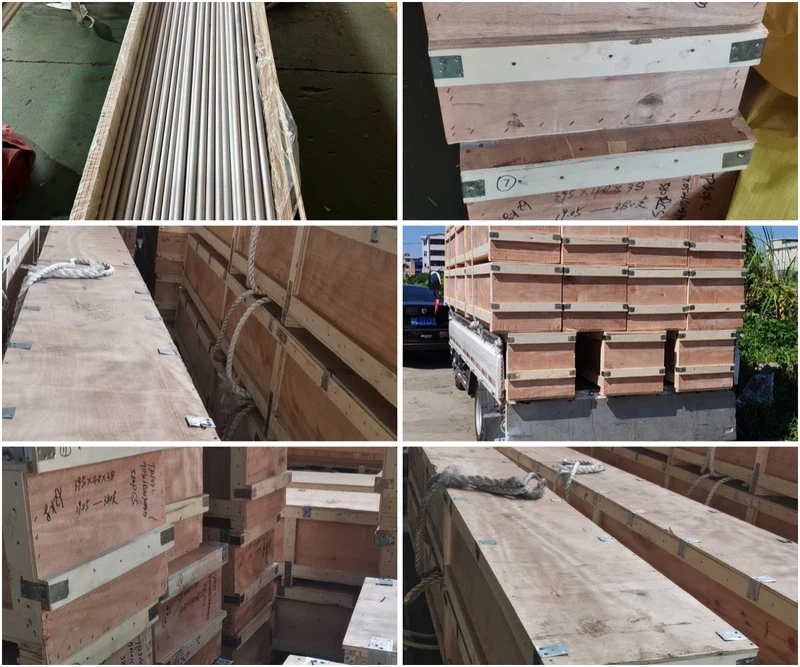
Gnee Steel specializes in the production of a wide range of stainless steel products. Gnee Steel's product packaging includes: Steel Strapping: Pipes with an outer diameter of 3 inches or less are typically strapped together with polypropylene film to prevent rust during ocean shipping, and then secured with steel strapping. Wooden Cases/Crates: Pipes are typically packaged in wooden cases or crates to protect the pipes during transportation, especially those that are longer or have larger diameters. Seaworthy Export Packaging: Suppliers typically use standard seaworthy export packaging methods, which may include a variety of materials and techniques to protect the pipes during transportation. Tarpaulin Packaging: This prevents rain, seawater, and other external factors from penetrating the export crates during transportation. Gnee Steel specializes in the production and sale of alloy materials. Gnee Steel's products are widely used in the aerospace, chemical, power, automotive, and nuclear energy sectors, and we can provide customized alloy material solutions based on customer needs. For alloy material pricing or customized alloy material solutions, please contact us for a quote: ru@gneesteelgroup.com