


Application of 304 and 316 stainless steel in processing systems

Application of 304 and 316 stainless steel in processing systems
304 and 316 stainless steels are crucial in processing systems. 304 stainless steel is versatile and cost-effective, ideal for general applications such as kitchens and basic manufacturing due to its excellent corrosion resistance. 316 stainless steel, with the addition of molybdenum, is more effectively resistant to chlorides and corrosive chemicals (suitable for marine, pharmaceutical, and chemical processing applications), making its higher cost worthwhile for applications requiring extremely high durability. The key is to balance cost with the corrosion resistance required for a specific environment.
What are the applications of 316 stainless steel?
316 stainless steel is commonly used in highly corrosive and high-salt environments due to its excellent resistance to chlorides and corrosive chemicals. It is ideal for marine applications (hull fittings, coastal construction), chemical and pharmaceutical equipment (containers, processing equipment, laboratory benches), and food processing. Its durability and corrosion resistance also make it suitable for high-temperature applications, such as heat exchangers and pressure vessels.

What is 304 Stainless Steel?
AISI 304, also known as 18/8 stainless steel, is an austenitic stainless steel. It contains 18% chromium and 8% nickel, with a maximum carbon content of 0.08%. The high chromium content in 304 stainless steel gives it excellent corrosion resistance, especially in terms of oxidation and acid corrosion resistance. Furthermore, the presence of nickel enhances the steel's formability, weldability, and ductility.
304 stainless steel is renowned for its versatility and is widely used in food processing equipment, kitchenware, architectural decoration, and automotive parts. Its good formability and weldability make it easy to process into various shapes and parts. In addition, compared to other high-quality stainless steel alloys, 304 stainless steel is relatively economical, making it an economical choice for many projects.
What is 316 Stainless Steel?
Types 1.4401 and 1.4404 stainless steel correspond to grades 316 and 316L, respectively.
In commercial applications, grade 316 is the second most used grade after 304.
316 is an austenitic stainless steel alloy with a melting point ranging from 1371°C to 1399°C, a tensile strength of up to 579 MPa (84 ksi), and a maximum service temperature of approximately 800°C.
All austenitic stainless steels contain high concentrations of chromium and nickel, thus possessing many excellent properties, including extremely high strength and superior corrosion resistance.
Furthermore, 316 contains molybdenum, typically at a content of about 2%, which improves its resistance to alkalis, acids, chloride pitting corrosion, and crevice corrosion in chloride environments.
Due to the addition of molybdenum and a higher nickel content, 316 steel is more expensive than 304 steel. Therefore, understanding when 316 steel is needed and when 304 steel is perfectly suitable for this task is crucial.
Chemical composition of 304 stainless steel and 316 stainless steel
| Grade | C | Si | Mn | P | S | N | Cr | Ni | Mo |
|---|---|---|---|---|---|---|---|---|---|
| 304 | 0.07 | 1.00 | 2.00 | 0.045 | 0.015 | 0.10 | 17.5 - 19.5 | 8.0 - 10.5 | - |
| 316 | 0.07 | 1.00 | 2.00 | 0.045 | 0.015 | 0.10 | 16.5 - 18.5 | 10.0 - 13.0 | 2.0 - 2.5 |
Physical Properties Comparison: 304 Stainless Steel vs 316 Stainless Steel
| Property | 304 Stainless Steel (UNS S30400) | 316 Stainless Steel (UNS S31600) |
|---|---|---|
| Density | 8.00 g/cm³ | 8.00 g/cm³ |
| Melting Range | 1400–1450 °C | 1375–1400 °C |
| Thermal Conductivity (20°C) | 16.2 W/m·K | 16.3 W/m·K |
| Specific Heat Capacity (20°C) | 500 J/kg·K | 500 J/kg·K |
| Coefficient of Thermal Expansion (20–100°C) | 17.2 μm/m·°C | 16.0 μm/m·°C |
| Modulus of Elasticity | 193 GPa | 193 GPa |
| Electrical Resistivity (20°C) | 0.72 μΩ·m | 0.74 μΩ·m |
| Magnetic Permeability (Annealed) | Non-magnetic (austenitic) | Non-magnetic (austenitic) |
| Poisson's Ratio | 0.29 | 0.29 |
| Hardness (Annealed) | 150–200 HB | 150–200 HB |
| Maximum Service Temperature (Continuous) | ≈ 870 °C | ≈ 870 °C |
| Thermal Diffusivity (20°C) | 4.0 mm²/s | 4.1 mm²/s |
| Thermal Expansion (20–400°C) | 18.0 μm/m·°C | 17.5 μm/m·°C |
| Specific Gravity | 8.00 | 8.00 |
| Thermal Conductivity (500°C) | 21.5 W/m·K | 21.5 W/m·K |
| Specific Heat (100°C) | 530 J/kg·K | 530 J/kg·K |
Advantages of 304 and 316 stainless steel in processing
Advantages of 316 Stainless Steel:
* Excellent corrosion resistance – withstands strong acids, alkalis, and salt water, reducing equipment damage.
* Ideal for high-purity applications – suitable for the pharmaceutical, biotechnology, and food processing industries with extremely high hygiene and contamination control requirements.
* Resistance to pitting and crevice corrosion – performs excellently in CIP (in-situ cleaning) systems containing corrosive chemicals.
* Applications – designed for more challenging environments, such as pharmaceutical manufacturing, biotechnology laboratories, and acidic food processing.
Advantages of 304 Stainless Steel:
* Cost-effective – more economical than 316, making it an economical choice for processing systems.
* Good corrosion resistance – withstands oxidation and weak acids, suitable for a wide range of standard food and beverage processing applications.
* Applications – ideal for everyday food and beverage processing, such as brewing tanks and dairy piping.
Applications of 304 and 316 stainless steel in processing
Both 304 and 316 stainless steels are widely used in various processing industries, but their specific applications differ due to variations in corrosion resistance, chemical exposure, and environmental conditions. The choice between 304 and 316 stainless steel depends on specific processing requirements, exposure to corrosive substances, and hygiene and safety regulations.
Applications of 304 Stainless Steel
Food and Beverage Equipment – Used in applications requiring moderate corrosion resistance, such as storage tanks, piping, and heat exchangers.
For example, 304 stainless steel is commonly used in dairy piping and beer fermentation tanks; its oxidation resistance and resistance to weak acids are sufficient for safe processing.
Applications of 316 Stainless Steel
Chemical Processing – Due to its excellent corrosion resistance, 316 stainless steel is more suitable than 304 stainless steel for environments exposed to acidic or highly corrosive cleaning agents. However, like 304 stainless steel, 316 stainless steel will also exhibit corrosion cracking upon contact with chlorides.
Pharmaceutical and Biotechnology Equipment – Used in ultrapure processing environments where contamination prevention is crucial.
For example, 316 stainless steel is the material of choice for pharmaceutical reactors and biotechnology storage tanks, ensuring reliability in highly controlled environments.
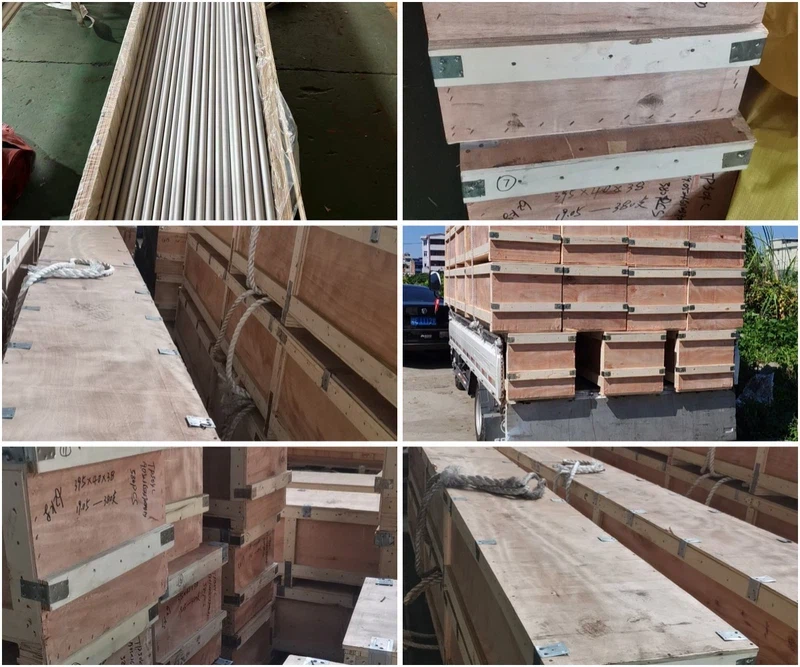
Gnee Steel specializes in the production of a wide range of stainless steel products. Gnee Steel's product packaging includes: Steel Strapping: Pipes with an outer diameter of 3 inches or less are typically strapped together with polypropylene film to prevent rust during ocean shipping, and then secured with steel strapping. Wooden Cases/Crates: Pipes are typically packaged in wooden cases or crates to protect the pipes during transportation, especially those that are longer or have larger diameters. Seaworthy Export Packaging: Suppliers typically use standard seaworthy export packaging methods, which may include a variety of materials and techniques to protect the pipes during transportation. Tarpaulin Packaging: This prevents rain, seawater, and other external factors from penetrating the export crates during transportation. Gnee Steel specializes in the production and sale of alloy materials. Gnee Steel's products are widely used in the aerospace, chemical, power, automotive, and nuclear energy sectors, and we can provide customized alloy material solutions based on customer needs. For alloy material pricing or customized alloy material solutions, please contact us for a quote: ru@gneesteelgroup.com