


The difference between 420 stainless steel and 316 stainless steel

The difference between 420 stainless steel and 316 stainless steel
420 stainless steel is a hardenable, magnetic alloy highly valued for its high wear resistance and commonly used in knife blades and surgical instruments. 316 stainless steel, on the other hand, is a non-magnetic austenitic stainless steel with excellent corrosion resistance (especially against chlorides containing molybdenum), making it ideal for applications in marine, chemical, and food processing industries where formability and corrosion resistance are critical. The main difference between the two lies in their composition and properties: 420 stainless steel prioritizes hardness at the expense of corrosion resistance (martensitic structure), while 316 stainless steel prioritizes corrosion resistance and formability (austenitic structure), containing higher levels of nickel and molybdenum.
What are the disadvantages of 316 stainless steel?
The main disadvantages of 316 stainless steel include: higher cost (due to the presence of molybdenum); greater difficulty in processing/forming (prone to work hardening); and potential for weld corrosion if welded improperly (carbide precipitation), leading to corrosion, especially in environments rich in chloride ions. Although its corrosion resistance is superior to 304 stainless steel, pitting corrosion can still occur. Furthermore, 316 stainless steel is heavier and requires specific tools and techniques for processing.

What is 420 stainless steel?
420 stainless steel is a high-carbon steel commonly used in the manufacture of blades and surgical instruments. It is known for its high hardness, wear resistance, and ability to maintain its shape at high temperatures. It is magnetic and belongs to the martensitic stainless steel family. 420 stainless steel is not suitable for applications requiring high corrosion resistance.
What is 316 stainless steel?
316 stainless steel is a commonly used austenitic stainless steel containing molybdenum, which enhances its corrosion resistance. It is widely used in various fields, including marine, pharmaceutical, food processing, and chemical industries. 316 stainless steel is known for its strength, durability, and high corrosion resistance. It is non-magnetic and has good welding properties.
420 stainless steel vs 316: Composition comparison
| Element | 420 Stainless Steel (%) | 316 Stainless Steel (%) |
| Carbon (C) | 0.15 – 0.40 | ≤ 0.08 |
| Chromium (Cr) | 12.0 – 14.0 | 16.0 – 18.0 |
| Manganese (Mn) | ≤ 1.0 | ≤ 2.0 |
| Silicon (Si) | ≤ 1.0 | ≤ 0.75 |
| Phosphorus (P) | ≤ 0.040 | ≤ 0.045 |
| Sulfur (S) | ≤ 0.030 | ≤ 0.030 |
| Nickel (Ni) | ≤ 0.50 | 10.0 – 14.0 |
| Molybdenum (Mo) | ≤ 0.50 | 2.0 – 3.0 |
Hardness
420 Stainless Steel: After heat treatment, the hardness can reach 50 HRC, making it one of the hardest stainless steels currently available.
316 Stainless Steel: Typically softer (approximately 15-20 HRC), but still maintains good strength and toughness.
Tip: Choose 420 stainless steel if you need a sharp blade or highly wear-resistant parts. For structural durability and weldability, 316 stainless steel is superior.
Corrosion Resistance
420 Stainless Steel: Moderate corrosion resistance, but prone to rusting in humid, salty, or chemical environments.
316 Stainless Steel: Excellent corrosion resistance to seawater, chemicals, and acidic environments.
Tip: For CNC machined parts in marine and medical applications, 316 stainless steel is a safe choice. Avoid 420 stainless steel unless corrosion is not a critical factor.
Wear Resistance
420 Stainless Steel: Due to its high hardness, it has excellent wear resistance, suitable for tools, molds, and bearings.
316 Stainless Steel: Lower wear resistance, not suitable for high-friction applications.
Note: Using 316 stainless steel under severe wear conditions may increase part replacement costs.
Oxidation Resistance
420 Stainless Steel: Good oxidation resistance at temperatures up to 650°C, but not suitable for long-term exposure to high temperatures.
316 Stainless Steel: Can withstand oxidation up to 870°C, making it more suitable for high-temperature environments.
Comparison of physical properties between 420 stainless steel and 316 stainless steel
| Physical Property | Stainless Steel 316 (Annealed) | Stainless Steel 420 (Annealed) |
|---|---|---|
| Density (g/cm³) | 8.00 | 7.75 |
| Melting Range (°C) | 1375 – 1400 | 1480 – 1530 |
| Modulus of Elasticity (GPa) | 193 | 200 |
| Thermal Conductivity (W/m·K, at 20°C) | 16.3 | 24.9 |
| Coefficient of Thermal Expansion (×10⁻⁶/K, 20–100°C) | 15.9 | 10.3 |
| Electrical Resistivity (μΩ·m, at 20°C) | 0.74 | 0.55 |
| Specific Heat (J/kg·K, at 20°C) | 500 | 460 |
| Magnetic Permeability | Typically non‑magnetic (austenitic) | Ferromagnetic (martensitic) |
| Poisson's Ratio | 0.28 | 0.27 – 0.30 |
420 Stainless Steel vs 316 Stainless Steel: Applications and Uses
| Category | 420 Stainless Steel (Martensitic) | 316 Stainless Steel (Austenitic) |
| Cutlery & Knives | Kitchen knives, surgical scalpels, scissors, razor blades (requires sharp edge + hardness) | Rarely used – too soft for blades |
| Medical Instruments | Surgical tools, dental instruments (hard, wear-resistant, sterilizable) | Surgical implants, medical devices (biocompatibility + corrosion resistance) |
| Industrial Components | Pump shafts, valve parts, bearings (where hardness matters) | Chemical tanks, heat exchangers, piping systems (resists acids, chlorides) |
| Aerospace & Automotive | Turbine blades, wear-resistant parts, molds | Exhaust systems, structural parts in corrosive environments |
| Marine Applications | Limited – corrodes in seawater | Widely used – resists seawater and salt spray (boats, marine fasteners) |
| Consumer Products | Scissors, tools, machine parts | Cookware, food processing equipment, appliances |
| CNC Machined Parts | Wear-resistant, high-hardness parts | Corrosion-resistant, high-toughness parts |
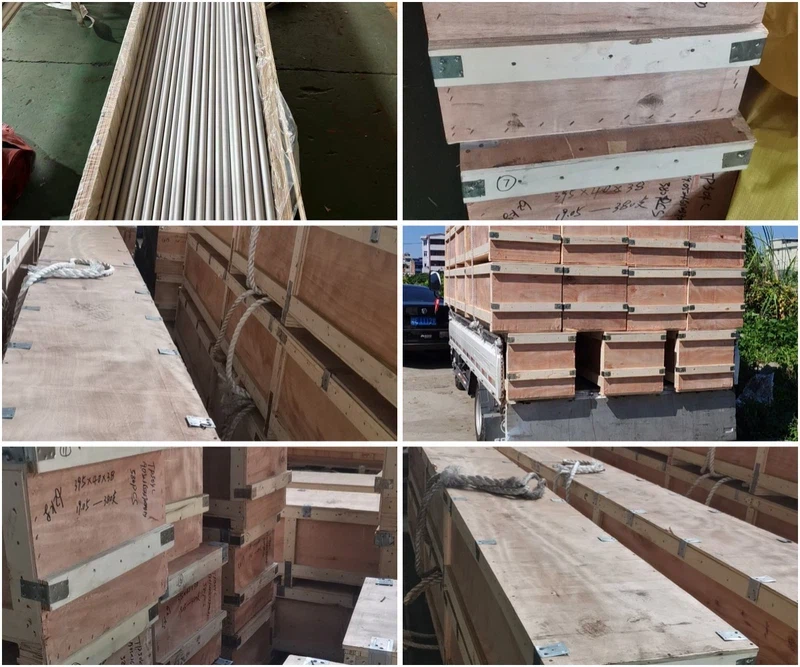
Gnee Steel specializes in the production of a wide range of stainless steel products. Gnee Steel's product packaging includes: Steel Strapping: Pipes with an outer diameter of 3 inches or less are typically strapped together with polypropylene film to prevent rust during ocean shipping, and then secured with steel strapping. Wooden Cases/Crates: Pipes are typically packaged in wooden cases or crates to protect the pipes during transportation, especially those that are longer or have larger diameters. Seaworthy Export Packaging: Suppliers typically use standard seaworthy export packaging methods, which may include a variety of materials and techniques to protect the pipes during transportation. Tarpaulin Packaging: This prevents rain, seawater, and other external factors from penetrating the export crates during transportation. Gnee Steel specializes in the production and sale of alloy materials. Gnee Steel's products are widely used in the aerospace, chemical, power, automotive, and nuclear energy sectors, and we can provide customized alloy material solutions based on customer needs. For alloy material pricing or customized alloy material solutions, please contact us for a quote: ru@gneesteelgroup.com