


Inconel 600 (also designated as UNS N06600, NCF 600, or Werkstoff Nr. 2.4816) is a non-magnetic nickel-chromium-iron alloy widely used for shell and tube heat exchanger tubes in extreme environments.
Contact us for the latest export price quote for 600 Alloy Tube
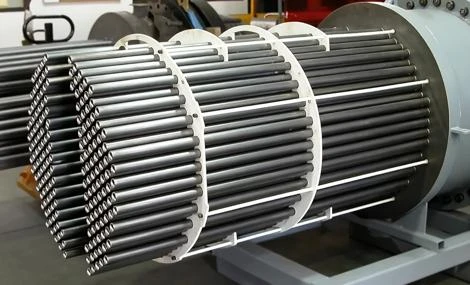
What is shell and tube heat exchanger tube?
A shell and tube heat exchanger, also known as a tubular heat exchanger, is an indirect heat exchanger that transfers heat through the walls of a tube bundle enclosed within a shell. Featuring a simple and robust structure, broad adaptability, and high processing capacity, it can operate reliably under demanding conditions, including high temperatures, high pressures, and large temperature differences. As a result, shell and tube heat exchangers are widely used across industrial sectors such as chemical processing, petroleum, power generation, metallurgy, refrigeration, food processing, and pharmaceuticals.
Why Use Inconel 600 for Heat Exchangers?
- Chloride & Stress-Corrosion Resistance: High nickel content prevents chloride-ion stress-corrosion cracking.
- Alkaline & Acid Resistance: Resists caustic/alkaline solutions, organic acids, and various inorganic compounds.
- High-Temperature Stability: Retains strength and resists oxidation in high-heat industrial and nuclear steam generator environments
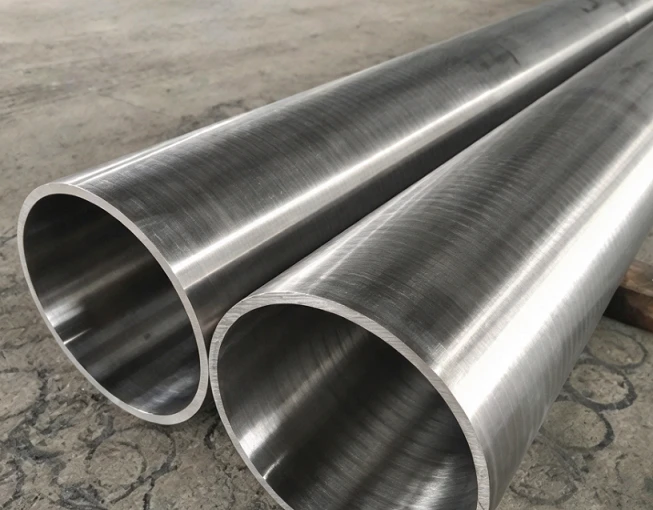
Inconel 600 shell and tube heat exchanger tube Equivalent Grades
| STANDARD | WERKSTOFF NR. | UNS | JIS | BS | GOST | AFNOR | EN |
| Incoloy 600 | 2.4816 | N06600 | NCF 600 | NA 13 | МНЖМц 28-2,5-1,5 | NC15FE11M | NiCr15Fe |
Inconel Alloy 600 shell and tube heat exchanger tube Chemical Composition
| Element | Alloy 600 |
| C | 0.05 max |
| Mn | 0.15 max |
| Si | 0.50 max |
| S | 0.015max |
| Cu | 0.50 max |
| Fe | 6.00 – 10.00 |
| Ni | 72.00 min |
| Cr | 14.00 – 17.00 |
Inconel 600 shell and tube heat exchanger tube Mechanical & Physical Properties
| Element | Incoloy Alloy 600 |
| Density | 8.47 g/cm3 |
| Melting Point | 1413 °C (2580 °F) |
| Tensile Strength | Psi – 95,000 , MPa – 655 |
| Yield Strength (0.2%Offset) | Psi – 45,000 , MPa – 310 |
| Elongation | 40 % |
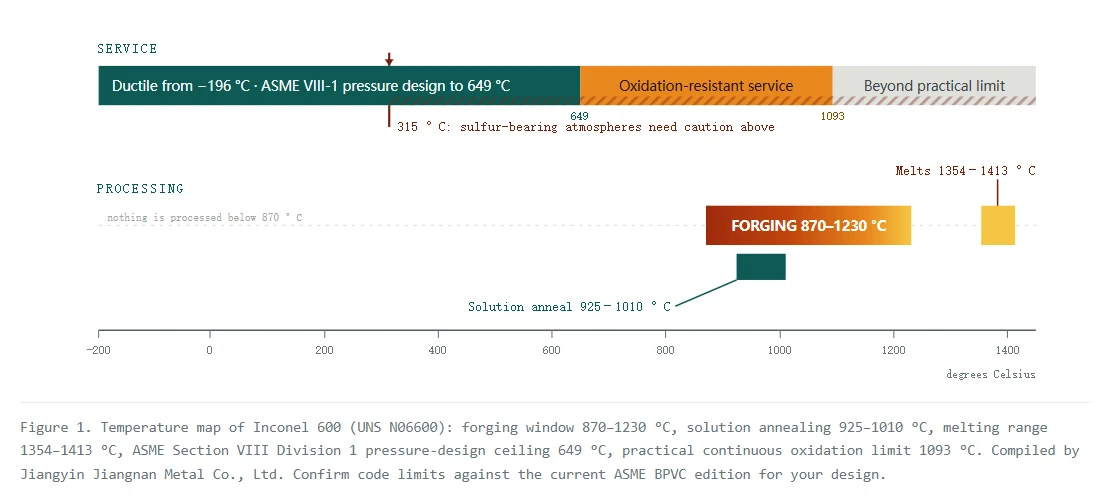
Temperature map for Inconel 600
Almost every decision about Alloy 600 reduces to a temperature: how to forge it, how to anneal it, where it may be used. This map places the processing windows and the service limits on one scale.
Inconel 600 vs 601, 625, 690 and Alloy 800H
These five grades are routinely confused on drawings. They are not interchangeable: each solves a different problem.
| Grade | UNS | Nominal chemistry | Choose it when |
|---|---|---|---|
| Inconel 600 | N06600 | 72 Ni · 15 Cr · 8 Fe | Heat plus chlorides, caustic, high-purity water or dry chlorine. General-purpose furnace and process hardware to 1093 °C |
| Inconel 601 | N06601 | 60 Ni · 23 Cr · 14 Fe · 1.4 Al | Oxidation and scaling resistance is the governing property. The aluminium addition holds the scale on past 1100 °C |
| Inconel 625 | N06625 | 61 Ni · 21 Cr · 9 Mo · 3.6 Nb | Seawater, pitting, crevice corrosion, reducing acids, or where much higher strength is needed without heat treatment |
| Inconel 690 | N06690 | 60 Ni · 30 Cr · 9 Fe | Stress-corrosion cracking in high-temperature water or caustic is the risk. The 30 % chromium is the reason it replaced 600 in nuclear steam generators |
| Alloy 800H / 800HT | N08810 / N08811 | 32 Ni · 21 Cr · balance Fe | Sustained load above 593 °C where creep-rupture strength governs and the iron base makes it cheaper per kilogram |
ASTM B167 UNS N06600 Tube Wall Thickness
| Types of Inconel 600 Tube | Out diameter (OD) | Wall thickness | Length |
|---|---|---|---|
| NB Sizes (in stock) | 1/8" ~ 8" | SCH 5 / SCH 10 / SCH 40 / SCH 80 / SCH 160 | Upto 6 Meters |
| Inconel 600 Seamless Tube (Custom Sizes) | 5.0mm ~ 203.2mm | As per requirement | Upto 6 Meters |
| Inconel 600 Welded Tube (in Stock + Custom Sizes) | 5.0mm ~ 1219.2mm | 1.0 ~ 15.0 mm | Upto 6 Meters |
SB 163 N06600 exhaust tube Pressure Rating Chart
| Grade |
Maximum internal pressure, ksi |
|||||||||
|---|---|---|---|---|---|---|---|---|---|---|
| 100°F | 200°F | 300°F | 400°F | 500°F | 600°F | 700°F | Comments | |||
| N06600 :1 | 8.02 | 8.02 | 8.02 | 8.02 | 8.02 | 8.02 | 8.02 | B167 OD>5" and hotworked | ||
| N06600 :2 | 9.6 | 9.6 | 9.6 | 9.6 | 9.6 | 9.6 | 9.6 | B167 OD<=5" and hotworked + OD>5" and coldworked | ||
| N06600 :3 | 11.19 | 11.19 | 11.19 | 11.19 | 11.19 | 11.19 | 11.19 | B167 OD<=5" and coldworked | ||
Outside Diameter And Wall Thickness (Mm): 6 X 1
| Grade |
Maximum internal pressure, ksi |
|||||||||
|---|---|---|---|---|---|---|---|---|---|---|
| 100°F | 200°F | 300°F | 400°F | 500°F | 600°F | 700°F | Comments | |||
| N06600 :1 | 392 | 392 | 392 | 392 | 392 | 392 | 392 | B167 OD>5" and hotworked | ||
| N06600 :2 | 470 | 470 | 470 | 470 | 470 | 470 | 470 | B167 OD<=5" and hotworked + OD>5" and coldworked | ||
| N06600 :3 | 547 | 547 | 547 | 547 | 547 | 547 | 547 | B167 OD<=5" and coldworked | ||
Outside Diameter And Wall Thickness (Mm): 8 X 1
| Grade |
Maximum internal pressure, ksi |
|||||||||
|---|---|---|---|---|---|---|---|---|---|---|
| 100°F | 200°F | 300°F | 400°F | 500°F | 600°F | 700°F | Comments | |||
| N06600 :1 | 284 | 284 | 284 | 284 | 284 | 284 | 284 | B167 OD>5" and hotworked | ||
| N06600 :2 | 340 | 340 | 340 | 340 | 340 | 340 | 340 | B167 OD<=5" and hotworked + OD>5" and coldworked | ||
| N06600 :3 | 397 | 397 | 397 | 397 | 397 | 397 | 397 | B167 OD<=5" and coldworked | ||
How we make Inconel 600 shell and tube heat exchanger tube?
1. Raw Material Verification
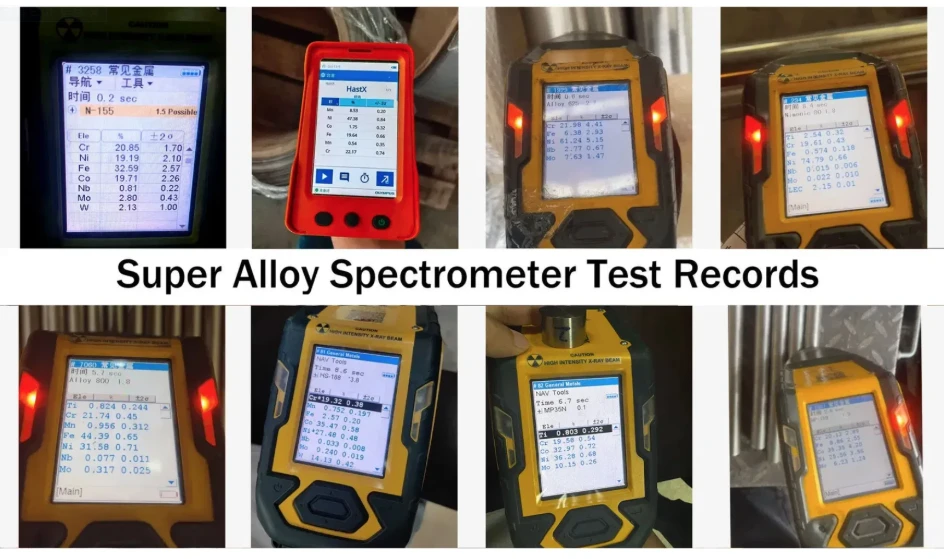
Select Inconel 600 feedstock complying with UNS N06600, with minimum 72% nickel, 14-17% chromium and 6-10% iron. Conduct full elemental analysis via direct-reading spectrometer following ASTM E350, strictly restricting low-melting impurities like sulfur, phosphorus and lead to eliminate hot working brittleness risks, ensuring all raw materials meet heat exchanger tube base material standards.
2. Melting and Ingot Preparation
Adopt non-vacuum induction melting plus electroslag remelting (ESR), with vacuum induction melting (VIM) as an alternative for severe service conditions. Control melting temperature at 1370-1430℃ and refining temperature at 1500-1550℃ under sulfur-free weak reducing atmosphere, to produce high-purity Inconel 600 ingots with uniform composition and low oxygen & nitrogen content.
3. Hot Piercing and Shell Forming
Heat the ingot in furnace within the optimal plasticity range 1040-1230℃, forge to break down the cast structure, then adopt hot extrusion process to pierce the solid billet into hollow tube shell. The final forging temperature shall not be lower than 870℃, avoiding the 650-870℃ brittle zone, to obtain the basic hollow shell for subsequent cold working.
4. Cold Drawing and Dimensional Control
Carry out multi-pass cold pilger rolling on the extruded hollow shell, limit single cold deformation to no more than 20%, to gradually process the diameter and wall thickness to the tolerance range specified in heat exchanger drawings. Perform intermediate annealing at 870-980℃ after each pass to eliminate cold work hardening and restore material ductility to prevent cracking.
5. Final Solution Heat Treatment
Heat the formed tubes in furnace, hold at 1010-1150℃ for 1 hour per 25.4mm wall thickness to fully dissolve grain boundary carbides. Quench immediately in water or force air cool after holding, rapidly passing through the 600-900℃ carbide precipitation sensitive zone, to obtain single-phase austenite structure and guarantee excellent intergranular corrosion resistance.
6. Surface Finishing and Sizing
Remove high-temperature oxide scales on both inner and outer surfaces completely through alkaline pickling and passivation treatment, restore the native metallic luster of Inconel 600. Then perform straightening, fixed-length cutting and pipe end chamfering, to ensure the straightness meets heat exchanger tube assembly requirements, and completely remove residual processing lubricants and impurities.
7. NDT and Final Acceptance
Carry out 100% hydrostatic test, eddy current testing and ultrasonic testing on every single tube, to fully detect micro-cracks, laminations and other metallurgical defects on inner and outer walls. Conduct sampling re-inspection on hardness, intergranular corrosion resistance and tensile properties. All tubes that meet ASTM B163 standards will be issued with formal qualification reports before delivery.
Why Choose Gnee as Your Nickel-Based Alloy Supplier?
✅ Since 2008, we have exported alloy materials to clients across Asia, Europe and other regions globally
✅ Qualified with ISO, SGS and BV third-party certifications
✅ Complete inspection services: PMI, UT, eddy current testing and other quality checks
✅ Global stock of Inconel, Hastelloy, Incoloy and Monel tubes, plates & bars
✅ Custom machining: cutting, polishing, CNC processing and tailored packaging
✅ Stock items ship in 7–15 working days; custom orders 15–25 working days, with priority MRO scheduling

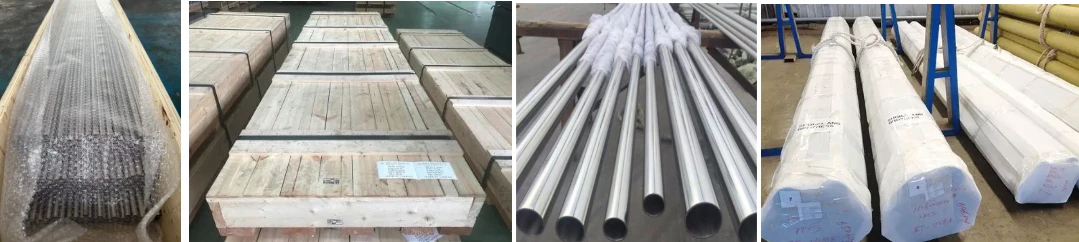
📦 Packaging and Shipping
Our nickel-based alloy products adopt industrial anti-corrosion packaging for overseas shipment:
- Heat-treated wooden pallets or solid export crates
- Multi-layer moisture-proof & rust-resistant wrapping
- Marked labels with heat number, material grade, standard and dimensions
- Global delivery options: sea freight, air freight and courier express
If you are currently sourcing high-performance Inconel 600 N06600 NCF600 shell and tube heat exchanger tubes for high-temperature, corrosion-resistant working conditions, we can provide you with full-process manufacturing traceability documents, third-party test reports, and a customized quotation tailored to your exact dimensional and pressure requirements.
Send your drawings, technical specifications and detailed demand description directly to ru@gneesteelgroup.com, and our dedicated heat exchanger tube engineering team will get back to you with a complete solution within 24 working hours.
FAQ:
Are alloy 600 and Inconel 600 the same?
Yes, Alloy 600 and Inconel 600 are chemically identical and share the same UNS designation N06600.
What are the key differences between Inconel 600 and Inconel 750?
Inconel 600 and Inconel X-750 (often referred to as Inconel 750) are both nickel-chromium-based superalloys, but they differ significantly in their chemical composition, how they are strengthened, and their ideal engineering uses.
What are the key differences between Inconel 600 and Inconel 718?
Inconel 600 and Inconel 718 are both nickel-chromium superalloys, but they differsignificantly in strengthening mechanisms, mechanical strength, cost, and ideal operatingenvironments.