


Differences Between 316 and 321 Stainless Steel

Differences Between 316 and 321 Stainless Steel
316 stainless steel contains added molybdenum, giving it excellent resistance to chloride corrosion/pitting (suitable for marine and chemical environments), while 321 stainless steel contains added titanium, making it more stable in high-temperature environments (welding, heat exchangers) and preventing carbide precipitation and intergranular corrosion. You can understand it this way: 316 stainless steel is suitable for corrosive liquid environments, while 321 stainless steel is suitable for high-temperature environments; both are austenitic stainless steels, but the different elements added determine their specific advantages in terms of corrosion resistance and thermal stability.
Is 321 stainless steel better than 316 stainless steel?
Comparison of 321 and 316 stainless steel: 316 stainless steel has superior resistance to chloride/marine corrosion (thanks to molybdenum), making it ideal for storage tanks, pipes, and food processing equipment; while 321 stainless steel is more suitable for high-temperature/welding applications (thanks to titanium), such as exhaust systems, heat exchangers, and aerospace components. It prevents carbide precipitation/sensitization during welding/heating. Both stainless steels have good weldability, but 321 stainless steel can withstand thermal cycling better and does not require annealing after welding to resist intergranular corrosion, unlike 316 stainless steel.

316 Stainless Steel
316 stainless steel, also known as AISI 316 or UNS S31600, is an austenitic stainless steel with a higher molybdenum content than 304 stainless steel. The additional molybdenum enhances its corrosion resistance, especially in chloride and other corrosive environments.
321 Stainless Steel
321 stainless steel is an austenitic stainless steel alloy with titanium added as an alloying element. The addition of titanium enhances its resistance to intergranular corrosion, particularly during welding and high-temperature operations. Due to its superior corrosion resistance at high temperatures, 321 stainless steel is commonly used in exhaust systems, jet engine components, and high-temperature chemical processing.
In summary, 304 stainless steel offers good corrosion resistance and versatility, while 321 stainless steel provides stronger resistance to intergranular corrosion and is ideal for high-temperature environments.

| Composotion of Stainless Steel 316 & 321 | ||
| Element | Stainless Steel 321
(Weight %) |
Stainless Steel 316
(Weight %) |
| Silicon | 0.75 | 0.75 |
| Carbon | 0.08 | 0.08 |
| Magnesium | 2.00 | 2.00 |
| Phosphorus | 0.045 | 0.045 |
| Titanium | 0.70 | – |
| Sulfur | 0.030 | 0.030 |
| Nitrogen | 0.10 | – |
| Chromium | 17.0-19.0 | 16.0-18.0 |
| Nickel | 9.0-12.0 | 10.0-14.0 |
| Physical Properties of Stainless Steel 316 & 321 | ||
| Property | Stainless Steel 316 | Stainless Steel 321 |
| Thermal Expansion | 16.5-16.7 | 16.5-16.9 |
| Thermal Conductivity (W/m'K) | 16.2 | 16.3 |
| Specific Heat (J/kg·K) | 500 | 500 |
| Modulus of Elasticity (GPa) | 740 | 720 |
| Density (g/cm3) | 7.98 | 7.92 |
| Melting Point (°C) | 1398-1420 | 1398-1420 |
The Equivalents of 321 and 316 Stainless Steel
| GB/T | 321 | 316 |
|---|---|---|
| ASTM/UNS | 321 / S32100 | 316 / S31600 |
| EN | X6CrNiTi18-10 (1.4541) | X5CrNiMo17-12-2 (1.4401) |
| JIS | SUS 321 | SUS 316 |
| GOST | 08Х18Н10Т | 03Х17Н14М3 |
Mechanical Properties of 321 vs 316 Stainless Steel
| Property | Grade 316 | Grade 321 |
|---|---|---|
| Tensile Strength (MPa) | 515 – 690 | 515 – 850 |
| Yield Strength (0.2% offset) (MPa) | 205 – 260 | 205 – 230 |
| Elongation (%) | 30 – 40 | 35 – 40 |
| Hardness (Brinell HB) | ≤ 217 | ≤ 217 |
Corrosion Resistance of 316 Stainless Steel vs. 321 Stainless Steel
Corrosion Resistance in Different Environments
Corrosion resistance is a key factor in material selection:
316 Stainless Steel
Offers superior corrosion resistance to chlorides and industrial solvents
Suitable for marine and chemical applications
321 Stainless Steel
Offers resistance to intergranular corrosion due to the presence of titanium
Suitable for high-temperature environments
Summary of the comparison between 316 stainless steel and 321 stainless steel
| Property | 316 Stainless Steel | 321 Stainless Steel |
|---|---|---|
| Chromium Content | 16-18% | 17-19% |
| Nickel Content | 10-14% | 9-12% |
| Additional Elements | Molybdenum (2-3%) | Titanium (0.3-0.7%) |
| Heat Resistance | Up to 870°C continuous | Up to 900°C continuous |
| Corrosion Resistance | Excellent in chloride environments | Good in high-temperature environments |
| Common Applications | Marine, Chemical Processing | Aerospace, Exhaust Systems |
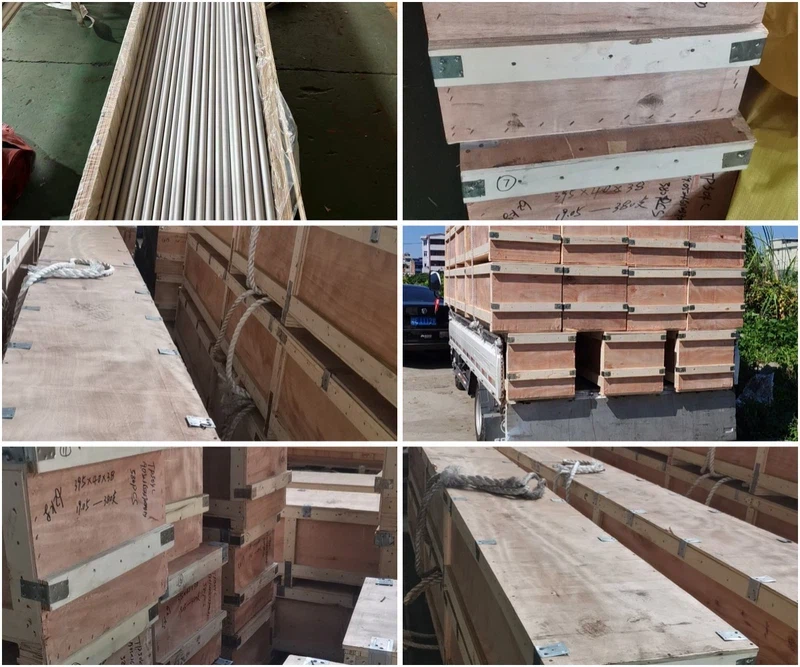
Gnee Steel specializes in the production of a wide range of stainless steel products. Gnee Steel's product packaging includes: Steel Strapping: Pipes with an outer diameter of 3 inches or less are typically strapped together with polypropylene film to prevent rust during ocean shipping, and then secured with steel strapping. Wooden Cases/Crates: Pipes are typically packaged in wooden cases or crates to protect the pipes during transportation, especially those that are longer or have larger diameters. Seaworthy Export Packaging: Suppliers typically use standard seaworthy export packaging methods, which may include a variety of materials and techniques to protect the pipes during transportation. Tarpaulin Packaging: This prevents rain, seawater, and other external factors from penetrating the export crates during transportation. Gnee Steel specializes in the production and sale of alloy materials. Gnee Steel's products are widely used in the aerospace, chemical, power, automotive, and nuclear energy sectors, and we can provide customized alloy material solutions based on customer needs. For alloy material pricing or customized alloy material solutions, please contact us for a quote: ru@gneesteelgroup.com