


Difference between 316L Stainless Steel and 317L Stainless Steel
Gnee Steel
Difference between 316L and 317L Stainless Steel
317L is an upgraded version of 316L, offering superior corrosion resistance in harsh chloride/acidic environments (such as paper mills and flue gas desulfurization plants) due to its higher molybdenum, chromium, and nickel content. Both steels are low-carbon ("L" grade) austenitic stainless steels, ideal for welding and general corrosion-resistant applications. The key difference lies in their performance in corrosive media: 317L is better suited to extreme corrosive conditions than 316L, but for general marine or food-grade applications, 316L is usually sufficient and more cost-effective.

Gnee Steel
What does the "L" in 316L steel stand for?
Low
For example, the "L" in 316L stainless steel stands for "low," indicating that this alloy has a very low carbon content. Compared to 316 stainless steel, 316L stainless steel is more resistant to welding corrosion and can withstand higher temperatures. Therefore, 316L stainless steel is often used in marine and construction engineering projects.

What is 316 stainless steel?
316 stainless steel is a molybdenum-containing austenitic stainless steel that offers superior corrosion resistance and pitting resistance compared to 304 stainless steel.
Key Features:
Contains 2-3% molybdenum, improving resistance to chloride corrosion
Good mechanical strength
Excellent overall corrosion resistance
Widely used in marine, chemical, and food processing equipment
What is 317 stainless steel?
317 stainless steel is a higher-alloy version of 316 stainless steel, containing more molybdenum and nickel, significantly improving corrosion resistance and pitting resistance.
Key Features:
Contains 3-4% molybdenum (higher than 316)
Excellent resistance to chemicals, acids, and chloride pitting
Higher cost, but offers better durability in corrosive environments
Used in chemical, paper, and high-chloride environments

What is the Difference Between 316 and 317 Stainless Steel?
Both 316 and 317 stainless steels are austenitic stainless steels. They contain similar elements, but differ in composition and specific applications. The following are the main differences between the two:
| Feature | Grade 316 Stainless Steel | Grade 317 Stainless Steel | Gnee Steel recommends: |
| Mo | 2.0% – 3.0% | 3.0% – 4.0% | This is the most critical difference. The higher molybdenum content gives 317 greater corrosion resistance. |
| Corrosion Resistance | Excellent | More Superior | Especially in harsh environments containing chloride and sulfuric acid compounds, 317 performs better. |
| Mechanical Strength | Good | Slightly Higher | The tensile strength and yield strength of 317 is generally slightly higher than 316. |
| Cost | Standard | Higher | Due to the higher alloying element content, the cost of 317 also increases accordingly. |
| Availability | Very high, easy-to-buy | Relatively low, more specialized | 316 stainless steel is very common, while 317 stainless steel requires finding professional manufacturers and stockists. |
Composition: 316 Vs 317 Stainless Steel
| Element | 316 Stainless Steel | 317 Stainless Steel |
|---|---|---|
| C | ≤0.08% | ≤0.08% |
| Mn | ≤2.00% | ≤2.00% |
| Si | ≤1.00% | ≤1.00% |
| Cr | 16.0–18.0% | 18.0–20.0% |
| Ni | 10.0–14.0% | 11.0–15.0% |
| Mo | 2.0–3.0% | 3.0–4.0% |
| S | ≤0.03% | ≤0.03% |
| P | ≤0.045% | ≤0.045% |
Professional tip: If your application environment contains high concentrations of chlorides, saltwater, or corrosive chemicals, then choosing 317 stainless steel will be a safer and more durable option.
316L and 317 stainless steel Mechanical Properties Comparison
| Mechanical Property | 316 | 317 |
|---|---|---|
| Tensile Strength (MPa) | 515 | 515 |
| Yield Strength (MPa) | 205 | 205 |
| Elongation (%) | 40% | 40% |
| Hardness (HB) | ≤217 | ≤217 |
The mechanical strength is almost identical. The main difference lies in corrosion resistance, not strength.
Gnee Steel supplies 316 and 317 stainless steel materials, guaranteeing excellent processing performance whether for precision machining of bars or for wire drawing.
316L and 317 stainless steel High-Temperature Resistance
Both 316 and 317 materials maintain their strength up to the following temperatures:
870°C (intermittent use)
925°C (continuous use)
In carburizing environments, 317 performs slightly better than 316.
316L and 317 stainless steel Weldability Comparison
| Property | 316 | 317 |
|---|---|---|
| Weldability | Excellent | Good |
| Hot cracking sensitivity | Low | Slightly higher due to alloy content |
| Recommended filler metal | 316L | 317L |
Although both materials can be welded, 316 stainless steel is easier to weld.
316L and 317 stainless steel Machinability & Formability
| Feature | 316 | 317 |
|---|---|---|
| Machinability | Better | Slightly more difficult |
| Formability | Good | Good |
| Work hardening | Moderate | Moderate to high |
317 stainless steel has a higher alloy content, which slightly reduces processing efficiency.
316L and 317 stainless steel International Equivalent Grades
| Standard | 316 | 317 |
|---|---|---|
| ASTM | 316 / 316L | 317 / 317L |
| EN | 1.4401 / 1.4404 | 1.4449 / 1.4438 |
| JIS | SUS316 | SUS317 |
| DIN | X5CrNiMo17-12-2 | X2CrNiMo18-15-4 |
Application: 316 Vs 317 Stainless Steel
316 stainless steel: Widely used in various fields, including food processing equipment, pharmaceuticals, marine environments, building structures, and medical implants. It is also suitable for high-temperature environments and is commonly used in heat exchangers and exhaust systems.
317 stainless steel: Its enhanced corrosion resistance makes it suitable for more demanding applications, such as environments exposed to corrosive chemicals and acids. It is commonly used in chemical equipment, the paper industry, the textile industry, and environments with high chloride and acid content.
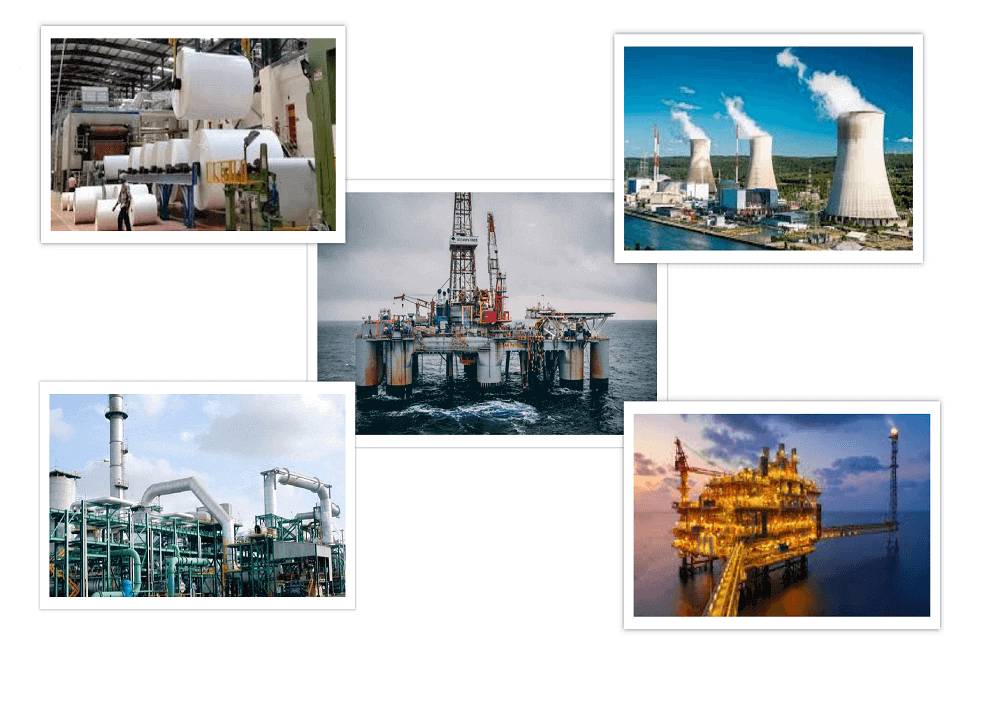
In summary, both 316 and 317 stainless steels are corrosion-resistant austenitic alloys, but 317 stainless steel has higher chromium, nickel, and molybdenum content, resulting in superior corrosion resistance to corrosive chemicals and acids. The specific choice of stainless steel depends on the intended application and the required level of corrosion resistance.
Gnee Steel also supplies custom stainless steel 316L products in various sizes and specifications. Please send us your drawings for a quote!

