


Detailed explanation of Inconel 718 flanges

Detailed explanation of Inconel 718 flanges
Inconel 718 flanges are high-performance pipe connectors made from a nickel-chromium superalloy, renowned for their exceptional strength, corrosion resistance, and stability at extremely high and low temperatures. Therefore, they are crucial in industries such as aerospace, oil and gas, and nuclear power, and are widely used in demanding applications such as jet engines, deep-sea drilling, and cryogenic systems. However, their high cost and difficulty in processing are drawbacks.
What are the characteristics of Inconel 718 alloy?
Inconel 718 alloy (UNS designation N07718) is one of the most commonly used nickel-based superalloys. These alloys are characterized by high strength and excellent resistance to high temperatures, corrosion, and oxidation. IN718 alloy is specifically designed for good fatigue and creep resistance at temperatures up to 700°C.

Looking for a reliable Inconel 718 flange manufacturer and supplier, especially one with extensive experience in high-pressure and high-temperature applications? You've come to the right place. GNEE is a leading specialist in nickel alloy forging and machining, with over 18 years of industry experience and API, ASME, and ISO certifications. We offer a full range of Inconel 718 flanges, including stock availability and custom manufacturing. This guide provides detailed information on Inconel 718 flange types, standards, manufacturing processes, and selection criteria to help you make informed decisions for your critical piping and pressure vessel systems.
Inconel 718 flanges, designated as UNS N07718, are high-strength, precipitation-hardened nickel-chromium alloy flanges known for their exceptional mechanical strength, superior corrosion resistance, and excellent high-temperature performance. This alloy maintains excellent tensile strength, creep strength, and fracture toughness at temperatures up to 700°C, making it ideal for demanding environments such as aerospace, power generation, petrochemical, and cryogenic applications.
Due to the addition of niobium and molybdenum, Inconel 718 exhibits superior hardness and fatigue resistance while maintaining excellent weldability compared to other precipitation-hardened alloys. These flanges are widely used in high-pressure systems, turbine components, heat exchangers, and chemical processing equipment.
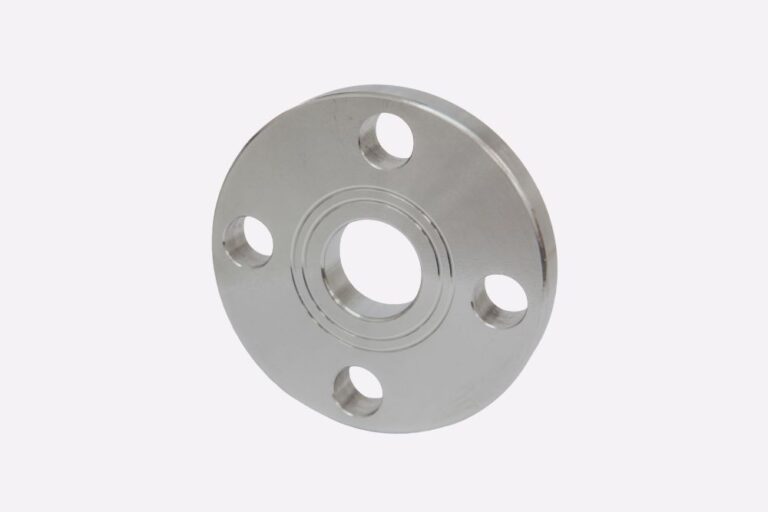
Gnee Inconel 718 flanges
2. General manufacturing standards and specifications for Inconel 718 flanges
The production and acceptance of Inconel 718 flanges primarily follow these categories of internationally recognized standards. Selecting the standard is the first step in procurement.
| Standard System | Typical Standard Number | Scope of Application and Characteristics | Key Selection Points |
|---|---|---|---|
| Dimensions & Pressure Ratings | ASME B16.5 | Pipe flanges and flanged fittings (NPS 1/4" to 24"). Defines flange types, dimensions, facing, pressure classes (e.g., Class 150, 300, 600, 900, 1500, 2500). | The most universal and fundamental standard. First, determine the type and Class rating under ASME B16.5 based on piping design pressure and size. |
| Material & Forging | ASTM B564 / ASME SB564 | Standard specification for nickel alloy forgings. This is the fundamental basis for Inconel 718 flange material, specifying chemical composition, forging processes, heat treatment, and mechanical property requirements. | Ensure the flange forging material certificate (MTR) conforms to the requirements for UNS N07718 in ASTM B564, especially properties after aging treatment (e.g., yield strength ≥ 1035 MPa). |
| Specialty Industry | API 6A | Specification for wellhead and Christmas tree equipment. Used for flanges, blind flanges, valve bonnets, etc., in oil & gas wellheads. Pressure ratings like API 2000psi, 5000psi, 10000psi, etc. | Applicable for harsh environments in upstream oil & gas production, requiring resistance to Sulfide Stress Cracking (SSC). Compliance with NACE MR0175/ISO 15156 must be specified. |
| Specialty Industry | MIL-DTL-24231 | U.S. Military specification. Imposes special dimensional and performance requirements for flanges used in aerospace, naval, and other military systems. | Applicable for special designs in defense and aerospace sectors. |
3. Main flange types of Inconel 718 and their application characteristics
According to ASME B16.5, Inconel 718 flanges are mainly of the following types, suitable for different installation and operational requirements.
| Flange Type | Characteristics & Advantages | Typical Application Scenarios | |
|---|---|---|---|
| Weld Neck Flange (WN) | Features a tapered neck for smooth stress transition. Offers the highest strength, optimal stress distribution, and excellent resistance to fatigue and temperature fluctuations. | First choice for high-pressure, high-temperature, and severe cyclic services, such as reactor outlets, steam lines, and gas turbine piping. | |
| Slip-On Flange (SO) | Bore is slightly larger than the pipe OD; slides over the pipe and is fillet welded inside and outside. Easier to align during installation and lower cost than weld neck flanges. | Used for medium-low pressure, non-severe cyclic services, such as auxiliary lines and tank nozzles. | |
| Threaded Flange (TH) | Has an internal thread to connect directly to threaded pipe, requiring no welding. | Suitable for no-hot-work zones, instrument connections, or locations requiring frequent disassembly. Note: threads may loosen at high temperatures. | |
| Socket Weld Flange (SW) | Pipe is inserted into the socket and fillet welded. Provides higher connection strength and better fatigue resistance than slip-on flanges. | Small-diameter, high-pressure piping (NPS ≤ 2"), such as instrument impulse lines and sample lines. | |
| Blind Flange (BL) | Has no bore, used to seal the end of a pipeline or equipment nozzle, facilitating inspection. | System isolation, pressure testing, and future connection points. |
4. Key Manufacturing Processes: Forging and Heat Treatment
The performance of Inconel 718 flanges largely depends on the correct forging and heat treatment processes.
1. Forging Process
Objective: To break down the cast structure, obtain a dense, uniform, fine-grained forged billet, and improve mechanical properties and fatigue resistance.
Method: Die forging is typically used to obtain a near-net shape, reducing material waste and machining requirements. The forging temperature range must be strictly controlled (~1120°C - 950°C).
GNEE Process Advantage: We use multi-directional die forging technology to ensure that the metal flow lines follow the shape of the flange, avoiding transverse flow lines and significantly improving the load-bearing capacity of the flange in critical areas (such as the neck).
2. Heat Treatment Process
This is a core step in activating the precipitation hardening properties of Inconel 718 and must be strictly followed.
Solution Treatment: Heated to approximately 980°C, held at temperature, and then rapidly cooled (usually water quenched) to dissolve the strengthening elements into the matrix, preparing for aging and achieving a suitable hardness for machining.
Aging Treatment: Two-stage aging is the standard process.
First stage: 720°C ± 10°C, held for 8 hours.
Second stage: Furnace cooled to 620°C ± 10°C, held for 8 hours, then air cooled.
Performance after aging: After the above treatment, the flange reaches its highest strength state (yield strength ≥1035 MPa) and possesses good toughness.
5. Inconel 718 Flange Sealing Surface Types and Selection
The choice of sealing surface type directly affects the reliability of the connection's seal.
| Facing Type (Face Type) | Characteristics | Applicable Gaskets | Applicable Service Conditions | |
|---|---|---|---|---|
| Raised Face (RF) | Most common type. A raised ring around the bore concentrates pressure for effective sealing. | Non-metallic soft gaskets, spiral wound gaskets, metal-jacketed gaskets. | General service, suitable for Class 150 through 2500. | |
| Ring Type Joint (RTJ) | Groove cut into the flange face forms a line contact seal with a metal ring gasket (oval or octagonal). Provides excellent sealing integrity. | Metal ring gaskets (soft iron, 718, Inconel 600, etc.). | High pressure, high temperature, toxic, or flammable/explosive media (typically Class 600 and above, especially in oil & gas industry). | |
| Flat Face (FF) | The entire flange face is flat. | Full-face gaskets. | Commonly used for low-pressure (Class 150) applications and connections to cast iron or plastic equipment to avoid localized high stress. | |
| Tongue and Groove (T&G) | One flange has a tongue, the other a matching groove. The gasket sits inside the groove, providing good alignment and crush resistance. | Metal or non-metallic gaskets. | Services with penetrating media, requiring high containment, or where gaskets are prone to blowout. |
Please contact us for the latest Inconel 718 flange price list and stock availability. We also offer free technical assessments to ensure optimal performance and safety of the flanges in your system.

Inconel 718 flanges are strategic components that ensure the integrity and safety of piping systems under extreme operating conditions. Their value lies not only in the material itself but also in the comprehensive quality control throughout the entire process, from forging and heat treatment to precision machining. Correct selection-choosing the appropriate type, pressure rating, and sealing surface based on ASME B16.5 standards, and strictly specifying materials and heat treatment requirements conforming to ASTM B564-is fundamental to ensuring the long-term reliable operation of the flange.
For critical systems in aerospace, high-end energy, and chemical industries, investing in high-quality Inconel 718 flanges is an investment in the safety, reliability, and low maintenance costs of the entire system. As a supplier with vertically integrated production capabilities, GNEE controls the entire process from forging blanks to finished products, ensuring that every flange meets or exceeds standard requirements. Contact us immediately at ru@gneesteelgroup.com to obtain the Inconel 718 flange solutions and authoritative technical documentation your project requires.