


Comparison between ASTM A312 TP316 and TP316L pipes

Comparison between ASTM A312 TP316 and TP316L pipes
ASTM A312 TP316L is a low-carbon version of TP316, the main difference being the carbon content (maximum 0.03% vs. 0.08%). Low-carbon TP316L is better suited for welding applications because it prevents carbide precipitation (sensitization) and improves corrosion resistance. Although TP316 has slightly higher tensile strength/yield strength due to its higher carbon content, both offer excellent resistance to general corrosion and chloride corrosion, thanks to the presence of molybdenum. For welded thick-section components, 316L is recommended; while for general high-strength applications where welding is not a primary consideration, 316 is preferred.
What are the properties of ASTM A312 TP316L material?
A312 TP316L stainless steel is a low-carbon austenitic stainless steel. A312 TP316L is made with a high-quality composition of nickel, chromium, and molybdenum, making it suitable for various industries. This gives this grade of product excellent corrosion resistance and oxidation resistance.

ASTM A312 TP316 and TP316L refer to 316 and 316L stainless steel, respectively. The prefix "TP" indicates the "type" of stainless steel. TP316 or TP316L pipes can be made into seamless or longitudinally welded pipes, with butt-welded or threaded ends. TP316 is made by adding molybdenum to the classic "18-8" (TP304) stainless steel to improve its resistance to pitting corrosion in chloride environments. TP316L is a low-carbon version of TP316; its lower carbon content improves sensitization properties, thereby enhancing its resistance to weld corrosion.
ASTM A312 TP316 and TP316L are designated as UNS S31600 and UNS S31603, respectively. Although more expensive, TP316/TP316L pipes offer higher corrosion resistance than TP304/TP304L pipes. They can be used in pipelines for various corrosive chemical processes, including industries such as inks, rayon, photographic chemicals, paper, textiles, bleach, and rubber.
Chemical composition of ASTM A312 TP316 and TP316L
| Element | Composition, % TP316 |
Composition, % TP316L |
|---|---|---|
| C | ≤0.08 | ≤0.035 |
| Mn | ≤2.00 | ≤2.00 |
| P | ≤0.045 | ≤0.045 |
| S | ≤0.030 | ≤0.030 |
| Si | ≤1.00 | ≤1.00 |
| Cr | 16.0-18.0 | 16.0-18.0 |
| Ni | 10.0-14.0 | 10.0-14.0 |
| Mo | 2.00-3.00 | 2.00-3.00 |
Mechanical Properties of ASTM A312 TP316 and TP316L
| Tensile Requirements | TP316 | TP316L |
|---|---|---|
| Tensile Strength min. MPa [ksi] |
515 [75] |
485 [70] |
| Yield Strength min. MPa [ksi] |
205 [30] |
170 [25] |
| Elongation in 2", min, % (*L) |
35 | 35 |
| Elongation in 2", min, %(*T) |
25 | 25 |
Welding & Corrosion:
TP316: A high carbon content can lead to the formation of carbides (sensitization) at grain boundaries during welding, thereby reducing the corrosion resistance of the heat-affected zone.
TP316L: Low carbon content prevents this sensitization, thus providing excellent resistance to intergranular corrosion after welding.
Manufacturing and Heat Treatment
Seamless steel pipes manufactured from ASTM A312 TP316/TP316L steel should be produced without welding at any stage of production. Welded pipes should be manufactured using automated welding processes, and no welding wire should be added during welding. TP316/TP316L steel pipes should undergo solution treatment, which involves heating the pipe and holding it at a temperature not lower than 1040°C (1900°F) for a sufficient time to allow all chromium carbides to be completely austenitized/dissolved. This should be followed by water cooling or other rapid cooling methods to ensure no carbide precipitation at grain boundaries. Furthermore, due to the lower carbon content of TP316L, intergranular carbide precipitation is reduced, making TP316L less prone to chromium carbide precipitation compared to TP316. This may result in limited sensitization, thus benefiting welding, flame cutting, and other hot working operations.
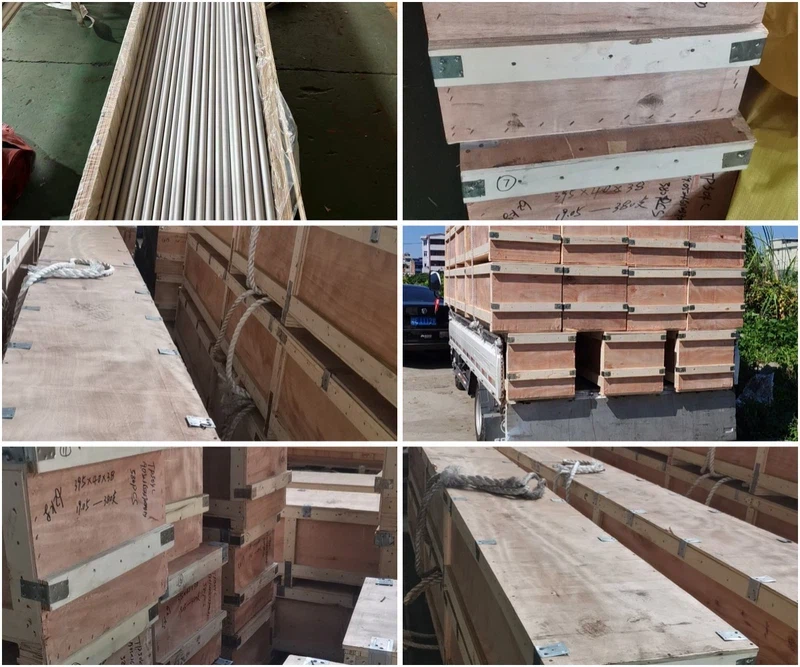
Gnee Steel specializes in the production of a wide range of stainless steel products. Gnee Steel's product packaging includes: Steel Strapping: Pipes with an outer diameter of 3 inches or less are typically strapped together with polypropylene film to prevent rust during ocean shipping, and then secured with steel strapping. Wooden Cases/Crates: Pipes are typically packaged in wooden cases or crates to protect the pipes during transportation, especially those that are longer or have larger diameters. Seaworthy Export Packaging: Suppliers typically use standard seaworthy export packaging methods, which may include a variety of materials and techniques to protect the pipes during transportation. Tarpaulin Packaging: This prevents rain, seawater, and other external factors from penetrating the export crates during transportation. Gnee Steel specializes in the production and sale of alloy materials. Gnee Steel's products are widely used in the aerospace, chemical, power, automotive, and nuclear energy sectors, and we can provide customized alloy material solutions based on customer needs. For alloy material pricing or customized alloy material solutions, please contact us for a quote: ru@gneesteelgroup.com