


ASTM A312 vs ASTM A358 – What's the Difference

ASTM A312 vs ASTM A358 – What's the Difference
ASTM A312 covers seamless and welded austenitic stainless steel tubes for general high-temperature/corrosive environments (welded tubes do not use filler metal), while ASTM A358 specifically covers electrofusion welded (EFW) austenitic stainless steel tubes for high-temperature/corrosive environments, allows the use of filler metal, and is generally used for larger diameter pipes. Different grades specify weld quality (e.g., radiographic testing). The main difference is that A312 has a broader scope (seamless/welded), while A358 focuses on electrofusion welding. A358 allows the use of filler metal, and A358 classifies welds into different inspection levels (radiographic testing).
What is the difference between ASTM A312 and SS316?
ASTM A312 TP 316 ERW steel pipe is used for structural applications such as handrails, building supports, and processing equipment supports. 316 stainless steel welded pipe is widely used in structural applications. 316 stainless steel seamless pipe, on the other hand, is used for pressure applications.

ASTM A312 Standard
ASTM A312 is a standard specification for seamless, welded, and cold-worked austenitic stainless steel tubes suitable for high-temperature and generally corrosive environments. It covers the dimensions, tolerances, and mechanical properties of various grades of austenitic, austenitic-ferritic, and heat-resistant steels. Grades covered by ASTM A312 include TP304, TP304L, TP304H, TP316, TP316L, TP317, TP321, TP347, and TP310S. Seamless and welded tubes have different specifications regarding chemical composition, mechanical properties, and manufacturing processes.
ASTM A358 Standard
ASTM A358 is a standard specification for electrofusion-welded austenitic chromium-nickel stainless steel tubes suitable for corrosive or high-temperature environments. The tubes covered by this specification are suitable for superheater, heat exchanger, or condenser tubes. ASTM A358 covers grades including TP304, TP304L, TP347, TP347H, TP316, TP316L, and TP321. This standard requires that pipes be manufactured using electrofusion welding or submerged arc welding.
Manufacturing Processes: ASTM A312 and A358
ASTM A312:
Coveres seamless and welded (without filler metal) stainless steel tubes.
The tubes are typically produced using extrusion (seamless tube) or automated welding processes.
ASTM A358:
Coveres electrofusion welded (EFW) austenitic stainless steel tubes.
Filler metal is used during the welding process to increase strength and make it suitable for thicker tube walls.
ASTM A312 vs. ASTM A358 – Comparison Table
| Aspect | ASTM A312 | ASTM A358 |
|---|---|---|
| Pipe Type | Seamless or Welded | Welded only (usually from plate or sheet) |
| Manufacturing Method | Cold or hot finished, welded without filler metal (typically) | Electric Fusion Welded (EFW) with or without filler metal |
| Grades Covered | TP304, TP316, TP321,Tp347/H etc. | TP304, TP316, TP321,Tp347/H etc |
| Wall Thickness Range | Standard schedules (e.g., Sch 10, 40, 80) | Often for larger diameters and heavier wall thicknesses |
| Pipe Sizes | Nominal Pipe Size (NPS) 1/8″ to 30″ | Usually NPS 8″ and above |
| Dimension Tolerance | As per A999 | Accoridng to ASTM A358 |
| Typical Applications | High-pressure piping, chemical, food industry | Low-pressure steam, condensate, or structural applications |
Chemical Composition
ASTM A312 and ASTM A358 have very similar chemical compositions. Both use chromium, molybdenum, and nickel as the main alloying elements. The main difference is that ASTM A312 contains carbon, while ASTM A358 does not.
Mechanical Properties
ASTM A312 and ASTM A358 also have very similar mechanical properties. Both have a yield strength of approximately 35 ksi and a tensile strength of approximately 75 ksi. The main difference is that ASTM A312 has a lower carbon content, resulting in better weldability.
Applications
The main difference between these two standards lies in their application areas. ASTM A312 is primarily used in high-temperature and generally corrosive environments, suitable for seamless or welded pipes. In contrast, ASTM A358 is more suitable for corrosive or high-temperature environments, suitable for electrofusion welded pipes. Another difference lies in the range of steel grades covered by the two standards. ASTM A312 covers a wider range of steel grades, including austenitic, austenitic-ferritic, and heat-resistant steels, while ASTM A358 only covers austenitic chromium-nickel stainless steel.
Which standard is more suitable, ASTM A312 or ASTM A358?
The choice between ASTM A312 and ASTM A358 depends primarily on the intended use of the product. If your application requires a generally corrosive or high-temperature environment, then ASTM A312 is a suitable standard. However, if your application requires electrofusion welded pipe suitable for corrosive or high-temperature environments, then ASTM A358 is a more suitable choice.
Conclusion
In summary, ASTM A312 and ASTM A358 are two important standards for manufacturing stainless steel pipes, differing in specifications and applications. ASTM A312 is primarily used for high-temperature and generally corrosive environments, while ASTM A358 is well-suited for corrosive or high-temperature environments requiring electrofusion welded pipes. The choice depends on the intended use. Regardless, both standards offer numerous advantages, making them suitable for a wide range of industries.
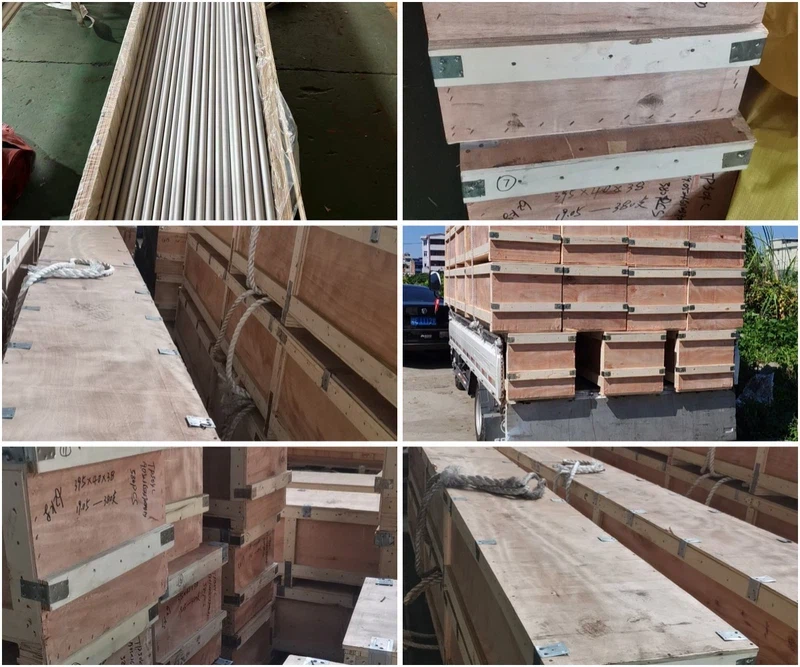
Gnee Steel specializes in the production of a wide range of stainless steel products. Gnee Steel's product packaging includes: Steel Strapping: Pipes with an outer diameter of 3 inches or less are typically strapped together with polypropylene film to prevent rust during ocean shipping, and then secured with steel strapping. Wooden Cases/Crates: Pipes are typically packaged in wooden cases or crates to protect the pipes during transportation, especially those that are longer or have larger diameters. Seaworthy Export Packaging: Suppliers typically use standard seaworthy export packaging methods, which may include a variety of materials and techniques to protect the pipes during transportation. Tarpaulin Packaging: This prevents rain, seawater, and other external factors from penetrating the export crates during transportation. Gnee Steel specializes in the production and sale of alloy materials. Gnee Steel's products are widely used in the aerospace, chemical, power, automotive, and nuclear energy sectors, and we can provide customized alloy material solutions based on customer needs. For alloy material pricing or customized alloy material solutions, please contact us for a quote: ru@gneesteelgroup.com