


316 vs 18-8 Stainless Steel: Which is Better?

316 vs 18-8 Stainless Steel: Which is Better?
Due to the addition of molybdenum, 316 stainless steel is more suitable for harsh corrosive environments (such as marine/chemical environments) because of its superior corrosion resistance; while 18/8 (304 type) stainless steel is a standard and cost-effective option for general purposes (kitchenware, household items), offering good but not exceptional corrosion resistance. Therefore, the "better" choice depends on the application requirements and budget.
Does a magnet attract 316 stainless steel?
Due to its high nickel content, 316 stainless steel is considered the "least magnetic" type of stainless steel. However, if a 316 stainless steel product undergoes extensive welding or machining, its magnetism may increase to the point where it exhibits a noticeable attraction to a magnet.

What is 18-8 stainless steel?
18-8 stainless steel typically refers to 304 stainless steel, a widely used austenitic stainless steel. Its name comes from its main components: 18% chromium and 8% nickel. (UNS S30400) 304 stainless steel is widely used due to its excellent corrosion resistance, mechanical properties, and processability. It is a non-magnetic material and maintains good toughness and strength at low temperatures.
What is 316 stainless steel?
(UNS S31600) 316 stainless steel is a high-grade austenitic stainless steel that has improved corrosion resistance due to the addition of molybdenum. Compared to 304 stainless steel, 316 stainless steel performs better when exposed to chlorides and other corrosive chemicals. Its unique composition makes it suitable for more challenging environments, especially in the marine and chemical industries.
18-8 Stainless Steel vs 316 Stainless Steel
| Feature | 18-8 (Grade 304) Stainless Steel | 316 Stainless Steel |
| Key Composition | ~18% Chromium, ~8% Nickel | ~16-18% Chromium, ~10-14% Nickel, ~2-3% Molybdenum |
| Chloride Resistance | Poor. Prone to pitting and crevice corrosion in salt water. | Excellent. Molybdenum provides superior resistance to chlorides. |
| Overall Corrosion | Good for general atmospheric and most chemical exposures. | Excellent, especially in harsh, corrosive environments. |
| Cost Index | 1.0x (Baseline) | ~1.3x – 1.5x (Typically 30-50% more expensive) |
| Common Names | 18-8 Stainless, 304 Stainless, Food-Grade Stainless | Marine-Grade Stainless, Surgical Stainless Steel |
| Typical Use Case | Indoor applications, fresh water environments, and general purpose. | Marine, coastal, chemical processing, and high-value applications. |
Comparison of equivalent grades between 18/8 stainless steel and 316 stainless steel
| Standard | 18-8 (304 Equivalent) | 316 |
|---|---|---|
| UNS | S30400 | S31600 |
| EN | 1.4301 | 1.4401 / 1.4404 |
| ASTM | 304 | 316 / 316L |
| JIS | SUS304 | SUS316 |
| DIN | X5CrNi18-10 | X2CrNiMo17-12-2 |
| GB | 06Cr19Ni10 | 022Cr17Ni12Mo2 |
Mechanical Properties Comparison of 18/8 Stainless Steel and 316 Stainless Steel
| Property | 18-8 (304) | 316 |
|---|---|---|
| Tensile Strength | 515 MPa | 515 MPa |
| Yield Strength | 205 MPa | 205 MPa |
| Elongation | 40% | 40% |
| Hardness | 70–90 HRB | 70–90 HRB |
Chemical Composition Comparison: Stainless Steel 316 vs. Stainless Steel 18/8
| Element (% by weight) | Stainless Steel 316 (UNS S31600) | Stainless Steel 18/8 (similar to 304, UNS S30400) |
|---|---|---|
| Iron (Fe) | Balance | Balance |
| Chromium (Cr) | 16.0 – 18.0 | 18.0 – 20.0 |
| Nickel (Ni) | 10.0 – 14.0 | 8.0 – 10.5 |
| Molybdenum (Mo) | 2.0 – 3.0 | – |
| Manganese (Mn) | ≤ 2.00 | ≤ 2.00 |
| Silicon (Si) | ≤ 1.00 | ≤ 1.00 |
| Carbon (C) | ≤ 0.08 | ≤ 0.08 |
| Phosphorus (P) | ≤ 0.045 | ≤ 0.045 |
| Sulfur (S) | ≤ 0.030 | ≤ 0.030 |
| Nitrogen (N) | ≤ 0.10 | ≤ 0.10 |
High Temperature Resistance: 18-8 Stainless Steel vs 316
| Temperature Resistance | 18-8 (304) | 316 |
|---|---|---|
| Continuous Service | 870°C | 870°C |
| Intermittent Service | 925°C | 925°C |
304 stainless steel: Suitable for high-temperature environments up to approximately 870°C. Under prolonged high-temperature conditions, the performance of 304 stainless steel may degrade, such as reduced strength and toughness.
316 stainless steel: Can withstand temperatures up to 925°C. Its high-temperature resistance is slightly better than that of 304 stainless steel, but when used in high-temperature environments, the durability and stability of the material also need to be considered.
The performance of both types of stainless steel is similar at high temperatures, but 316 stainless steel has slightly superior oxidation resistance.
18-8 Stainless Steel vs 316 Stainless Steel Application

18-8 Stainless Steel Applications
Due to its excellent corrosion resistance, strength, and machinability, 18-8 stainless steel is widely used in everyday products, such as:
Kitchenware and tableware
Building and decorative materials
Food processing and storage equipment
Automotive parts
Bolts and fasteners
316 Stainless Steel Applications
316 stainless steel is often used in demanding environments due to its excellent resistance to salt spray and chemical corrosion, such as:
Marine equipment
Chemical equipment
Medical equipment
Seawater desalination equipment
Shipbuilding and offshore platforms

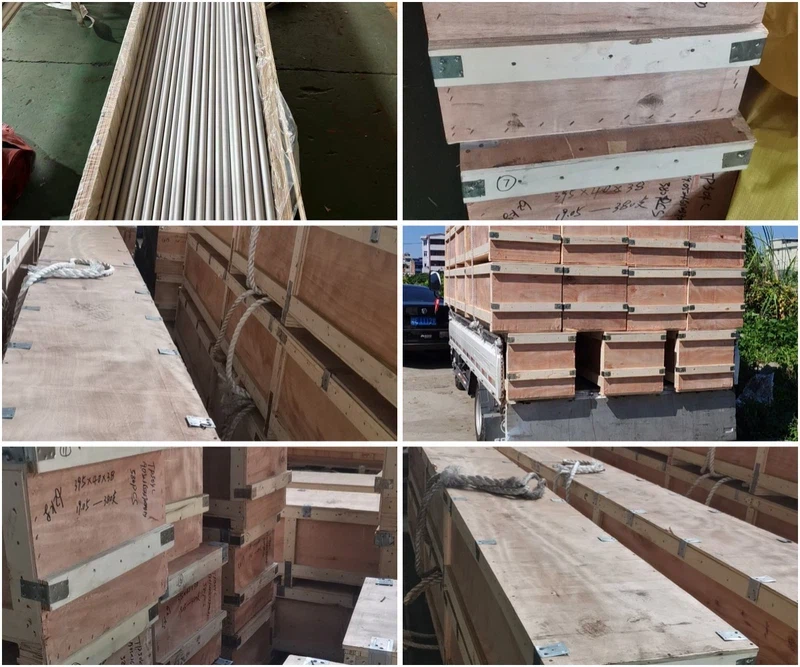
Gnee Steel specializes in the production of a wide range of stainless steel products. Gnee Steel's product packaging includes: Steel Strapping: Pipes with an outer diameter of 3 inches or less are typically strapped together with polypropylene film to prevent rust during ocean shipping, and then secured with steel strapping. Wooden Cases/Crates: Pipes are typically packaged in wooden cases or crates to protect the pipes during transportation, especially those that are longer or have larger diameters. Seaworthy Export Packaging: Suppliers typically use standard seaworthy export packaging methods, which may include a variety of materials and techniques to protect the pipes during transportation. Tarpaulin Packaging: This prevents rain, seawater, and other external factors from penetrating the export crates during transportation. Gnee Steel specializes in the production and sale of alloy materials. Gnee Steel's products are widely used in the aerospace, chemical, power, automotive, and nuclear energy sectors, and we can provide customized alloy material solutions based on customer needs. For alloy material pricing or customized alloy material solutions, please contact us for a quote: ru@gneesteelgroup.com