


304 vs 316 Stainless Steel for Processing Systems

304 vs 316 Stainless Steel for Processing Systems
For processing systems, 304 stainless steel is the economical mainstay, suitable for general applications (weak acids, food/beverage), while 316 stainless steel with added molybdenum offers superior resistance to chlorides, strong chemicals, and salt water, making it ideal for more corrosive, high-chlorinated, or marine environments. Its higher cost is reflected in better long-term performance and lower maintenance costs. The choice of material depends on specific chemical exposures, temperature, and budget; 316 stainless steel can prevent pitting corrosion, which is common in the weaker areas of 304 stainless steel.
Why is 316 stainless steel better than 304 stainless steel?
316 stainless steel is more corrosion-resistant than 304 stainless steel, especially resistant to chloride corrosion. Therefore, it is often used in marine equipment and other applications that require contact with high concentrations of chlorides or other oxidizing agents.

Chemical Composition Comparison: Stainless Steel 316 vs Stainless Steel 304
| Element (% by weight) | Stainless Steel 316 (UNS S31600) | Stainless Steel 304 (UNS S30400) |
|---|---|---|
| Iron (Fe) | Balance | Balance |
| Chromium (Cr) | 16.0 – 18.0 | 18.0 – 20.0 |
| Nickel (Ni) | 10.0 – 14.0 | 8.0 – 10.5 |
| Molybdenum (Mo) | 2.0 – 3.0 | – |
| Manganese (Mn) | ≤ 2.00 | ≤ 2.00 |
| Silicon (Si) | ≤ 1.00 | ≤ 1.00 |
| Carbon (C) | ≤ 0.08 | ≤ 0.08 |
| Phosphorus (P) | ≤ 0.045 | ≤ 0.045 |
| Sulfur (S) | ≤ 0.030 | ≤ 0.030 |
| Nitrogen (N) | ≤ 0.10 | ≤ 0.10 |
Applications Comparison: Stainless Steel 316 vs Stainless Steel 304
| Industry / Application Area | Stainless Steel 304 | Stainless Steel 316 |
|---|---|---|
| Food & Beverage | Tanks, processing equipment, utensils, sinks, countertops. | Equipment for processing salty, acidic, or chloride-containing foods; brewery fittings. |
| Architecture & Construction | Interior trim, handrails, decorative panels, roofing, fasteners in non-coastal areas. | Exterior cladding, facades, structural components, and fasteners in coastal/marine or de-icing salt environments. |
| Chemical & Petrochemical | Tanks and pipes for mild chemicals, water, alcohols, some organic acids. | Tanks, pipes, valves, and pumps for more aggressive chemicals, including chlorides, acids, and alkalis. |
| Marine & Offshore | Not recommended for prolonged saltwater exposure. | Boat fittings, offshore platforms, seawater handling equipment, desalination plants. |
304 Stainless Steel (General Purpose)
Best Uses: Mild general environments, standard food processing, kitchen equipment, freshwater environments.
Advantages: Lower cost, good formability, excellent corrosion resistance.
Disadvantages: Susceptible to corrosion from chlorides (salt) and strong acids, leading to pitting.
316 Stainless Steel (Marine/Chemical Grade)
Best Uses: Corrosive chemicals, seawater, marine environments, pharmaceuticals, and high-chloride environments.
Advantages: Excellent resistance to pitting and crevice corrosion, higher strength, more durable in harsh environments.
Disadvantages: More expensive due to higher molybdenum and nickel content.
Advantages of 304 and 316 stainless steel in the manufacturing process.
Advantages of 316 Stainless Steel
Excellent Corrosion Resistance – Able to withstand strong acids, alkalis, and saltwater, reducing equipment wear and tear.
Suitable for High-Purity Applications – Widely used in industries with stringent hygiene and contamination control requirements, such as pharmaceuticals, biotechnology, and food processing.
Resistance to Pitting and Crevice Corrosion – Performs exceptionally well in CIP (Clean-in-Place) systems using highly corrosive chemicals.
Application Scenarios – Designed for more demanding environments, such as pharmaceutical manufacturing, biotechnology laboratories, and acidic food processing.
Advantages of 304 Stainless Steel
Cost-Effective Option – This material is more economical than 316 stainless steel, making it a cost-effective choice for processing systems.
Sufficient Corrosion Resistance – Resistant to oxidation and weak acid corrosion, suitable for various standard food and beverage processing applications.
Application Scenarios – Ideal for everyday food and beverage processing, such as brewing tanks and dairy pipelines.
When to Choose Which Stainless Steel for Processing Systems
Choose 304 stainless steel: Suitable for indoor systems, weak organic acids (such as citric acid), most cleaning agents, and general food/beverage processing applications where budget is a primary consideration.
Choose 316 stainless steel: Suitable for processes involving de-icing salts, sulfuric/hydrochloric acid, seawater, sterilization (due to its better temperature cycling resistance), or any exposure to high chloride/corrosive chemicals to prevent premature failure.
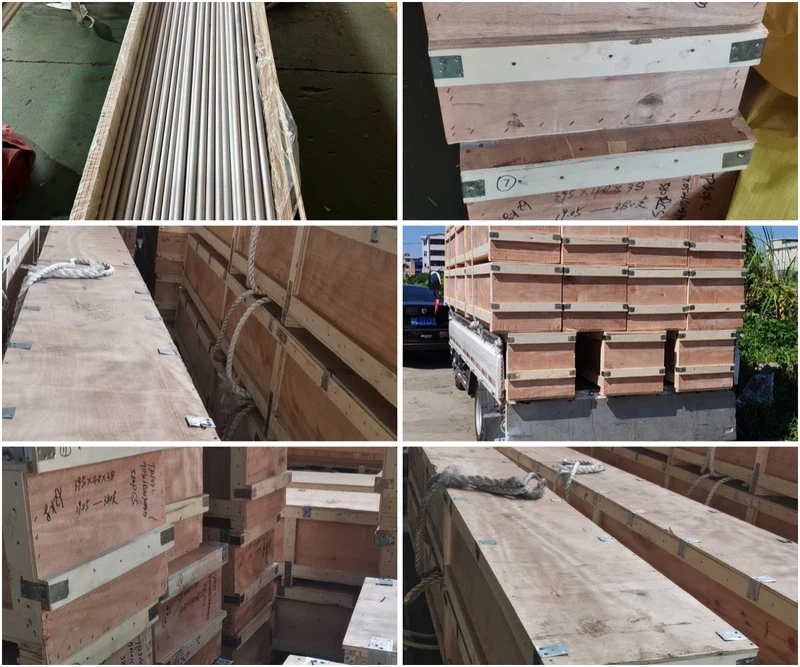
Gnee Steel specializes in the production of a wide range of stainless steel products. Gnee Steel's product packaging includes: Steel Strapping: Pipes with an outer diameter of 3 inches or less are typically strapped together with polypropylene film to prevent rust during ocean shipping, and then secured with steel strapping. Wooden Cases/Crates: Pipes are typically packaged in wooden cases or crates to protect the pipes during transportation, especially those that are longer or have larger diameters. Seaworthy Export Packaging: Suppliers typically use standard seaworthy export packaging methods, which may include a variety of materials and techniques to protect the pipes during transportation. Tarpaulin Packaging: This prevents rain, seawater, and other external factors from penetrating the export crates during transportation. Gnee Steel specializes in the production and sale of alloy materials. Gnee Steel's products are widely used in the aerospace, chemical, power, automotive, and nuclear energy sectors, and we can provide customized alloy material solutions based on customer needs. For alloy material pricing or customized alloy material solutions, please contact us for a quote: ru@gneesteelgroup.com