


What are the differences between 446 stainless steel and 316 stainless steel?

What are the differences between 446 stainless steel and 316 stainless steel?
The main difference lies in their properties: 446 stainless steel is a high-temperature, heat-resistant ferritic stainless steel with excellent oxidation and scaling resistance; while 316 stainless steel is a low-temperature resistant austenitic stainless steel, renowned for its superior corrosion resistance in various environments. 446 stainless steel is magnetic and suitable for high-temperature applications; 316 stainless steel is non-magnetic, has better processing properties, and is more suitable for corrosive environments such as marine or chemical plants.
What is 446 stainless steel?
446 is a ferritic stainless steel alloy, smelted using the AOD (Alternating Oxidation) process. This alloy is not hardenable, but it exhibits excellent corrosion resistance at extremely high temperatures and possesses good mechanical properties. Due to its high chromium content (approximately 25 wt%), this grade has relatively poor ductility.

446 Stainless Steel
446 stainless steel is primarily composed of iron, chromium, and carbon. It also contains trace amounts of nickel, manganese, silicon, phosphorus, sulfur, titanium, and other elements. The high chromium content gives 446 grade stainless steel excellent corrosion resistance, enabling it to resist corrosion from oxidizing acids such as nitric acid and sulfuric acid. This makes it particularly suitable for applications requiring high resistance to oxidation, such as chemical equipment or automotive exhaust components. Furthermore, due to its high chromium and low carbon content, 446 grade stainless steel has excellent formability, allowing it to be easily machined into various complex shapes without sacrificing strength or durability.
316 Stainless Steel
316 grade stainless steel is primarily composed of iron and chromium, and also contains trace amounts of nickel, molybdenum, silicon, phosphorus, sulfur, titanium, and other elements. This grade has a high nickel content, giving it excellent resistance to reducing acids such as hydrochloric acid; simultaneously, its high molybdenum content gives it excellent resistance to chloride ion solutions in saltwater environments, making it ideal for applications frequently exposed to saltwater, such as marine hardware or food processing equipment.
Comparison of 446 and 316 Stainless Steel
| Property | 446 Stainless Steel | 316 Stainless Steel |
| Composition | 23-27% Chromium (Ferritic alloy) | 16% Chromium, 10% Nickel, 2% Molybdenum (Austenitic alloy) |
| Hardness | Higher hardness, more resistant to wear but harder to machine | Softer, easier to machine but less wear-resistant |
| Corrosion Resistance | Good resistance to high temperatures, but less corrosion-resistant in acidic or chloride-rich environments | Excellent resistance to corrosion, especially in marine and acidic environments |
| Wear Resistance | Better wear resistance due to higher hardness | Lower wear resistance compared to 446 |
| Oxidation Resistance | Excellent resistance to oxidation at high temperatures | Good oxidation resistance in moderate temperature environments |
| Welding | More difficult to weld, special care needed | Easier to weld, commonly used in welding applications |
| Heat Resistance | Withstands temperatures up to 2000°F (1093°C) | Withstands temperatures up to 1600°F (871°C) |
| Machinability | More challenging to machine due to higher hardness | Easier to machine due to lower hardness and toughness |
| Cost | Typically lower cost | More expensive due to higher nickel and molybdenum content |
| Applications | High-temperature environments (furnace parts, heat exchangers) | Marine, chemical, food, and pharmaceutical industries |
446 and 316 Stainless Steel: Advantages and Disadvantages
When choosing between 446 and 316 stainless steel, it is crucial to weigh their respective advantages and limitations. 446 stainless steel performs exceptionally well at high temperatures and possesses outstanding oxidation resistance; while 316 stainless steel boasts unparalleled corrosion resistance, especially in highly corrosive, chloride-rich environments. However, each alloy has its own strengths and weaknesses in terms of machinability, cost, and performance under different operating conditions.
| Property | 446 Stainless Steel | 316 Stainless Steel |
| Advantages | - Excellent resistance to high-temperature oxidation | - Superior corrosion resistance, especially in marine and acidic environments |
| - Better wear resistance due to higher hardness | - Good weldability and machinability | |
| - Suitable for high-heat applications like furnace parts | - Ideal for food processing, pharmaceutical, and chemical industries | |
| Disadvantages | - More difficult to machine due to high hardness | - Less resistant to high temperatures than 446 |
| - Limited corrosion resistance in acidic or chloride-rich environments | - Higher cost due to added nickel and molybdenum content | |
| - More challenging to weld | - Not as wear-resistant as 446 |
420 and 316 Stainless Steel: Chemical Composition
| Element | 420 Stainless Steel | 316 Stainless Steel |
| Carbon (C), % | 0.15-0.40% | 0.08% max |
| Chromium (Cr), % | 12-14% | 16-18% |
| Iron (Fe), % | Balance | Balance |
| Manganese (Mn), % | 0.50-1.00% | 2.00% max |
| Molybdenum (Mo), % | - | 2.00-3.00% |
| Nickel (Ni), % | - | 10-14% |
| Nitrogen (N), % | 0.10% max | 0.10% max |
| Phosphorus (P), % | 0.04% max | 0.045% max |
| Silicon (Si), % | 1.00% max | 0.75% max |
| Sulfur (S), % | 0.03% max | 0.030% max |
446 and 316 Stainless Steel: Physical Properties
| Property | 446 Stainless Steel | 316 Stainless Steel |
| Density | 7.8 g/cm³ | 8.0 g/cm³ |
| Melting Point (°C) | 1510-1530°C | 1375-1400°C |
| Thermal Conductivity (W/m·K) | 25-30 W/m·K | 16-20 W/m·K |
| Resistivity (Ω·m) | 0.0009-0.0011 Ω·m | 0.0007-0.0008 Ω·m |
| Thermal Expansion (10^-6/K) | 11.0-12.0 × 10^-6 K⁻¹ | 16.0-17.0 × 10^-6 K⁻¹ |
| Linear Thermal Expansion Coefficient (10^-6/K) | 11.5 × 10^-6 K⁻¹ | 16.0 × 10^-6 K⁻¹ |
| Corrosion Resistance | Good resistance at high temperatures but limited in acidic or chloride-rich environments | Excellent corrosion resistance, especially in marine and acidic environments |
| Magnetic Properties | Magnetic (ferritic) | Non-magnetic (austenitic) |
| Formability | Good for forming and bending at high temperatures | Excellent formability, especially at room temperature |
| Machinability (Annealing) | Moderate | Good |
| Environmental Adaptability | Excellent in high-temperature environments | Excellent in corrosive and moderate heat environments |
446 Stainless Steel and 316 Stainless Steel: Mechanical Properties
| Property | 446 Stainless Steel | 316 Stainless Steel |
| Hardness (HRC) | 50-55 HRC | 45-50 HRC |
| Hardness (HV) | 450-500 HV | 200-250 HV |
| Tensile Strength (MPa) | 450-650 MPa | 520-700 MPa |
| Elongation (Rp0.2/MPa) | 15-25% | 40-50% |
| Ductility (%) | 15-20% | 40-50% |
| Ultimate Tensile Strength | 650 MPa | 700 MPa |
| Yield Tensile Strength | 350 MPa | 280-290 MPa |
| Reduction of Area (%) | 50-60% | 60-70% |
| Heating Temperature (°C) | Up to 2000°F (1093°C) | Up to 1600°F (871°C) |
| Elastic Modulus (GPa) | 200 GPa | 190 GPa |
| Fatigue Strength (MPa) | 170-250 MPa | 150-200 MPa |
| Shear Strength (MPa) | 300-450 MPa | 200-300 MPa |
| Shear Modulus (GPa) | 80 GPa | 75 GPa |
| Poisson's Ratio | 0.3 | 0.3 |
| Area Reduction (%) | 50-60% | 60-70% |
446 Stainless Steel and 316 Stainless Steel: Heat Treatment
| Heat Treatment Process | 446 Stainless Steel | 316 Stainless Steel |
| Annealing Temperature | 1600-1650°F (870-900°C) | 1900-2050°F (1038-1121°C) |
| Hardening | Not typically hardened (Ferritic structure) | Can be hardened through cold working or solution annealing |
| Tempering | Not commonly tempered (Ferritic) | Can be tempered after hardening to adjust hardness |
| Quenching | Not generally required (Ferritic) | Water or air quenching after solution annealing |
| Solution Annealing | Not typically needed | Required for improved corrosion resistance and ductility |
| Stress Relieving | Useful for reducing internal stresses in welded or cast parts | Commonly performed to relieve stress in welds and formed parts |
446 Stainless Steel and 316 Stainless Steel: Applications and Uses
| Application | 446 Stainless Steel | 316 Stainless Steel |
| High-Temperature Applications | Furnace parts, heat exchangers, combustion chambers | Industrial ovens, heat exchangers (moderate temperatures) |
| Corrosive Environments | Limited use in chemical or marine environments | Marine, chemical processing, and pharmaceutical industries |
| Marine and Saltwater | Not ideal for saltwater exposure | Widely used in marine equipment, boat parts, and offshore structures |
| Food Processing | Rarely used due to potential corrosion concerns | Commonly used for food processing equipment and containers |
| Medical and Pharmaceutical | Not commonly used due to limited corrosion resistance | Used in surgical instruments, implants, and pharmaceutical manufacturing |
| Automotive and Aerospace | Exhaust systems, engine parts | Corrosion-resistant automotive components, aircraft parts |
| Industrial Equipment | Furnace components, boiler tubes | Chemical processing equipment, pumps, valves |
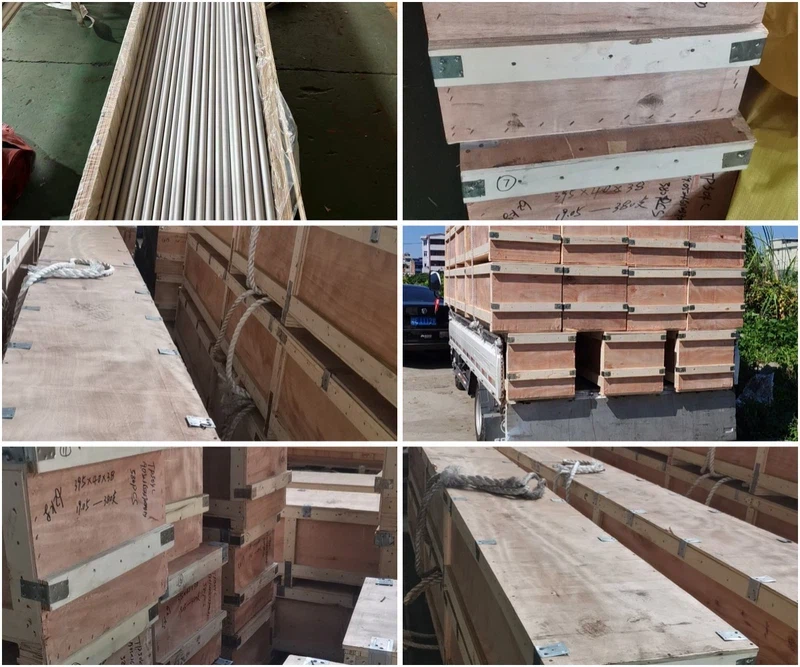
Gnee Steel specializes in the production of a wide range of stainless steel products. Gnee Steel's product packaging includes: Steel Strapping: Pipes with an outer diameter of 3 inches or less are typically strapped together with polypropylene film to prevent rust during ocean shipping, and then secured with steel strapping. Wooden Cases/Crates: Pipes are typically packaged in wooden cases or crates to protect the pipes during transportation, especially those that are longer or have larger diameters. Seaworthy Export Packaging: Suppliers typically use standard seaworthy export packaging methods, which may include a variety of materials and techniques to protect the pipes during transportation. Tarpaulin Packaging: This prevents rain, seawater, and other external factors from penetrating the export crates during transportation. Gnee Steel specializes in the production and sale of alloy materials. Gnee Steel's products are widely used in the aerospace, chemical, power, automotive, and nuclear energy sectors, and we can provide customized alloy material solutions based on customer needs. For alloy material pricing or customized alloy material solutions, please contact us for a quote: ru@gneesteelgroup.com


