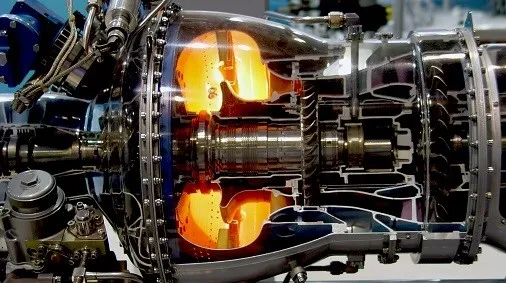
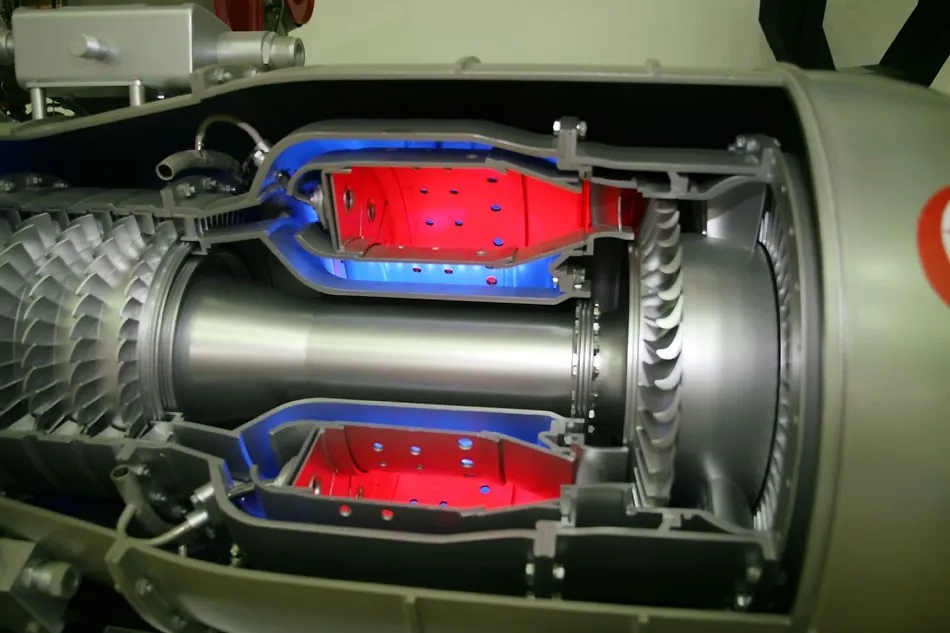
The combustion chamber liner is the most thermally stressed component in a turbine engine. Oxidation flaking (scaling) is a major challenge for maintenance, repair, and overhaul (MRO) specialists and engine designers.
When standard alloys operate at temperatures up to 800°C, a porous oxide layer forms. During rapid thermal cycling, this oxide scale flakes off and diffuses downstream, contaminating sensitive sensors and causing foreign object damage (FOD)-like erosion on high-speed turbine blades. This can lead to unplanned engine downtime and shorten the mean time between overhauls (MTBO).
At Gnee Alloy, we eliminate this risk. Our aerospace-grade GH3030 (equivalent to Nimonic 75) is specially designed to form a tightly adhering Cr2O3 (chromium oxide) protective layer, ensuring your propulsion system operates in a zero-contamination environment.
Click to get a GH3030 product quote
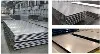
GH3030 / Nimonic 75 High Temperature Alloy Turbine Engine Sheet Metal

GH3030 / Nimonic 75 High Temperature Alloy Turbine Engine Sheet Metal
GH3030 and Nimonic 75 (UNS N06075) are almost identical 80/20 nickel-chromium superalloys. They are known for their sheet metal processing, excellent oxidation resistance, thermal fatigue performance, and high plasticity, making them ideal for turbine engine combustion chambers, afterburners, and high-temperature furnace components operating at temperatures up to 1100°C.
What is NIMONIC 75 material?
NIMONIC 75 alloy is an 80/20 nickel-chromium alloy with added titanium and carbon. This alloy was originally introduced in the 1940s for the manufacture of turbine blades. It is easy to machine and weld, and possesses good corrosion resistance, mechanical properties, and heat resistance.
1. Overview of GH3030 Turbine Engine Plate Materials
| Parameter | GH3030 | Nimonic 75 |
|---|---|---|
| Material Type | Wrought Nickel-based Superalloy | Wrought Nickel-based Superalloy |
| Strengthening Mechanism | Solid-solution strengthening (Cr + trace Ti) | Solid-solution strengthening (Cr) |
| Product Forms | Bar, plate, tube, strip, wire | Bar, plate, tube, strip, wire |
| Typical Applications | Combustion chambers, furnace components, high-temperature tubing | Gas turbine components, heat treatment fixtures, high-temperature fasteners |
| Maximum Service Temperature (Load-Bearing) | ~800°C | ~700 – 750°C |
| Maximum Service Temperature (Oxidation) | ~1000°C | ~1000°C |
2. Chemical composition comparison of GH3030 turbo engine plates (wt%)
| Element | GH3030 | Nimonic 75 | Key Difference |
|---|---|---|---|
| Nickel (Ni) | Balance (≥ 75.0) | Balance (≥ 73.0) | Similar |
| Chromium (Cr) | 19.0 – 22.0 | 18.0 – 21.0 | GH3030 slightly higher Cr |
| Iron (Fe) | ≤ 1.5 | ≤ 5.0 | Nimonic 75 allows more Fe |
| Titanium (Ti) | 0.15 – 0.35 | 0.20 – 0.60 | Both contain Ti |
| Aluminum (Al) | ≤ 0.15 | – | GH3030 contains trace Al |
| Carbon (C) | ≤ 0.12 | 0.08 – 0.15 | Similar |
| Manganese (Mn) | ≤ 0.70 | ≤ 1.00 | Similar |
| Silicon (Si) | ≤ 0.80 | ≤ 1.00 | Similar |
| Phosphorus (P) | ≤ 0.030 | ≤ 0.020 | – |
| Sulfur (S) | ≤ 0.020 | ≤ 0.015 | – |
| Copper (Cu) | ≤ 0.20 | ≤ 0.50 | – |
3. Comparison of high-temperature mechanical properties of GH3030 vortex engine plate
| Temp (°C) | Property | GH3030 | Nimonic 75 |
|---|---|---|---|
| 500 | Tensile (MPa) | ~600 | ~580 |
| Yield (MPa) | ~280 | ~270 | |
| 600 | Tensile (MPa) | ~550 | ~530 |
| Yield (MPa) | ~260 | ~250 | |
| 650 | Tensile (MPa) | ~500 | ~480 |
| Yield (MPa) | ~240 | ~230 | |
| 700 | Tensile (MPa) | ~450 – 500 | ~430 |
| Yield (MPa) | ~240 | ~220 | |
| 800 | Tensile (MPa) | ~300 – 380 | ~280 |
| Yield (MPa) | ~180 | ~160 | |
| 900 | Tensile (MPa) | ~200 – 250 | ~180 |
| Yield (MPa) | ~120 | ~100 |
High-Temperature Strength Retention (vs. Room Temperature)
| Temperature | GH3030 Retention | Nimonic 75 Retention |
|---|---|---|
| 500°C | ~88% | ~85% |
| 600°C | ~80% | ~78% |
| 650°C | ~73% | ~71% |
| 700°C | ~65% | ~63% |
| 800°C | ~55% | ~41% |
Click to download the GH3030 alloy PDF file now
4. GH3030 Vortex Engine Plate Main Characteristics and Manufacturing Process
Machinability: Excellent cold stamping and forming performance after solution treatment.
Welding Performance: Easily weldable using standard industrial welding methods (TIG, MIG, and MMA) and matching welding wires, provided the metal has been pre-annealed.
Stability: Maintains a single-crystal austenitic structure during high-temperature cycling without undergoing harmful phase transformations.
5. Typical applications of the GH3030 Plate
Aerospace: Gas turbine combustors, afterburners, and casing mounting edges.
Industry: Heat treatment fixtures, industrial furnace components, and nuclear engineering hardware.
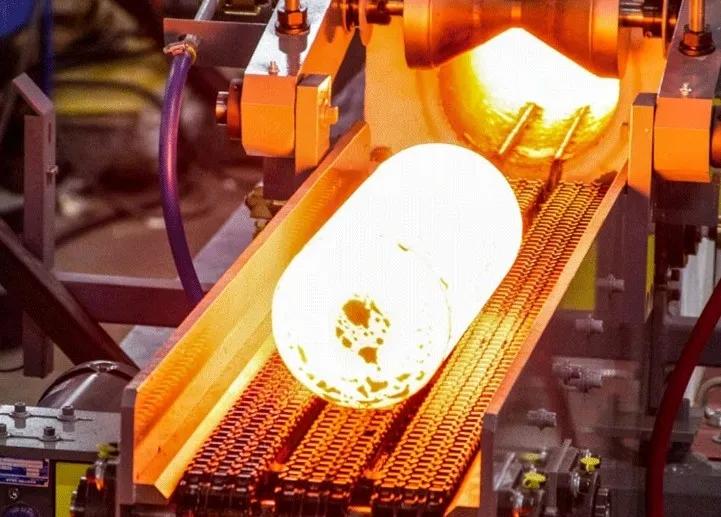
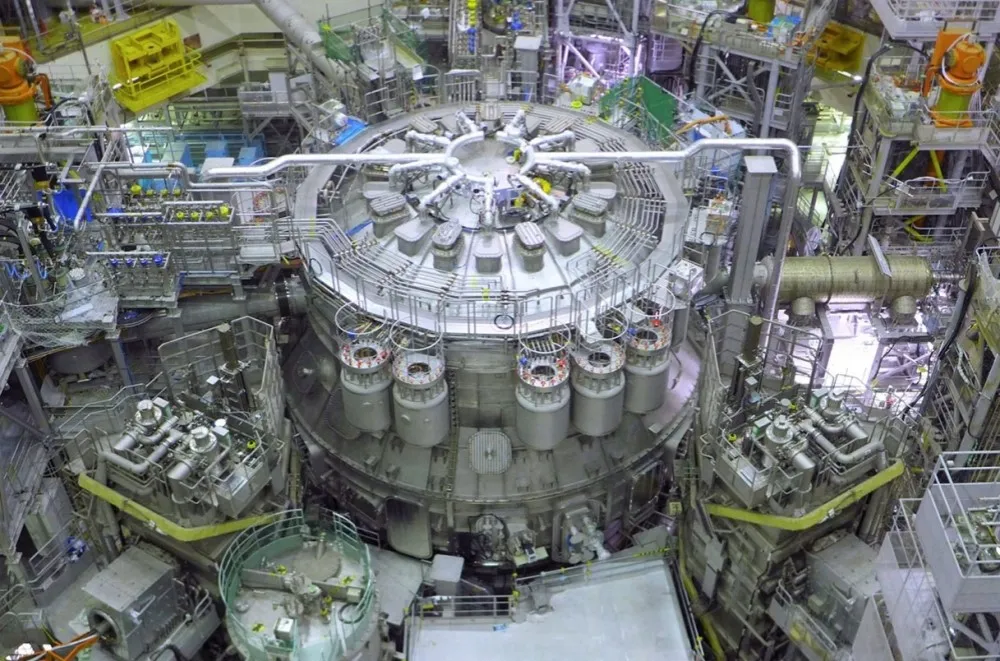
6. Why choose Gnee Alloy as your supplier?
As an AS9100 certified manufacturer, Gnee Alloy is committed to solving supply chain bottlenecks that lead to aircraft grounding:
✅️Massive Strategic Inventory: We maintain standard thicknesses (0.5mm to 3.0mm) in stock for Immediate Global Dispatch.
✅️100% Traceability: Every sheet is marked with its heat number and accompanied by a full metallurgical report.
✅️Precision Leveling: We guarantee a flatness tolerance of ≤ 3mm/m, essential for automated laser cutting of cooling holes.
✅️Wholesale Pricing: Benefit from Direct Factory Price on both small-batch MRO kits and large-tonnage OEM production runs.
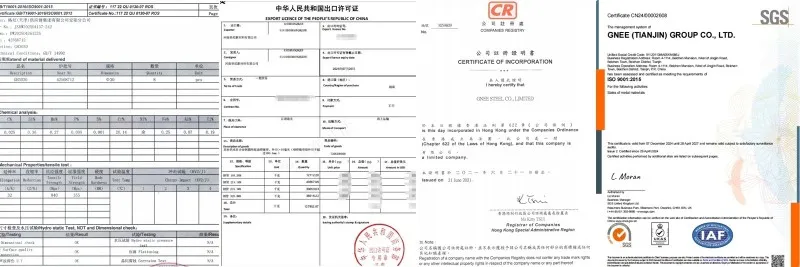
Gnee Alloy GH3030 certificate
Contact us now to get the latest export price for GH4169 in 2026
FAQ
Q1: Is GH3030 interchangeble with Nimonic 75 on GE or Rolls-Royce blueprints?
A: Yes. GH3030 is the technical equivalent designation used for the UNS N06075 system. Our material provides the exact chemical heat analysis and mechanical parity required for direct substitution in international blueprints.
Q2: How does your material prevent grain growth during long-term service?
A: Through precise Titanium (Ti) stabilization and a controlled VIM+ESR smelting route. This prevents the microscopic "sensitization" that leads to brittle grain boundaries at 750°C.
Q3: Can you provide laser-cut blanks based on our CAD drawings?
A: Absolutely. Our Custom Fabrication center specializes in precision blanking, providing you with ready-to-form parts that minimize material waste and labor time.
Q4: What NDT (Non-Destructive Testing) do you perform for aviation orders?
A: Every sheet undergoes 100% Surface Visual Inspection and specialized Ultrasonic Testing (UT) to verify internal integrity according to your project's specific Quality Assurance requirements.