


Which grade stainless steel is better, 304 or 316?

Which grade stainless steel is better, 304 or 316?
304 stainless steel is inexpensive and rust-resistant, making it suitable for general use and ordinary kitchens; while 316 stainless steel, due to its molybdenum content, offers superior corrosion resistance and is therefore more suitable for extreme environments (such as marine, chemical, acidic/high-salt environments), although it is also more expensive. If you have a limited budget, you can choose 304 stainless steel; however, if you need to use it in critical or highly corrosive environments, you should choose 316 stainless steel for greater durability.
Should I use 304 or 316 stainless steel?
Both 304 and 316 stainless steel are commonly used, but 304 (containing 18% chromium and 8% nickel) is the standard and more economical option for general purposes; while 316 stainless steel, due to the addition of molybdenum, performs better in corrosive environments and offers superior resistance to chlorides, salts, and chemicals, but it is also more expensive. The main difference between the two is that 316 stainless steel contains molybdenum, making it ideal for marine, chemical, and medical applications, while 304 stainless steel is perfectly suitable for most indoor kitchen/food applications.

What is 304 Stainless Steel?
304 stainless steel alloy is the most widely used and versatile of all stainless steel grades. It is primarily composed of approximately 18% chromium and 8% nickel, and does not contain molybdenum. 304 stainless steel exhibits excellent resistance to atmospheric corrosion, water, and various chemical corrosives. Due to its ease of processing, 304 stainless steel is a common material for metal castings and is widely used in areas such as pump and valve components, food processing equipment, bearings, heat exchangers, and pressure vessels.
What is 316 Stainless Steel?
316 stainless steel has higher tensile strength and greater corrosion resistance, especially in harsh environments. The main difference between 304 and 316 stainless steel is the addition of molybdenum (up to 3%) in 316 stainless steel, which significantly improves its resistance to pitting and saltwater corrosion. This grade of stainless steel is non-magnetic and requires cold working for hardening. While 316 stainless steel is more durable than 304 stainless steel, it has lower ductility and is more expensive. Its unique properties make it an ideal choice for some demanding applications.
Chemical composition of 304 stainless steel and 316 stainless steel
| Element | 304 Stainless Steel | 316 Stainless Steel |
|---|---|---|
| Chromium (Cr) | 18.0 – 20.0% | 16.0 – 18.0% |
| Nickel (Ni) | 8.0 – 10.5% | 10.0 – 14.0% |
| Molybdenum (Mo) | – | 2.0 – 3.0% |
| Carbon (C) | ≤ 0.08% | ≤ 0.08% |
| Manganese (Mn) | ≤ 2.00% | ≤ 2.00% |
| Silicon (Si) | ≤ 1.00% | ≤ 1.00% |
| Phosphorus (P) | ≤ 0.045% | ≤ 0.045% |
| Sulphur (S) | ≤ 0.03% | ≤ 0.03% |
| Iron (Fe) | Balance | Balance |
Mechanical properties of 304 stainless steel and 316 stainless steel
| Property | 304 Stainless Steel | 316 Stainless Steel |
|---|---|---|
| Tensile Strength (MPa) | ~505 | ~515 |
| Yield Strength (MPa) | ~215 | ~205 |
| Elongation (% in 50mm) | ~70% | ~60% |
| Hardness (Brinell HB) | 201 | 217 |
| Hardness (Rockwell B) | 92 | 95 |
Comparison of 304 and 316 (stainless steel)
| Feature | Stainless Steel 304 | Stainless Steel 316 |
|---|---|---|
| Key Composition | 18% Chromium, 8% Nickel (18/8) | 18% Chromium, 10% Nickel, Molybdenum |
| Corrosion Resistance | Good in general environments (kitchen, fresh water) | Excellent, especially against chlorides, acids, and seawater |
| Cost | More affordable (Moderate) | More expensive (High) due to molybdenum |
| Applications | Kitchen equipment, furniture, trim, architecture | Medical equipment, marine, chemical, pharmaceutical, coastal areas |
| When to Choose | Dry/mild environments, budget considerations | Exposure to salt/acids, marine environments, heavy industry |
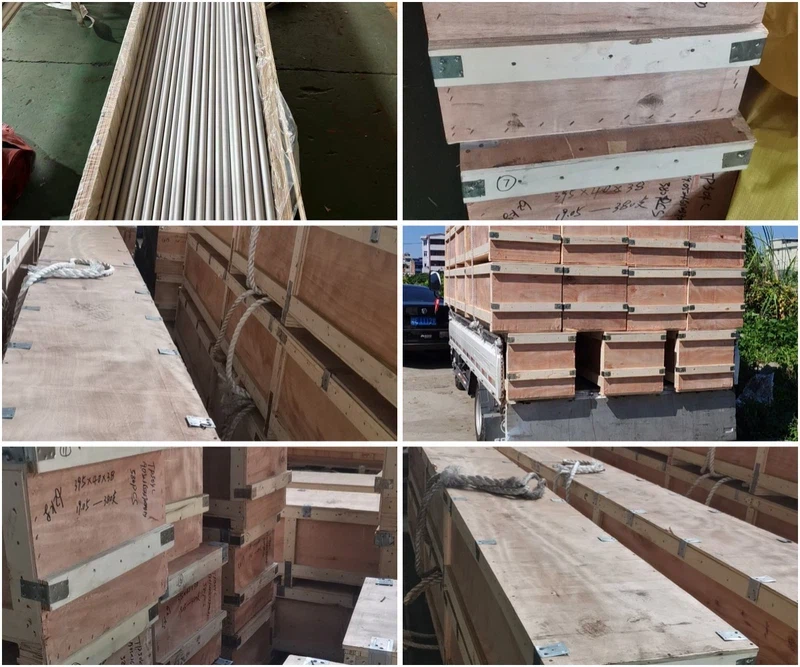
Gnee Steel specializes in the production of a wide range of stainless steel products. Gnee Steel's product packaging includes: Steel Strapping: Pipes with an outer diameter of 3 inches or less are typically strapped together with polypropylene film to prevent rust during ocean shipping, and then secured with steel strapping. Wooden Cases/Crates: Pipes are typically packaged in wooden cases or crates to protect the pipes during transportation, especially those that are longer or have larger diameters. Seaworthy Export Packaging: Suppliers typically use standard seaworthy export packaging methods, which may include a variety of materials and techniques to protect the pipes during transportation. Tarpaulin Packaging: This prevents rain, seawater, and other external factors from penetrating the export crates during transportation. Gnee Steel specializes in the production and sale of alloy materials. Gnee Steel's products are widely used in the aerospace, chemical, power, automotive, and nuclear energy sectors, and we can provide customized alloy material solutions based on customer needs. For alloy material pricing or customized alloy material solutions, please contact us for a quote: ru@gneesteelgroup.com