


In the field of superalloys, Inconel 625 and 718 are two major players, but they are suited for different applications. For purchasing managers and system designers, the most challenging issue is material failure due to environmental incompatibility.
Problem: Due to Inconel 625's reputation as a "superalloy," it was chosen for high-speed rotating turbine shafts, only to find that it deforms under load.
Risk: Choosing Inconel 718 for offshore brine reactors resulted in catastrophic pitting corrosion within months due to its less chemically stable composition compared to Inconel 625.
Choosing between Inconel 625 (UNS N06625) and Inconel 718 (UNS N07718) is essentially a trade-off between mechanical load and chemical corrosion.
Click here for Inconel 625 product quotes
What's the difference between Inconel 625 vs 718 Alloy?
What's the difference between Inconel 625 vs 718 Alloy?
Inconel 625 alloy is optimized for superior corrosion resistance and oxidation resistance. In contrast, Inconel 718 alloy is optimized for extremely high mechanical strength (yield strength approximately twice that of Inconel 625 alloy) and creep resistance at high temperatures.
What are the disadvantages of Inconel 718?
Disadvantages and alternatives of Inconel 718
While Inconel 718 boasts excellent mechanical and corrosion resistance properties, it also has some drawbacks: High cost: Due to its complex manufacturing process, Inconel 718 is expensive. Difficult to process: Its high hardness makes material removal difficult and accelerates tool wear.
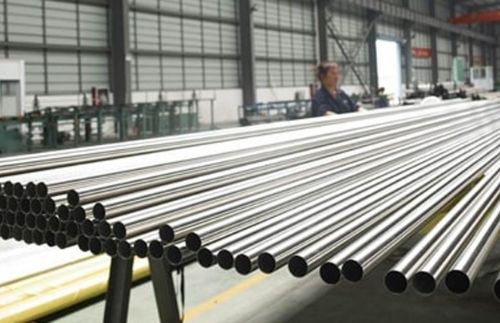
1. Inconel 625 VS 718:Chemistry Difference
| Element | Ni | Cr | Fe | Nb | Mo | Ti |
|---|---|---|---|---|---|---|
| Inconel 625 | 58 Min | 20 – 23 | 5 Max | 3.15 – 4.15 | 8 – 10 | 0.4 Max |
| Inconel 718 | 50 – 55 | 17 – 21 | ~ 17 | 4.75 – 5.5 | 2.8 – 3.3 | 0.65 – 1.15 |
2. Inconel 625 VS 718:Mechanical Properties
| Property | Inconel 625 | Inconel 718 |
|---|---|---|
| Strengthening Method | Solid Solution | Precipitation Hardening |
| Tensile Strength | ~ 930 MPa | ~ 1375 MPa |
| Yield Strength | ~ 517 MPa | ~ 1100 MPa |
| Elongation | ~ 30% | 12 – 20% |
| Hardness | ~ 220 HB | ~ 330 HB |
| Max Service Temp | Up To 980℃ (1796℉) | Up To 700 – 750℃ (1292 – 1382℉) |
| Corrosion Resistance | Excellent (especially marine) | Very Good (less than 625) |
| Weldability | Outstanding | Good (requires care) |
Properties of Inconel 625 and Inconel 718 alloys
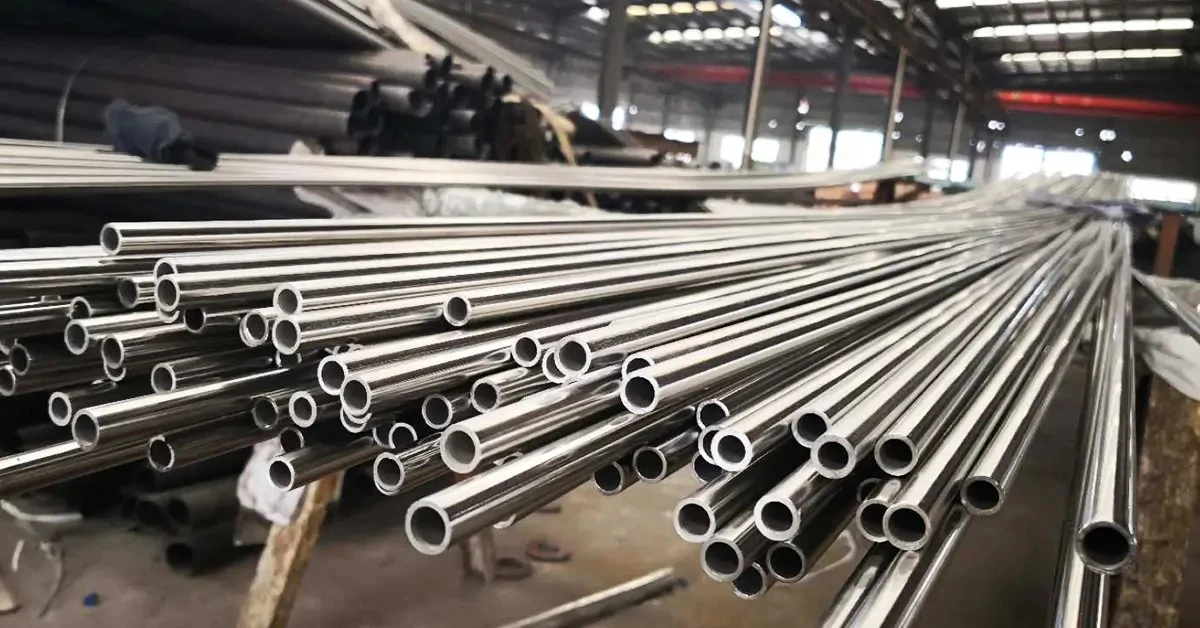
Inconel 625 Alloy
Inconel 625 is a solid solution strengthened alloy. Its properties are not dependent on heat treatment, but rather on the high content of molybdenum (9%) and niobium (3.5%) in its nickel-chromium matrix.
Excellent corrosion protection: virtually unaffected by chloride stress corrosion cracking and pitting.
Optimal applications: seawater systems, chemical reactors, flare towers, and offshore manifolds.
Commercial advantages: the most cost-effective solution for long-term stable operation in acidic and marine environments.


Inconel 718 Alloy
Inconel 718 is a precipitation-hardening superalloy. Its strength is achieved through a complex double-aging process that precipitates the γ′′ phase.
Extreme mechanical strength: maintains excellent tensile strength and creep rupture strength at temperatures up to 700°C (1292°F).
Optimal applications: turbine disks, engine shafts, rocket engines, and high-strength structural springs.
Business value: For components where safety is critical, structural integrity is a primary consideration, making this investment essential.


5. Thermal Properties of UNS N06625 & N07718
| Thermal Properties | UNS N06625 | UNS N07718 |
|---|---|---|
| Maximum Temp.: Mechanical | 980 °C ( 1800 °F) | 980 °C ( 1790 °F) |
| Meltin Onset (Solidus) | 1290°C (2350°F) | 1260 °C (2300 °F) |
| Thermal Conductivity | 11 W/m-K (6.4 BTU/h-ft-°F) | 11 W/m-K (6.5 BTU/h-ft-°F) |
| Latent Heat of Fusion | 330 J/g | 310 J/g |
| Melting Completion (Liquidus) | 1350 °C (2460 °F) | 1340 °C (2440 °F) |
| Specific Heat Capacity | 440 J/kg-K (0.1 BTU/lb-°F) | 450 J/kg-K (0.11 BTU/lb-°F) |
| Thermal Expansion | 13 µm/m-K | 13 µm/m-K |
| Curie Temperature | -200 °C (-320 °F) | -110 °C (-170 °F) |
6. Inconel 625 and Inconel 718 Purchasing Guide
Order Inconel 625 Pipes/Bars if: Your piping system is exposed to seawater, phosphoric acid, or hot contaminated media where Pitting and SCC are the primary failure modes.
Order Inconel 718 Pipes/Bars if: Your application involves high internal pressure, centrifugal forces, or structural components that must not "stretch" under massive stress at 650°C.
Why Source From a Tier-1 Manufacturer?
As a specialized Superalloy Manufacturer, we ensure Zero-Defect quality for both grades:
✅️VIM + VAR Melting: Ensuring ultra-pure chemistry to maximize fatigue life.
✅️MTC 3.1 Traceability: Full EN 10204 3.1 certificates provided with every shipment.
✅️Global Logistics: Fast shipping to USA, Europe, and Asia with specialized packaging.
✅️Custom Fabrication: We offer precision cutting, centerless grinding (h8-h11), and custom bending services.

Gnee Alloy Inconel 625 certificate
Gnee Alloy Product Packaging
All stainless steel products are:
✅️Packed in wooden pallets or crates
✅️Covered with moisture-proof wrapping
✅️Labeled with heat number, standard, and size
✅️Shipped worldwide via sea, air, or express

Gnee Alloy Product Packaging
Gnee Alloy Production Equipment and Product Testing


Contact us now to get the latest export price for inconel 625 in 2026
FAQ
Q1: Can I weld Inconel 625 to Inconel 718?
A: Yes. They have excellent metallurgical compatibility. We recommend using ERNiCrMo-3 (Alloy 625) filler metal for the best results in joining these two materials.
Q2: Which alloy is more expensive?
A: Generally, Inconel 718 is more expensive due to its higher Niobium content and the complex, multi-stage aging heat treatment (16+ hours) required to reach its performance.
Q3: Is Inconel 718 interchangeable with GH4169?
A: Absolutely. GH4169 is the technical equivalent used in international blueprints for UNS N07718. Our GH4169 fully complies with AMS 5662 and ASTM B637.
Q4: Do you support small trial orders for R&D?
A: Yes. As a Reliable Supplier, we support innovation. We offer Flexible MOQs on our in-stock inventory of bars, sheets, and tubes.