


Understanding the differences between 316L and 317L stainless steel pipes

Understanding the differences between 316L and 317L stainless steel pipes
Both 316L and 317L tubes are austenitic stainless steel, but due to higher molybdenum, chromium, and nickel content, 317L tubes have superior corrosion resistance, making them ideal for highly corrosive environments such as flue gas desulfurization and paper mills. 316L tubes, with lower molybdenum content, are well-suited for general marine, chemical, and medical applications, offering a balance of cost and performance. The "L" indicates low carbon content, which improves weldability. The main difference is that 317L seamless tubes offer greater resistance to pitting and crevice corrosion under harsh acidic/chloride conditions, and therefore are more expensive than 316L steel tubes.
What are the disadvantages of 316L stainless steel?
The main disadvantages of 316L stainless steel include: higher cost compared to other grades (such as 304); slightly lower mechanical strength (yield strength) due to its lower carbon content, making it less suitable for high-stress components; susceptibility to pitting corrosion if not properly surface treated or maintained in highly corrosive chloride environments; and potential for galling during processing. Although 316L stainless steel has excellent welding properties, its lower carbon content makes it more prone to becoming magnetic after cold working compared to standard 316 stainless steel.
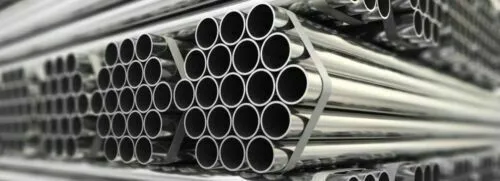

Composition of 316L and 317L Stainless Steel Tube
| Element | 316L Stainless Steel Pipe(UNS S31603) | 317L Stainless Steel Pipe(UNS S31703) |
|---|---|---|
| Chromium (Cr) | 16.0 – 18.0 % | 18.0 – 20.0 % |
| Nickel (Ni) | 10.0 – 14.0 % | 11.0 – 15.0 % |
| Molybdenum (Mo) | 2.0 – 3.0 % | 3.0 – 4.0 % |
| Carbon (C) | ≤ 0.03 % | ≤ 0.03 % |
| Manganese (Mn) | ≤ 2.0 % | ≤ 2.0 % |
| Silicon (Si) | ≤ 1.0 % | ≤ 1.0 % |
| Phosphorus (P) | ≤ 0.045 % | ≤ 0.045 % |
| Sulfur (S) | ≤ 0.030 % | ≤ 0.030 % |
| Iron (Fe) | Balance | Balance |
| Nitrogen (N) | ≤ 0.10 % | ≤ 0.10 % |
| Copper (Cu) | – | – |
| Titanium (Ti) | – | – |
Corrosion Resistance of 316L and 317L Stainless Steel
316L Stainless Steel:
316L possesses excellent overall corrosion resistance, particularly suitable for environments where there is a risk of chloride ion corrosion. It performs well in marine environments and acidic conditions, but may be susceptible to localized corrosion in certain high-chloride environments.
317L Stainless Steel:
317L is specifically designed for enhanced corrosion resistance, especially in acidic environments such as chemical plants and paper mills. The higher molybdenum and nickel content in 317L provides superior resistance to pitting and crevice corrosion, even in harsh chemical environments containing chlorides and other corrosive compounds.
Applications of 316L and 317L Stainless Steel Pipes
316L Stainless Steel Pipes:
316L stainless steel pipes are widely used in marine environments, pharmaceuticals, food processing, and medical equipment, where high corrosion resistance and hygiene requirements are critical. It is also suitable for applications requiring high strength and durability in moderately corrosive environments.
317L Stainless Steel Seamless Pipes:
317L stainless steel pipes are the preferred material in industries such as chemical, paper, and pharmaceutical, which have strict requirements for corrosion resistance in acidic environments containing chlorides and sulfates. It is also used in flue gas desulfurization systems and for handling corrosive chemicals.
Welding and Processing of 316L and 317L Stainless Steel Pipes
316L Stainless Steel Round Pipes:
Due to its lower carbon content, 316L is easier to weld than 317L, reducing the risk of carbide precipitation and sensitization. It can be welded using standard welding techniques and, in most cases, does not require post-weld heat treatment.
317L Stainless Steel Pipes:
317L requires special attention during welding to avoid sensitization and carbide precipitation, as this can reduce its corrosion resistance in certain environments. Post-weld heat treatment is usually recommended to restore corrosion resistance, especially in critical applications.
Why Choose Gnee Steel (Supplier Example)?
✅ Large stock of 304 stainless steel strip/coil, fast shipping.
✅ Factory direct sales, highly competitive prices, excellent value for money.
✅ Comprehensive quality assurance: Material Testing Certificate (MTC), Chemical Composition Certificate, and Mechanical Properties Certificate.
✅ Value-added services: Slitting, cutting, polishing, surface treatment.
✅ Worldwide shipping, secure and reliable packaging, and provision of export-required documentation.
Email: ru@gneesteelgroup.com
Gnee Steel also supplies custom stainless steel 304L products in various sizes and specifications. Please send us your drawings for a quote!

