


Mechanical Properties stainless steel 316 pipe

Mechanical Properties stainless steel 316 pipe
316 stainless steel tubing possesses excellent strength, with a typical tensile strength of approximately 515-620 MPa (75-90 ksi) in the annealed state, a yield strength of approximately 205 MPa (30 ksi), and exhibits excellent ductility (40% elongation), good hardness (approximately 145 HB), and superior corrosion resistance (thanks to the addition of molybdenum), making it tough and durable and suitable for harsh environments. Its strength is further enhanced after cold working.
What is stainless steel 316 used for?
316 stainless steel is widely used due to its excellent corrosion resistance, particularly in marine, medical, food/beverage, chemical, and construction industries. This is primarily due to its molybdenum content. It is ideal for applications requiring frequent contact with seawater, acidic substances, or harsh industrial environments, such as marine fittings, surgical instruments, food processing equipment, chemical containers, and coastal structures. Compared to standard stainless steels like 304, 316 stainless steel offers superior durability.

316 stainless steel tubing possesses exceptional mechanical properties, including a typical tensile strength of 90,000 psi and a yield strength of approximately 85,000 psi. Its elongation at break is as high as 40% to 50%, allowing it to withstand significant plastic deformation. The molybdenum content in this alloy enhances its strength and corrosion resistance, performing particularly well in harsh environments. Its average Brinell hardness is approximately 150 to 163. Furthermore, the austenitic structure of the material ensures excellent impact resistance. These robust mechanical properties make 316 stainless steel tubing an ideal choice for demanding applications across various industries, providing reliable performance even under extreme conditions.
What is 316 stainless steel tubing?
316 stainless steel tubing is a high-performance material known for its excellent corrosion resistance and mechanical strength, making it suitable for a variety of demanding environments.
It possesses outstanding heat resistance and durability, which are crucial for applications in the marine and chemical industries.
Furthermore, its good machinability allows for its widespread use in various structural and industrial applications, ensuring reliability and a long service life.
Mechanical Properties of 316 Stainless Steel Pipe
| Property | Value (Typical) |
| Tensile Strength | 515–750 MPa |
| Yield Strength | ~205 MPa |
| Brinell Hardness | ~149 HB |
| Rockwell Hardness | ~80 HR |
Tensile Strength of 316 Stainless Steel Tubing
Depending on the condition and degree of cold working, the tensile strength of 316 stainless steel tubing typically ranges from 515 to 750 MPa. This wide range indicates that the material can withstand significant tensile forces before fracturing. In practical applications, such as in chemical plants, storage tanks, and marine rigging, where structures or equipment are subjected to intermittent or continuous tensile forces, the long-term strength of 316 stainless steel tubing provides peace of mind, as there is no need to worry about fracture or rupture.
Yield Strength of 316 Stainless Steel Seamless Tubing
In the annealed state, the yield strength of 316 stainless steel tubing is typically approximately 205 MPa. This is the stress value at which 316 stainless steel begins to undergo permanent deformation. Below this stress value, the 316 stainless steel tubing will return to its original shape after the stress is released. Once this deformation threshold is exceeded, it will undergo permanent deformation. Yield strength is one of the first material properties that engineers consider when selecting materials for applications that require resistance to pressure or load and have high demands for precision and service life.
Hardness of 316 Stainless Steel
The hardness rating of 316 stainless steel tubing reaches 149 HB, confirming its combination of strength and machinability. Rockwell hardness is a commonly used indicator for measuring the hardness of stainless steel, and the Rockwell hardness of 316 stainless steel tubing is typically 80 HR. Due to its moderate hardness, the material has a certain degree of wear resistance while also being easy to machine. 316 stainless steel round tubing is widely used in pharmaceutical processes, marine equipment, and construction due to its high durability resulting from its high hardness and ease of processing due to its good ductility.
These mechanical properties collectively form the basis of 316 stainless steel's performance, demonstrating the metal's exceptional ability to withstand stress, pressure, and the test of time.
Density of 316 Stainless Steel Tubing
The density of 316 stainless steel round tubing is 7.98 g/cm³, which is quite high compared to many other non-ferrous alloys. It is this property, along with others, that gives this metal its high strength under pressure. Anyone designing components that need to withstand weight (such as those used in spacecraft, ships, and buildings) needs to consider the weight and density of the components when performing calculations. The ratio of mass to volume and mechanical calculations are crucial for those performing calculations and those involved in transportation and handling (e.g., thermal inertia).
Other Important Characteristics:
Toughness: Exhibits high impact absorption capacity even at low temperatures.
Machinability: Possesses good machinability and formability, but requires careful handling during oxygen cutting.
Weldability: Easily welded using standard fusion welding techniques; unlike 316 stainless steel, which requires preheating/post-weld heat treatment to ensure critical corrosion resistance, preheating/post-weld heat treatment is generally not required.
Magnetism: Non-magnetic in the annealed (solution-treated) state, but develops weak magnetism after cold working.
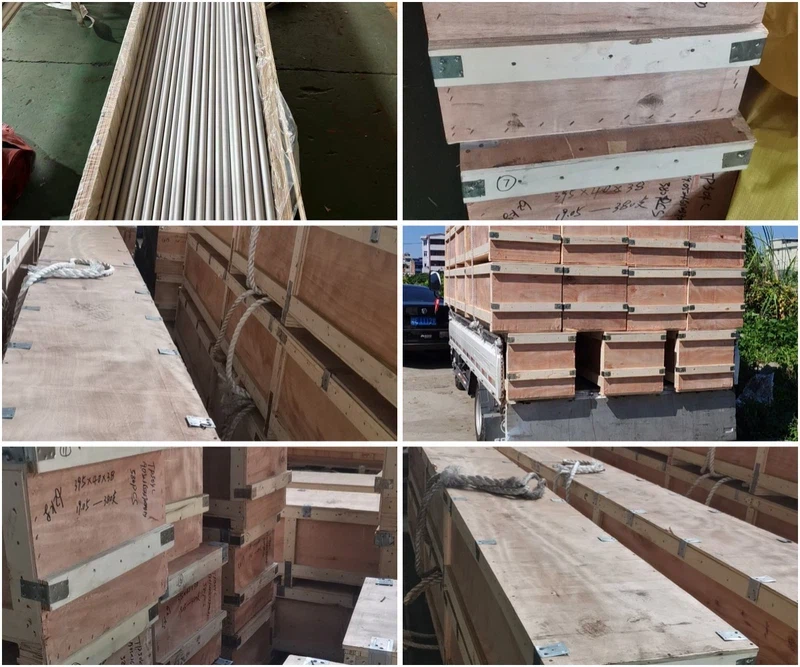
Gnee Steel specializes in the production of a wide range of stainless steel products. Gnee Steel's product packaging includes: Steel Strapping: Pipes with an outer diameter of 3 inches or less are typically strapped together with polypropylene film to prevent rust during ocean shipping, and then secured with steel strapping. Wooden Cases/Crates: Pipes are typically packaged in wooden cases or crates to protect the pipes during transportation, especially those that are longer or have larger diameters. Seaworthy Export Packaging: Suppliers typically use standard seaworthy export packaging methods, which may include a variety of materials and techniques to protect the pipes during transportation. Tarpaulin Packaging: This prevents rain, seawater, and other external factors from penetrating the export crates during transportation. Gnee Steel specializes in the production and sale of alloy materials. Gnee Steel's products are widely used in the aerospace, chemical, power, automotive, and nuclear energy sectors, and we can provide customized alloy material solutions based on customer needs. For alloy material pricing or customized alloy material solutions, please contact us for a quote: ru@gneesteelgroup.com