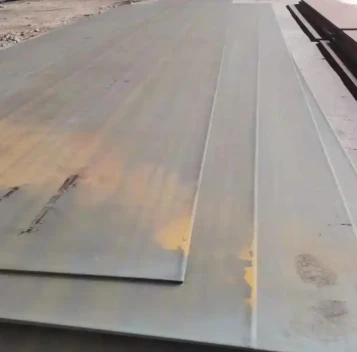
The performance of SPA-H weathering steel in low-temperature or extreme temperature-difference environments is generally stable but requires specific considerations. Here's a detailed analysis:
1. Low-Temperature Performance (e.g., Arctic/High-Altitude)
Toughness:
SPA-H maintains adequate impact toughness down to -30°C (per JIS G 3114 testing at -30°C, min. 27J).
Below -30°C, toughness decreases gradually; for critical applications (e.g., bridges), specify Ni-alloyed grades (e.g., 0.5–1.0% Ni) to enhance low-temperature ductility.
Brittle Fracture Risk:
Thicker sections (>25mm) may require post-weld heat treatment (PWHT) to relieve stresses in sub-zero conditions.
2. Thermal Cycling (Extreme Day-Night Temperature Swings)
Patina Stability:
The rust layer (α-FeOOH) adheres well under repeated expansion/contraction (e.g., desert climates with 40°C daily swings).
Risk: Rapid thermal cycles may cause minor surface microcracking, but these self-seal via rust deposition over time.
Structural Integrity:
SPA-H's CTE (Coefficient of Thermal Expansion): ~12 × 10⁻⁶/°C (similar to carbon steel), minimizing thermal stress issues.
3. Mitigation Measures for Harsh Environments
| Condition | Solution |
|---|---|
| Polar Regions (< -30°C) | Use Ni-modified SPA-H or ASTM A871 Grade 65 (better low-T toughness) |
| Desert (High ΔT) | Design with expansion joints; avoid rigid constraints |
| Coastal (Salt + Frost) | Pre-oxidize surface to accelerate patina formation |
4. Real-World Examples
Alaska Pipeline Supports: SPA-H with 0.8% Ni performs at -45°C.
Saudi Arabia Solar Farms: Untreated SPA-H withstands daily 15–50°C cycles.